First landing: 20 July 1969Status: Not working any more
ALSEP science stations
Image: NASA
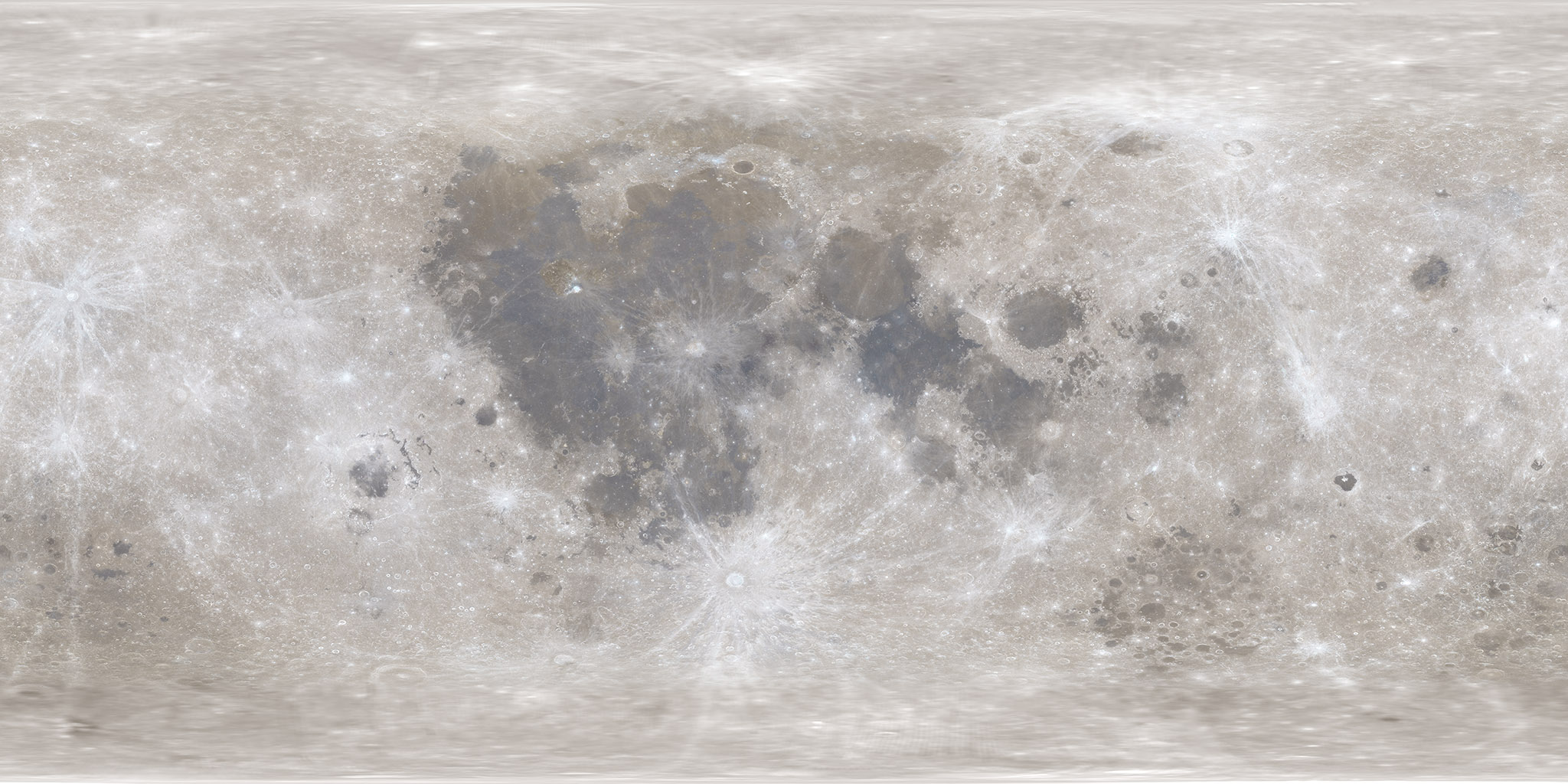
Main spot on the Moon:Oceanus Procellarum
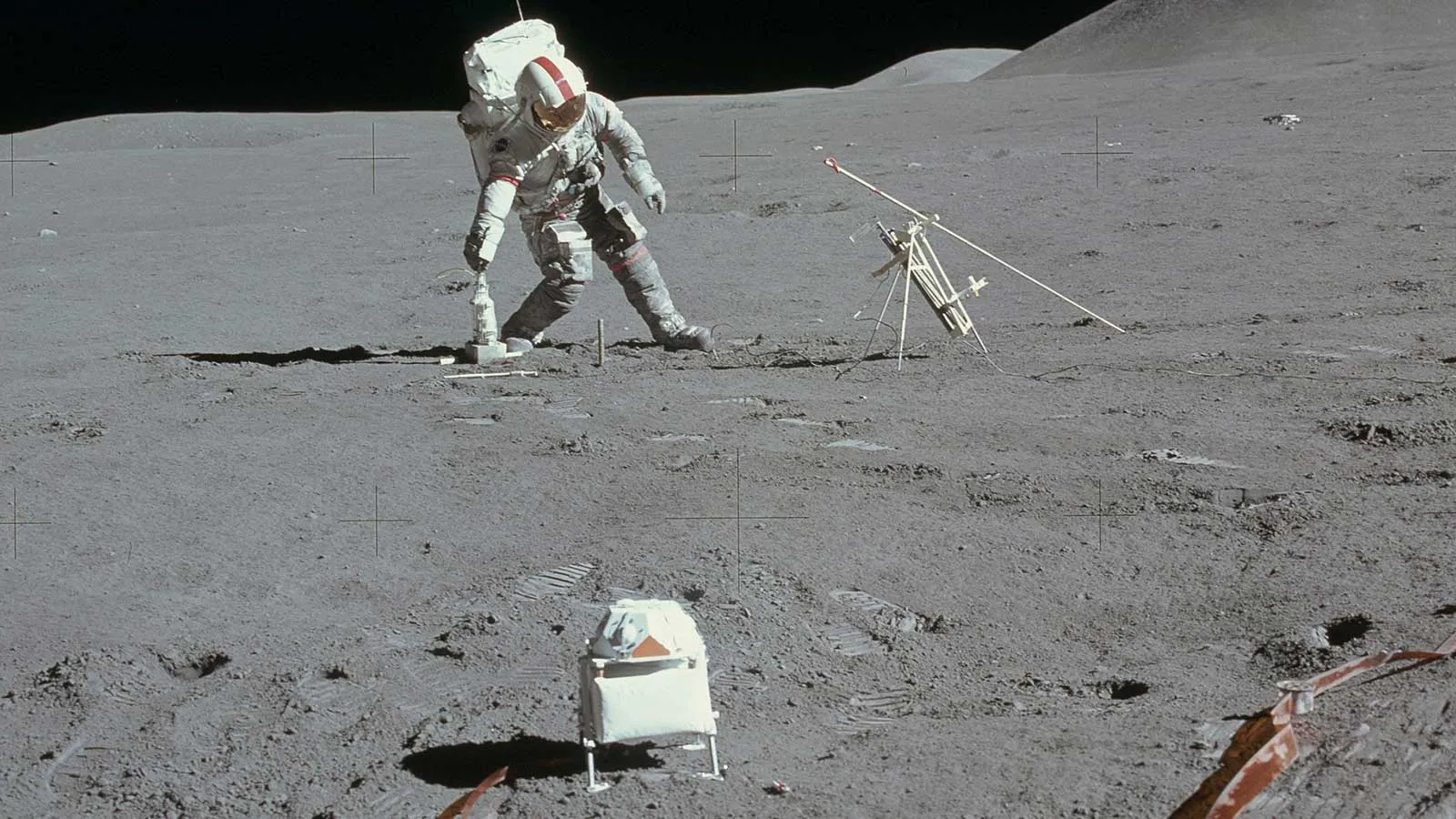
Apollo 12, 14, 15, 16 and 17 each set up an ALSEP station, which radioed its measurements to Earth for years. All of them were switched off together on 30 September 1977.
The science stations left behind
The astronauts could only stay on the Moon for a few days. But scientists wanted to know what was happening on the Moon long after the astronauts had gone home.

Echo: Hi! Let's find out how astronauts left a whole science station on the Moon.
The big idea
Leave a science station behind
So, beginning with Apollo 12, astronauts carried a collection of science instruments to the Moon. It was called ALSEP: the Apollo Lunar Surface Experiments Package.
The idea was simple: leave a science station behind.
The astronauts would set up the instruments, switch them on and then walk away. The station would keep collecting information and radio it back to Earth.
But first, they had to get there…
What's in a name?
Apollo Lunar Surface Experiments Package. Say it fast, and you get ALSEP.
By the numbers
Science that stayed behind
- ALSEP stations, set up by Apollo 12, 14, 15, 16 and 17
- 5
- years the Apollo 12 station kept working, from 1969 to 1977
- Nearly 8
- of electricity from the Apollo 12 station's generator
- 70 W
- how far away the first recorded artificial moonquake was felt
- 60 km
Apollo 11 · July 1969
A small start
Apollo 11 was the first mission to land astronauts on the Moon, in July 1969. Neil Armstrong and Buzz Aldrin spent less than a day there, and only a little over two hours walking outside. But they still left behind a small set of science experiments called the Early Apollo Scientific Experiments Package, or EASEP.
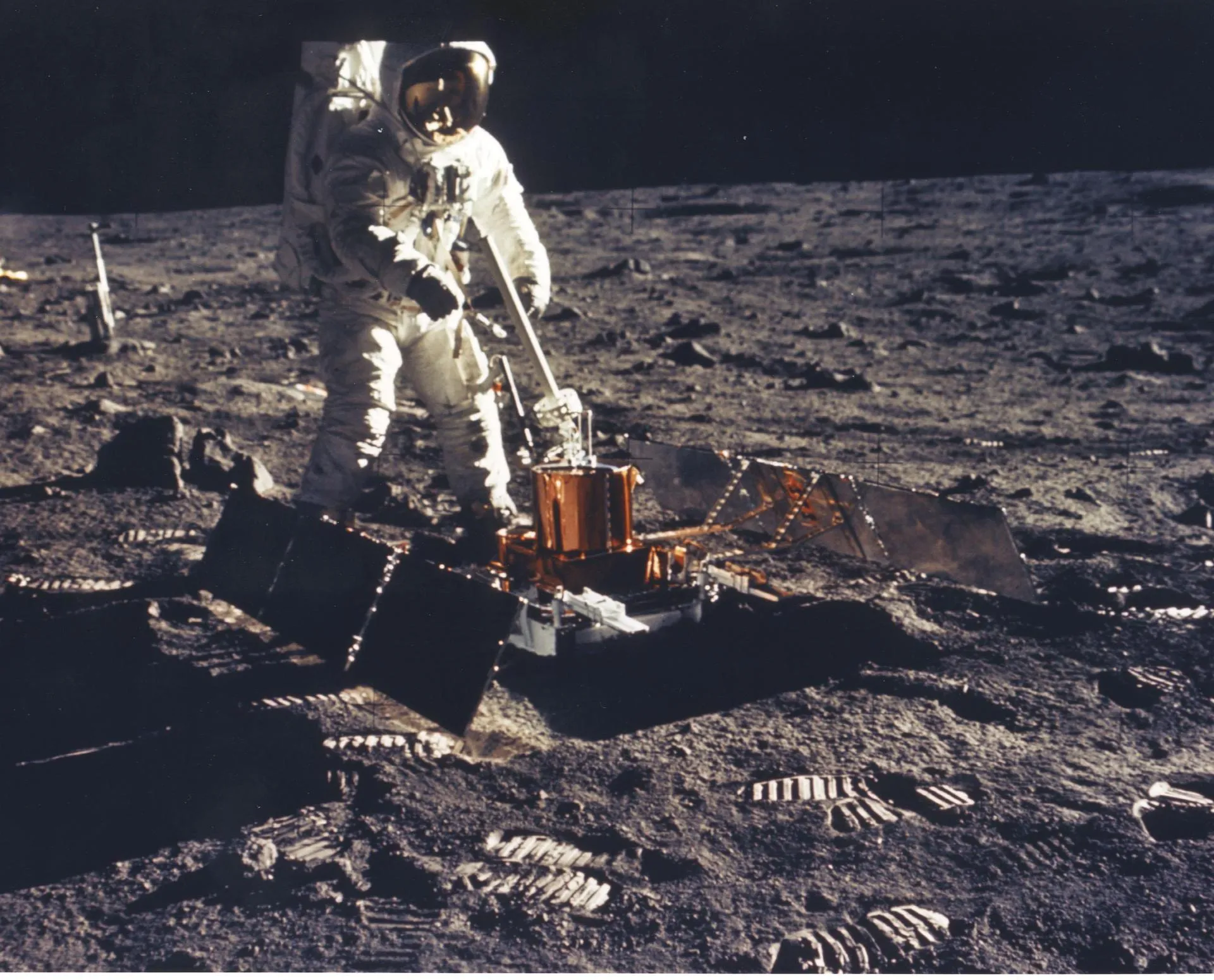
It included a seismometer to feel the Moon shake, and a detector to measure how much dust settled on it. It ran on solar panels, so it could only work during the lunar day, while the Sun was shining.
They also set out a laser reflector: a special panel that bounces laser light sent from Earth straight back towards us.
There was a sheet of foil to catch particles coming from the Sun, too. But that one didn't stay. The astronauts packed it up with their Moon rocks and took it home.
Apollo 11 proved that astronauts could work on the Moon. The next missions could go further.
 (opens larger view)
Buzz Aldrin sets up Apollo 11's seismometer near Tranquility Base.
Image: NASA

Echo: A seismometer is like a super-sensitive ear that feels the ground shake.
Apollo 12 · November 1969
A station that kept on working
Apollo 12 landed later in 1969, on 19 November. It carried a bigger collection of experiments: the first ALSEP station.
Instead of collecting a few measurements while the astronauts were there, it was built to keep gathering science after they had gone home. It was switched on the day it was set up, and it kept sending data for nearly eight years.
Its six instruments studied things like moonquakes, the Moon's magnetism, dust and the stream of tiny particles flowing out from the Sun, called the solar wind.
Leave a science station behind, and let the Moon keep telling us its secrets.
Power for the long lunar night
Solar panels only work while the Sun shines, and on the Moon, night lasts about two weeks. So ALSEP used a special power source called a radioisotope thermoelectric generator, or RTG.
It made electricity from heat. The heat came from a fuel rod of about 4 kg, filled with radioactive plutonium. That gave about 70 watts, as much as one old-fashioned light bulb, and it didn't need any sunlight at all.
 (opens larger view)
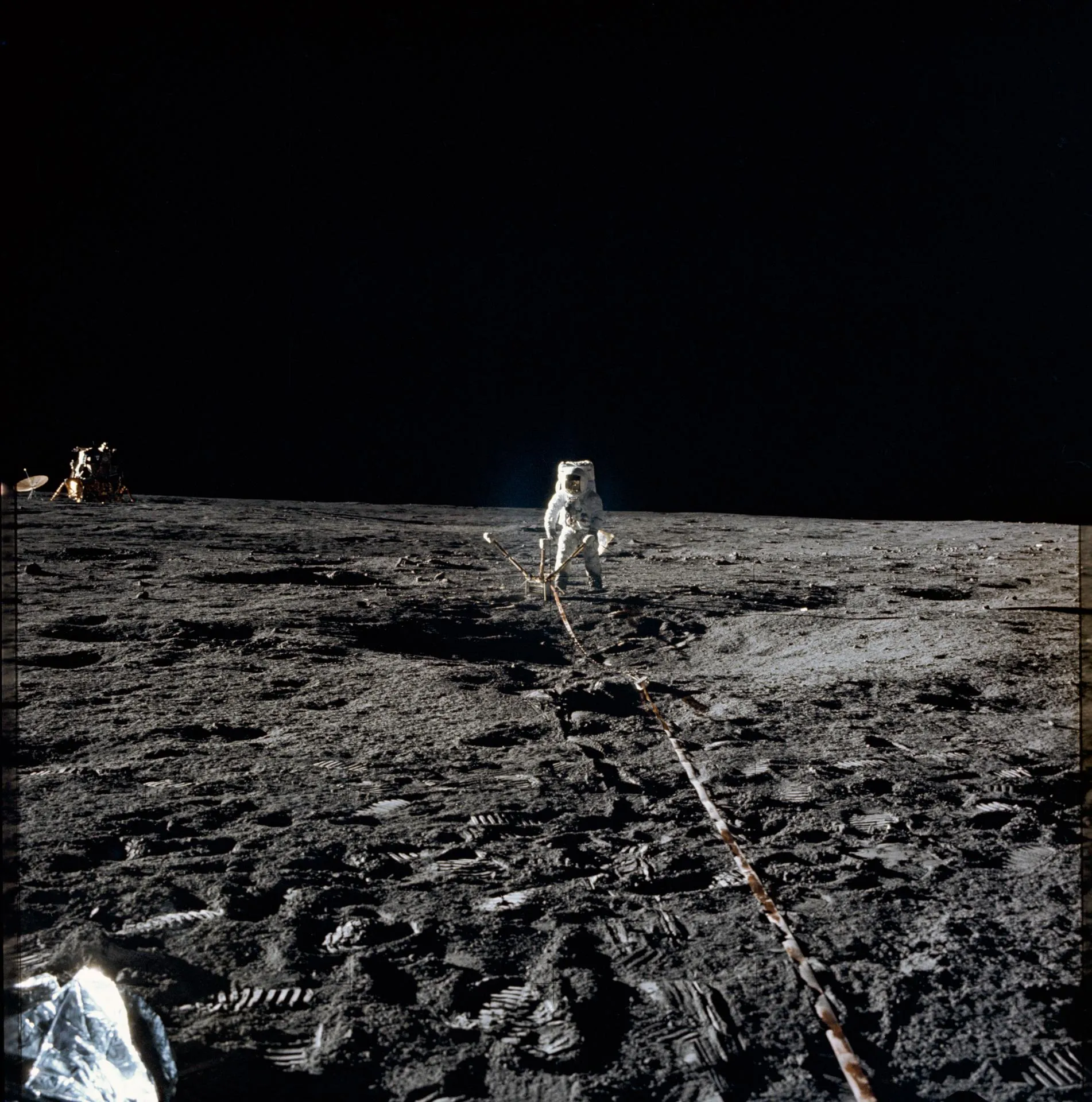
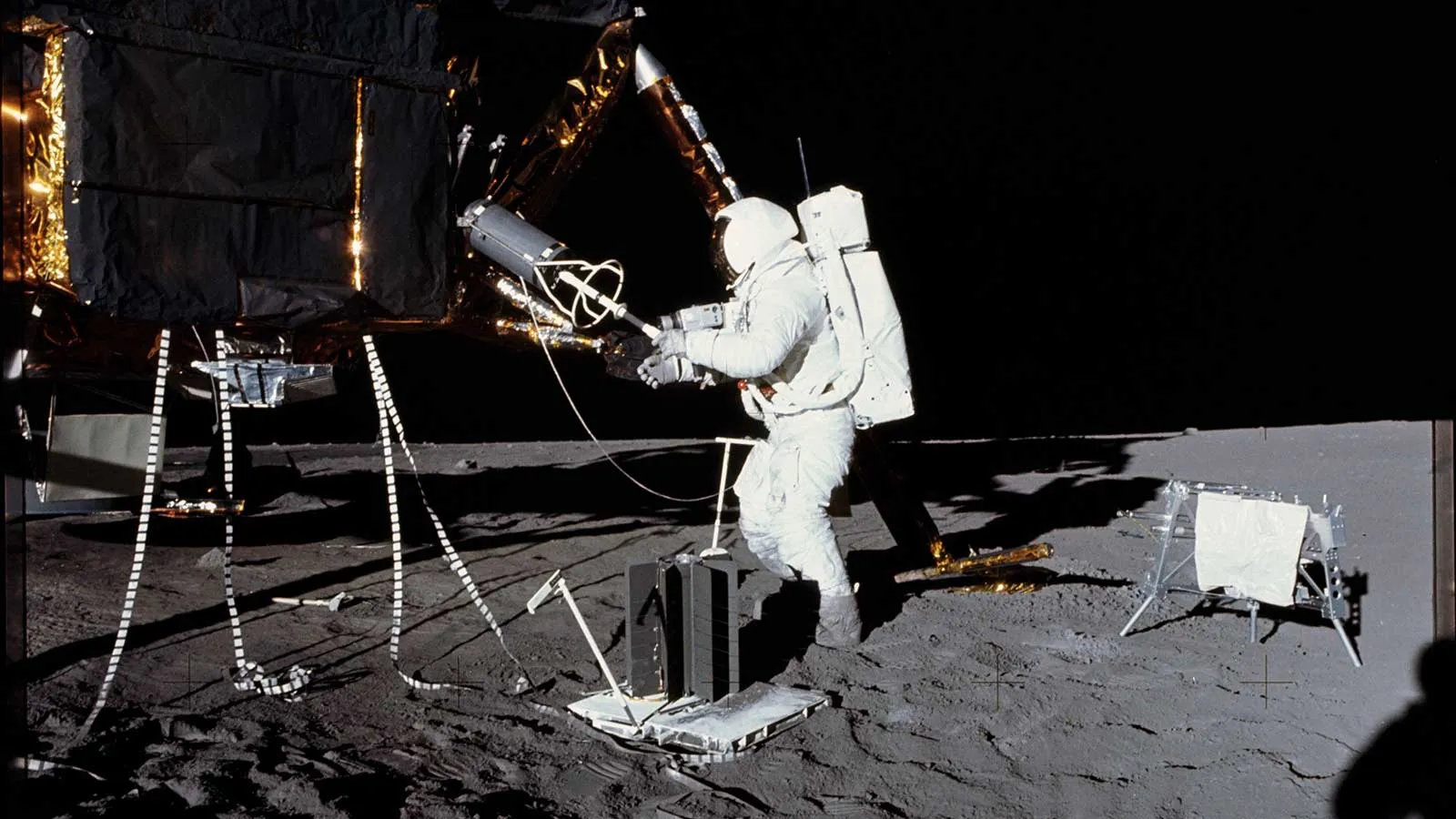
Apollo 12 Alan Bean sets up the station's magnetometer. The Lunar Module stands in the background.
Image: NASA (JSC)
 (opens larger view)
Alan Bean unloads the generator's fuel cask from the Lunar Module.
Image: NASA

Echo: No sunlight? No problem. The generator ran on heat!
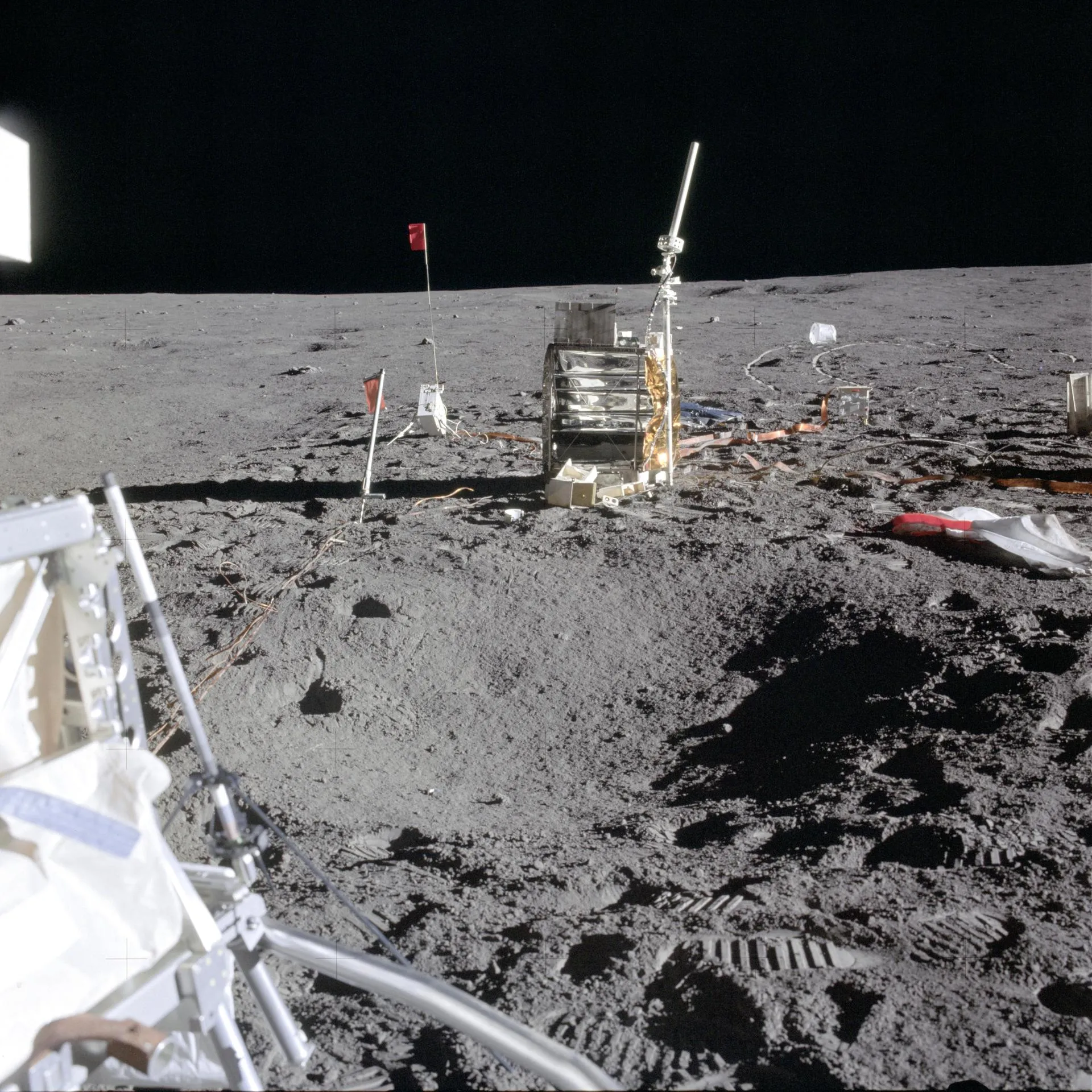
The same idea, again and again.
Apollo 14, 15, 16 and 17 each left another science station behind.
Image: NASA (JSC)
1971 to 1972
One station after another
Apollo 14 · February 1971
Apollo 14 landed in the highlands near the crater Fra Mauro. It carried another ALSEP station, with experiments designed to study the Moon's interior and its surroundings, including two different kinds of seismometer.
Apollo 15 · July 1971
Apollo 15, later that year, took things even further. Its astronauts were the first to drive a rover on the Moon, and they covered 27.9 km on their trips outside. Their station had seven instruments, studying everything from moonquakes and magnetism to particles arriving from space, and even the heat escaping from deep inside the Moon.
Apollo 16 · April 1972
Then came Apollo 16. Its astronauts landed in the Descartes highlands, a region NASA wanted them to survey and sample. Once again, they left behind science instruments, so researchers on Earth could keep studying the Moon after the astronauts had left.
Apollo 17 · December 1972
Finally, Apollo 17 landed in December 1972. It was the last Apollo mission to land on the Moon, and it left behind the final ALSEP station. Its instruments even measured the Moon's gravity and sniffed its very thin atmosphere.
By this point, the Moon was no longer just a place astronauts visited. It had become a place where science instruments could be left behind, quietly collecting information for years.
 (opens larger view)
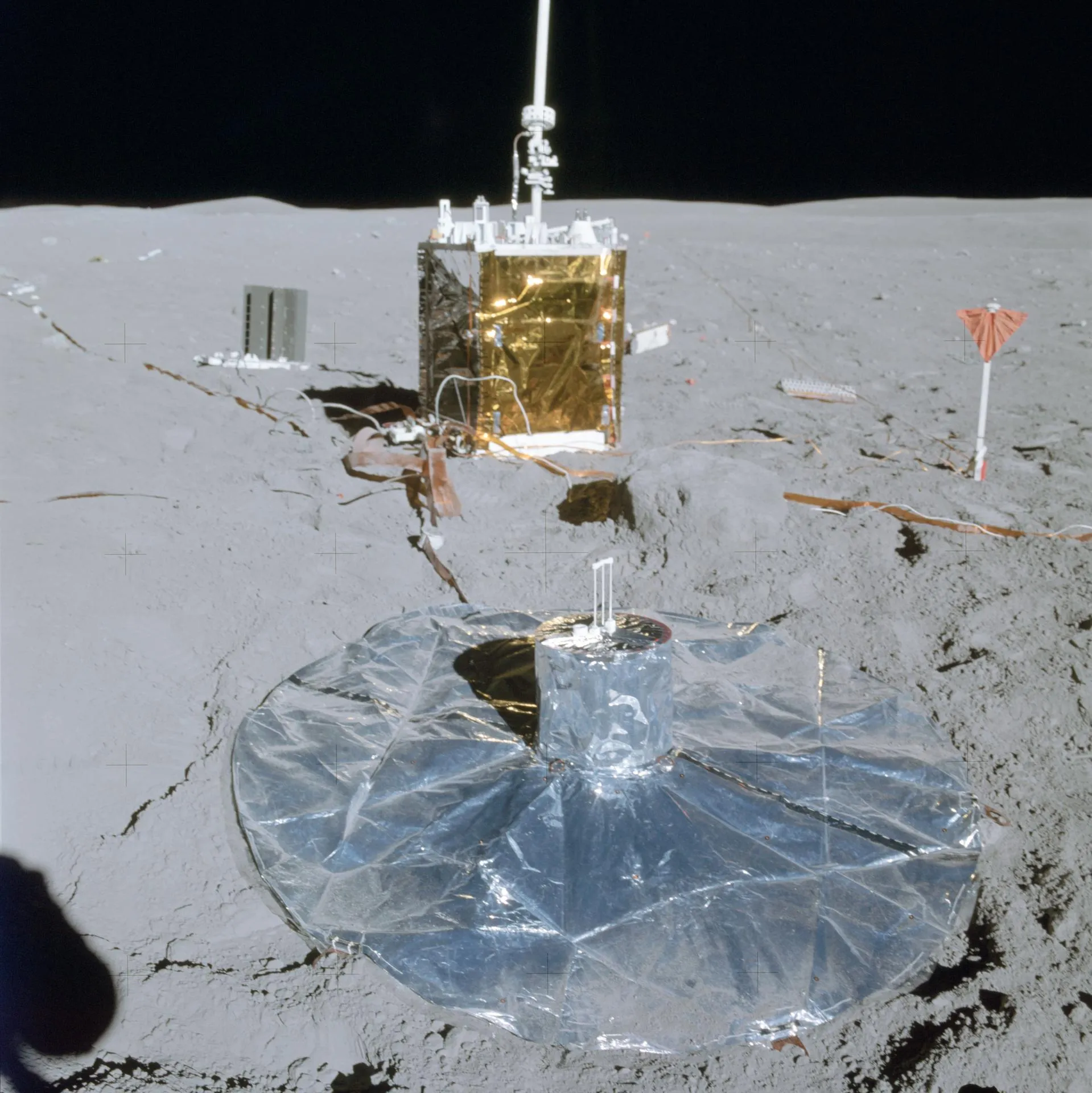
Apollo 16 The Apollo 16 station: the seismometer in front, the central station behind and the generator on the left.
Image: NASA (JSC)
Watch your step!
On Apollo 16, astronaut John Young tripped on the cable of the heat flow experiment and broke it. Walking in a bulky spacesuit isn't easy!

Echo: Five stations, spread out across the Moon. That's a whole science network!

Imagine this…
You can leave one instrument on the Moon to keep watch for years. What would you want it to measure?
Back on Earth
The Moon kept talking
And that was the real advantage of ALSEP. The astronauts could stay for only a few days. The instruments could stay much longer.
They measured moonquakes, changes in the Moon's surroundings, heat flowing up through the lunar surface and other clues that helped scientists understand how the Moon works.
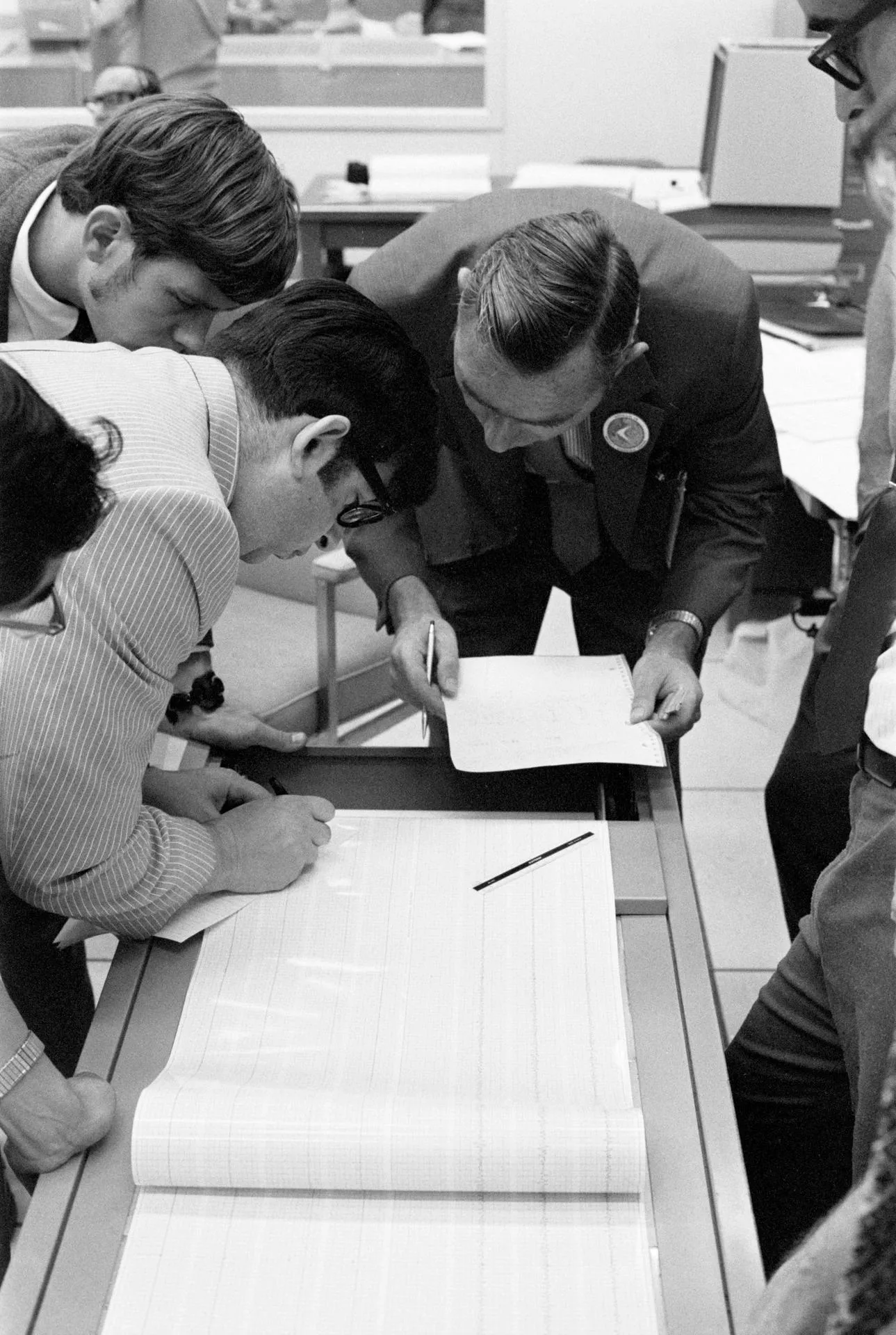
Scientists could even make their own moonquakes. When the Apollo 12 crew's empty ascent stage was crashed into the Moon on purpose, the seismometer about 60 km away felt it. It was the first artificial moonquake ever recorded.
 (opens larger view)
Scientists in Mission Control study the shaking the seismometers recorded when Apollo 15's spent rocket stage hit the Moon.
Image: NASA (JSC)

Echo: They crashed a spacecraft into the Moon on purpose, just to make it shake!
In pictures
A closer look at the stations
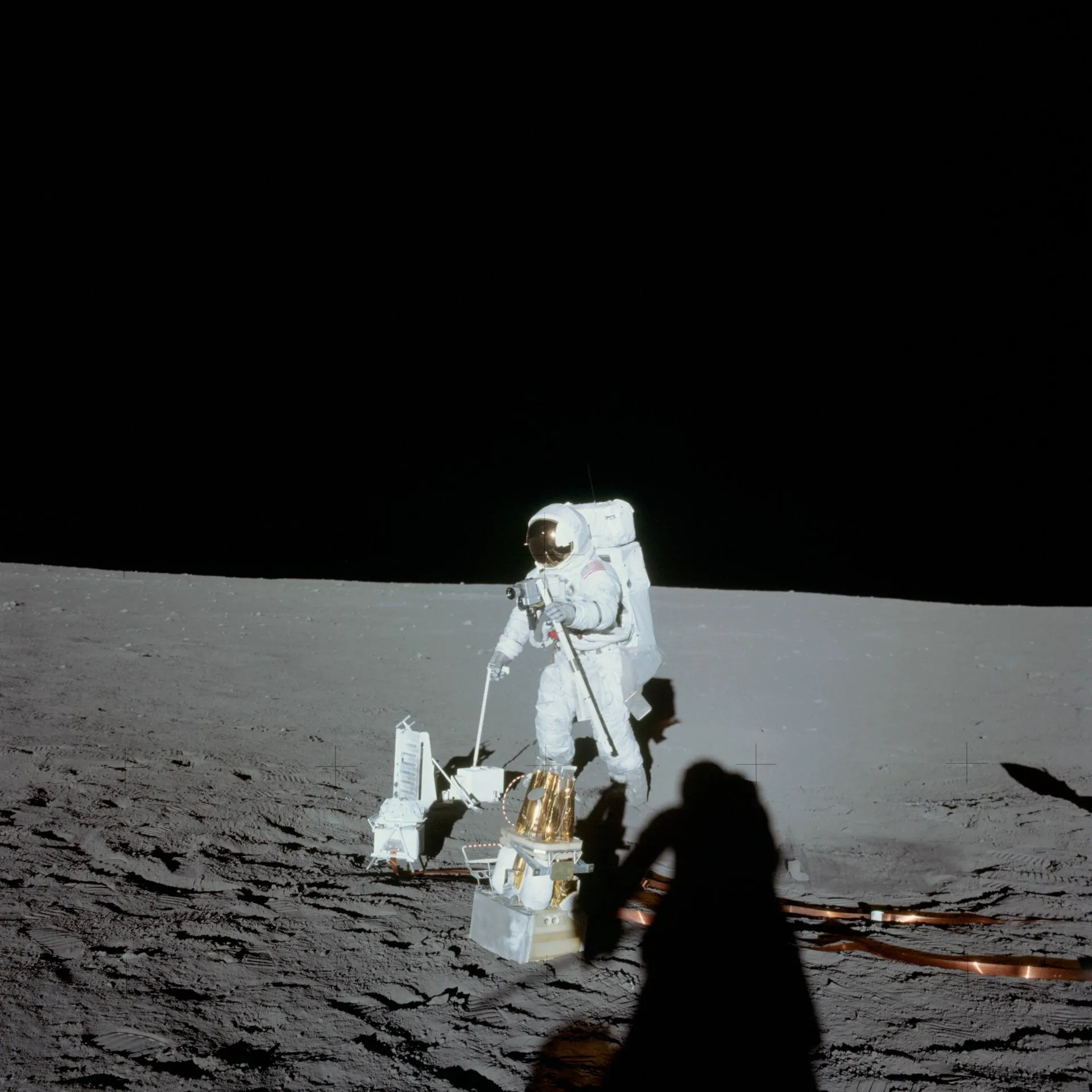 (opens larger view)
Alan Bean sets up the Apollo 12 science station.
Image: NASA (JSC)
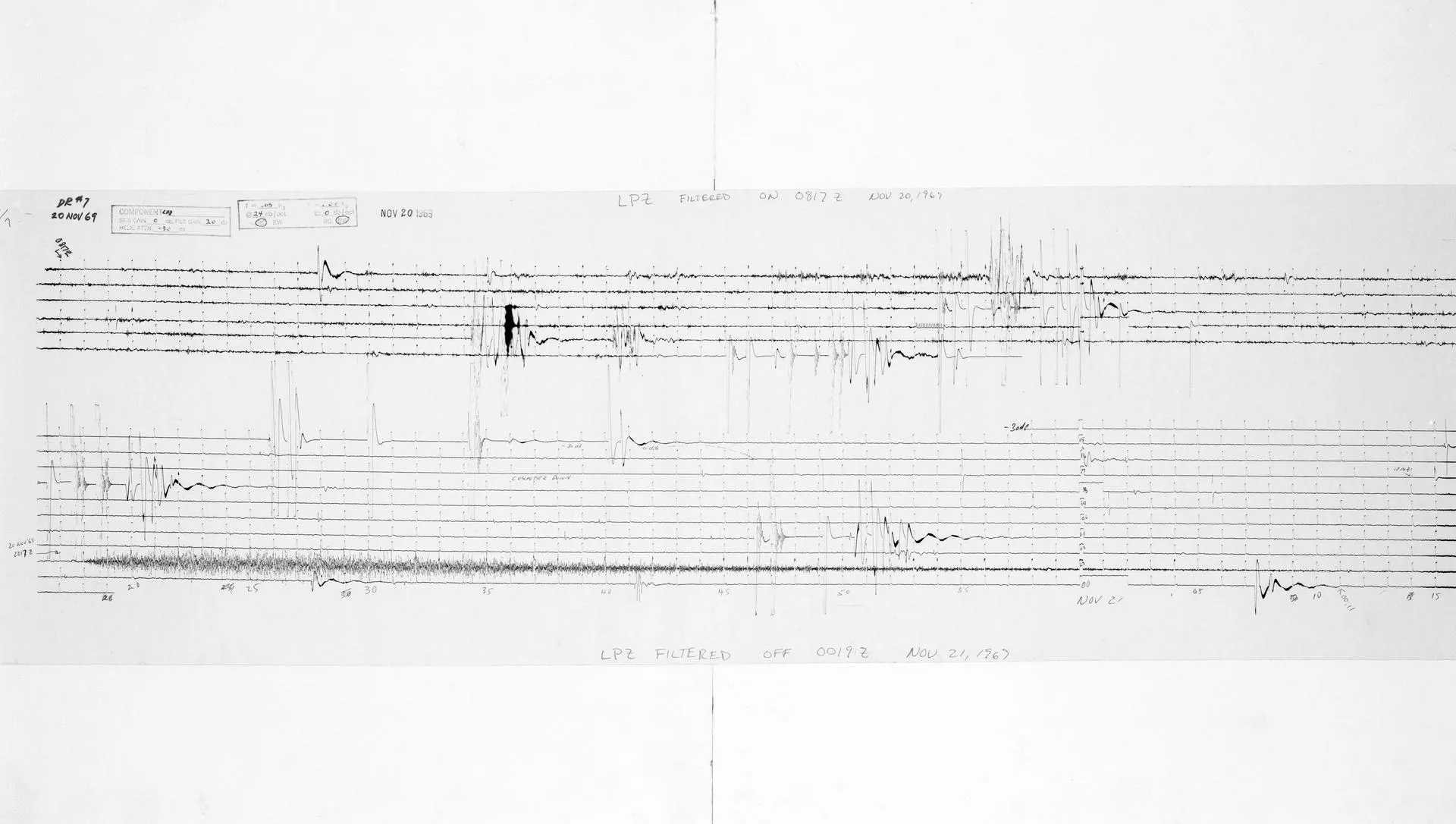 (opens larger view)
The Apollo 12 seismometer's record of the empty ascent stage crashing into the Moon.
Image: NASA (JSC)
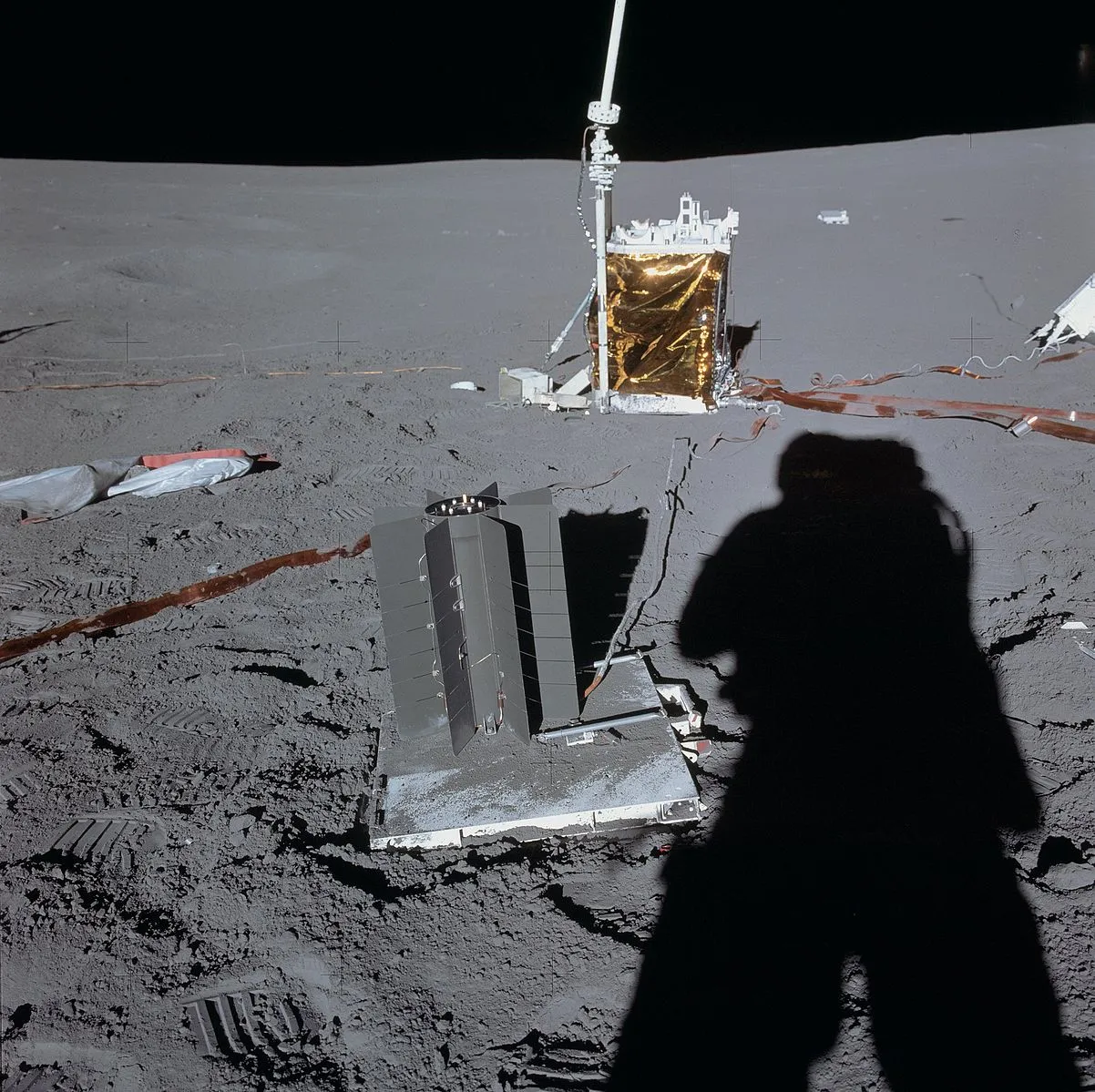 (opens larger view)
The grey, finned generator in front made electricity for the Apollo 14 station.
Image: NASA
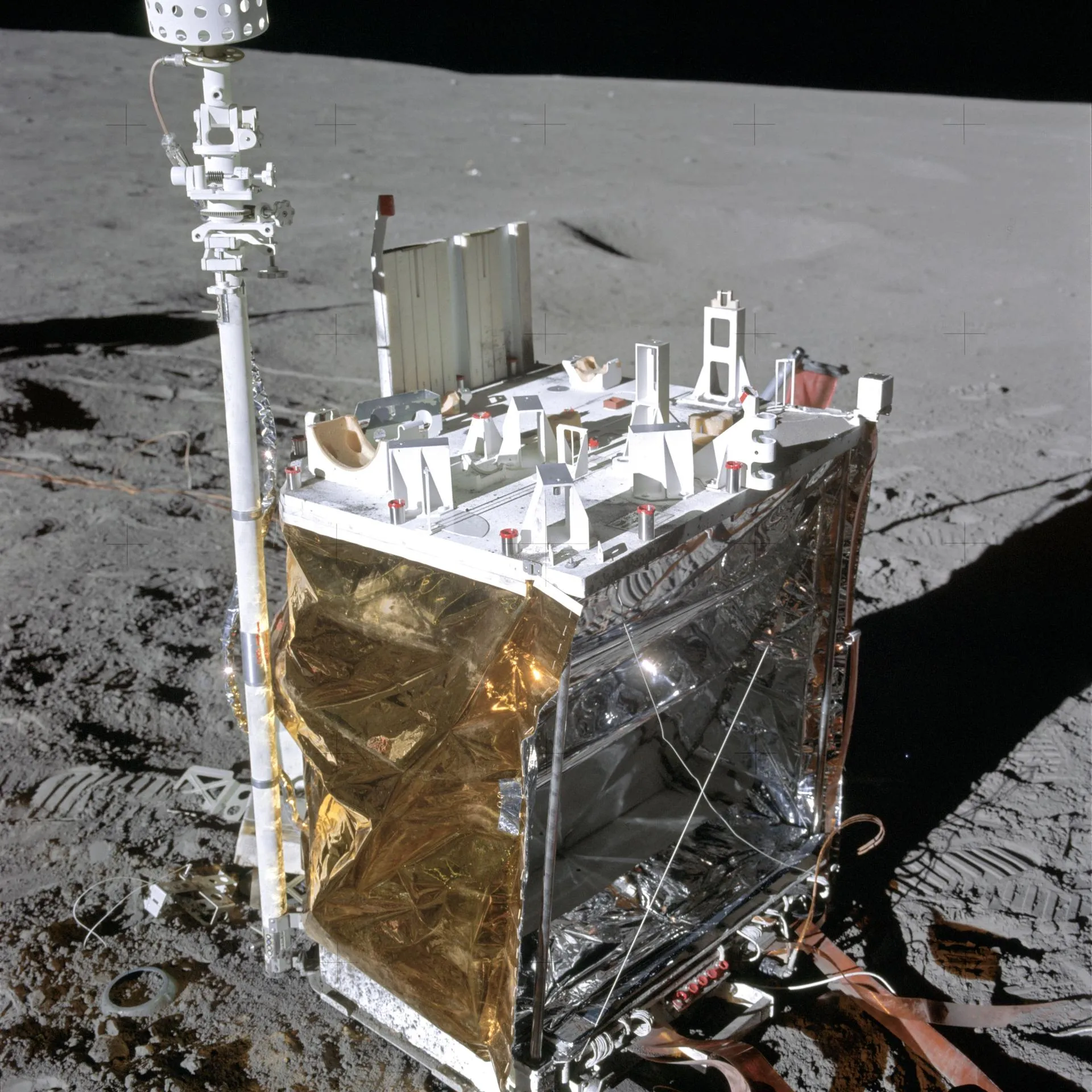 (opens larger view)
The central station radioed the measurements to Earth.
Image: NASA (JSC)
Timeline
From the first seismometer to the big switch-off
20 July 1969
Apollo 11 lands
Buzz Aldrin sets up the solar-powered seismometer, and the first laser reflector goes out.
27 August 1969
Apollo 11's seismometer goes quiet
It stops answering commands from Earth.
19 November 1969
Apollo 12: the first ALSEP
Switched on the same day it was set up.
20 November 1969
The first artificial moonquake
Apollo 12's empty ascent stage hits the Moon about 60 km from the station.
5 February 1971
Apollo 14 lands
A second station goes up, near the crater Fra Mauro.
30 July 1971
Apollo 15 lands
The first rover on the Moon, and a station that measures heat escaping from inside the Moon.
21 April 1972
Apollo 16 lands
Another station, in the Descartes highlands.
11 December 1972
Apollo 17 lands
The last Apollo landing, and the last ALSEP station.
30 September 1977
The big switch-off
All five stations are shut down on the same day.
Still there
The story didn't end
The astronauts eventually returned to Earth, but the story didn't end when they left.
They had turned the Moon into a place where science could continue long after the astronauts had gone home.
And some of the things they left behind are still there today. The laser reflectors are even still in use: scientists on Earth bounce laser beams off them to measure the distance to the Moon.
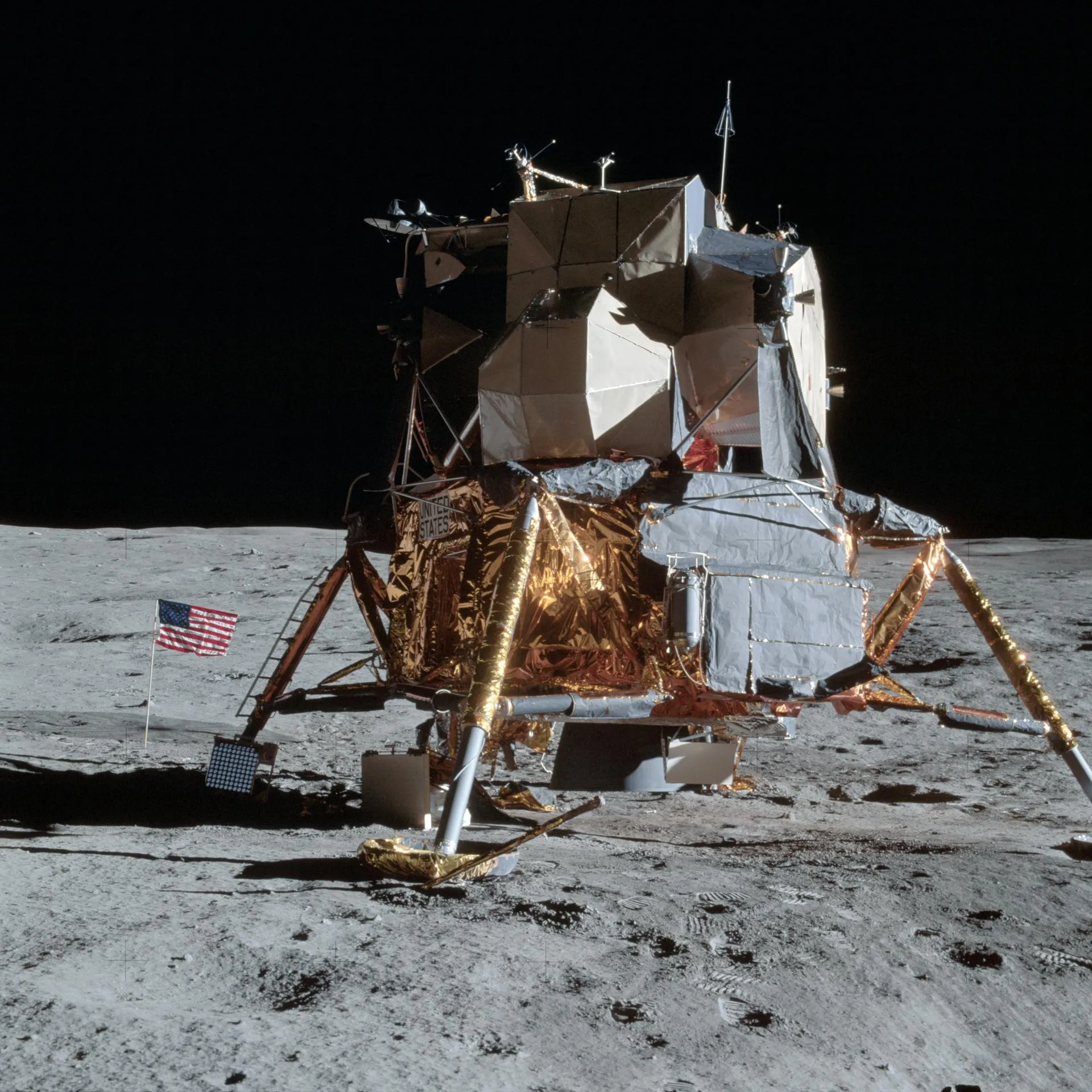 (opens larger view)
Antares, the Apollo 14 lander. The laser reflector waits at the foot of the ladder, ready to be set up.
Image: JSC

Echo: The mirror panels are still used, more than 50 years later. Talk about a long job!
Still there today
What the science stations left behind
- Status: Not working any more
Apollo 11 EASEP
The simpler, solar-powered forerunner of ALSEP. It stopped answering commands from Earth on 27 August 1969.
- Status: Still working
Apollo 11 Laser Ranging Retroreflector
A panel of mirrors that needs no power. More than 50 years later, observatories on Earth still bounce laser beams off it to measure the distance to the Moon.
- Status: Not working any more
Apollo 12 ALSEP
Six instruments, including a seismometer and a magnetometer.
- Status: Not working any more
Apollo 14 ALSEP
Included both a passive and an active seismometer.
- Status: Still working
Apollo 14 Laser Ranging Retroreflector
Another mirror panel, set up near the Apollo 14 science station. Still used for laser ranging.
- Status: Not working any more
Apollo 15 ALSEP
Seven instruments, including a heat flow experiment.
- Status: Still working
Apollo 15 Laser Ranging Retroreflector
The largest of the three Apollo mirror panels. Still used for laser ranging.
- Status: Not working any more
Apollo 16 ALSEP
Its heat flow experiment was broken during setup.
- Status: Not working any more
Apollo 17 ALSEP
Included a gravimeter and a mass spectrometer.
Sources and fact-check
- NSSDCA: Apollo 12 Lunar Module / ALSEP
- NSSDCA: Apollo 11 Lunar Module / EASEP
- NSSDCA: Apollo 14 Lunar Module / ALSEP
- NSSDCA: Apollo 15 Lunar Module / ALSEP
- NSSDCA: Apollo 16 Lunar Module / ALSEP
- NSSDCA: Apollo 17 Lunar Module / ALSEP
- NASA ILRS: Apollo and Luna reflectors
- NSSDCA: Apollo landing site coordinates (LRO-based)
- NASA GSFC PGDA: Laser ranging to surface retroreflectors from LRO
- Sabhlok et al. (2024), A clear case for dust obscuration of the lunar retroreflectors, Icarus
- NSSDCA: Apollo 11 mission information
- NSSDCA: Apollo impact sites on the Moon
- NASA: Apollo 16
- NSSDCA: Surveyor 3 (the two-week lunar night)