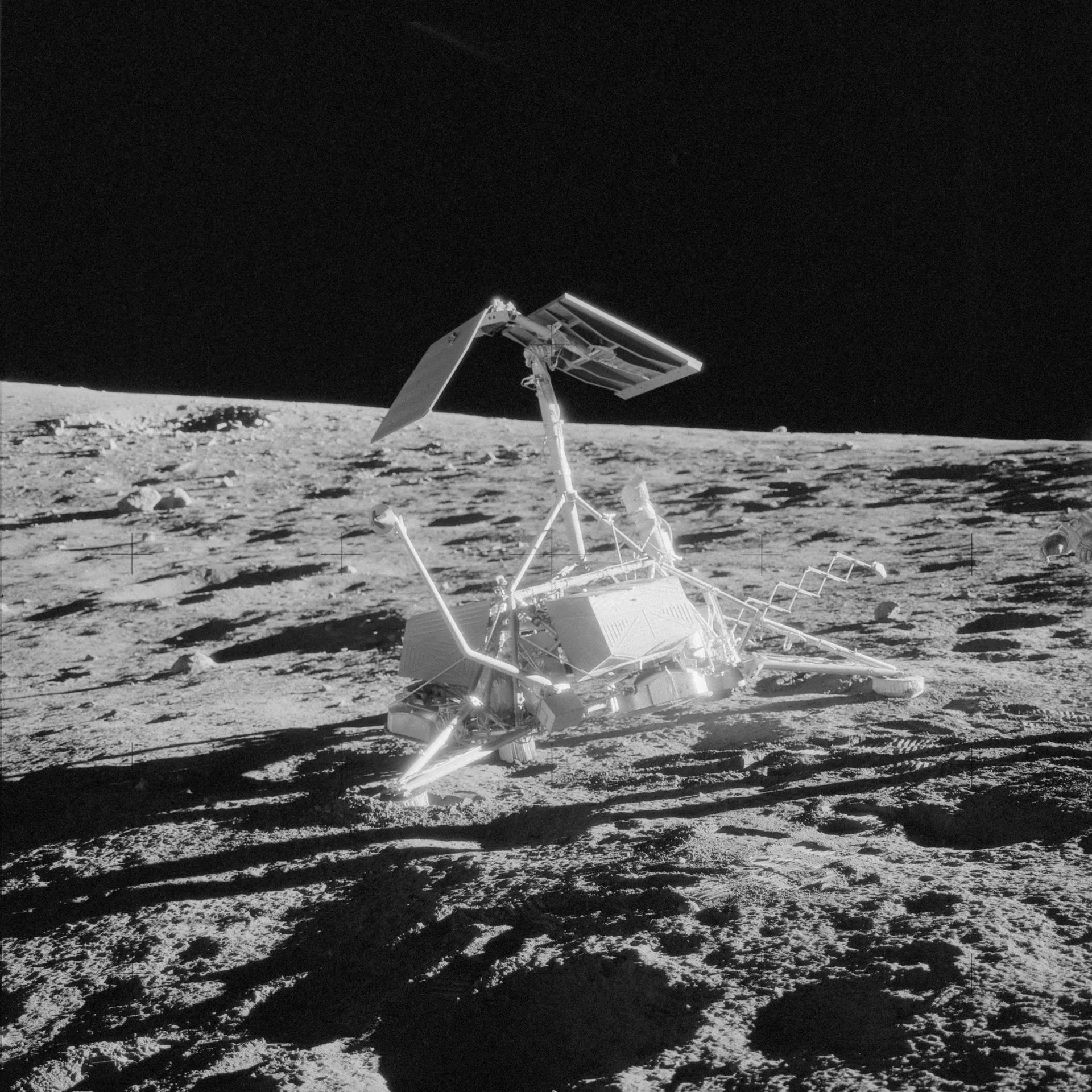
First landing: 2 June 1966Status: Not working any more
Surveyor landers
Image: NASA (JSC)
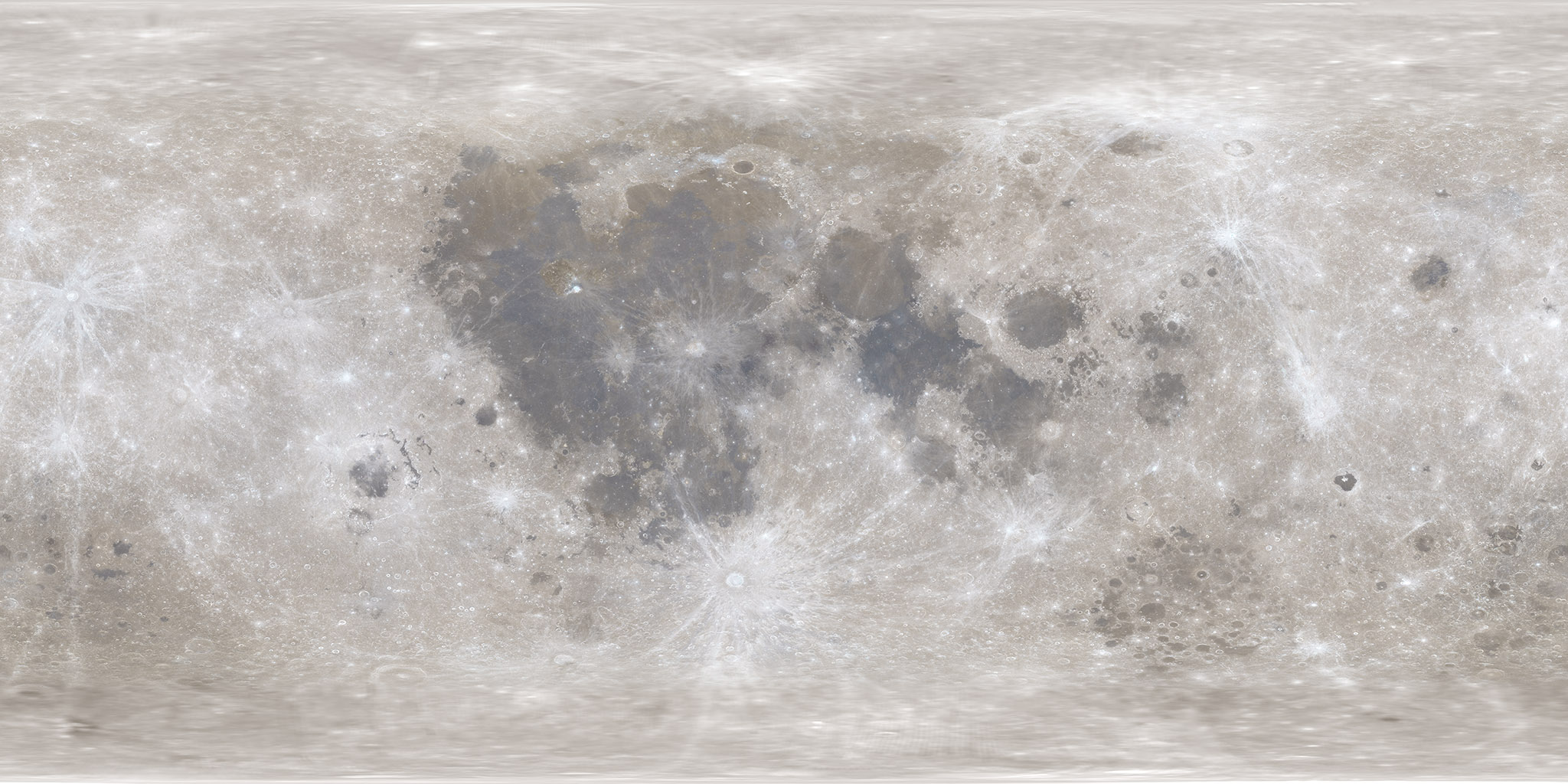
Main spot on the Moon:Oceanus Procellarum
Five Surveyors landed safely between 1966 and 1968. Together they sent back more than 87,000 pictures. Surveyor 3 dug trenches with a scoop and found soil "similar to wet sand".
Listen
Hear the story of this mission.
What did the Surveyors leave behind?
Today, the Moon is scattered with things that people have left there. Some are easy to spot, like astronaut footprints, flags and equipment. But before any human walked on the Moon, NASA sent a group of robot explorers to prepare the way. They were called Surveyors.

Echo: Hi! Let's meet the robots that landed on the Moon before any astronaut did.
By the numbers
Five robots, one big job
- Surveyors that landed safely between 1966 and 1968
- 5
- pictures they sent back to Earth, all together
- 87,000+
- the engine burn that made Surveyor 6 hop
- 2.5 s
- how close Apollo 12 landed to Surveyor 3
- 180 m
The landers
Like a robot graveyard on the Moon
Between 1966 and 1968, five Surveyors landed safely on the Moon. Their missions ended, but the landers didn't come home. They are still there.
Surveyor 1: the first soft landing
Surveyor 1 was the first American spacecraft to make a soft landing on the Moon. That means it came down gently instead of crashing. It touched down on 2 June 1966 and sent back more than 11,000 photographs.
It stood on three landing legs, each with a footpad at the end. More than 40 years later, NASA's Lunar Reconnaissance Orbiter photographed it from space, still sitting where it landed.
Surveyor 5: the soil detective
Surveyor 5 landed on 11 September 1967. It left behind something even more interesting: a science instrument that tested what the Moon's soil is made of.
The results showed that the soil was a lot like basalt, a dark volcanic rock that we also find on Earth. It was the first time anyone had tested the ground of another world right where it lay.
 (opens larger view)
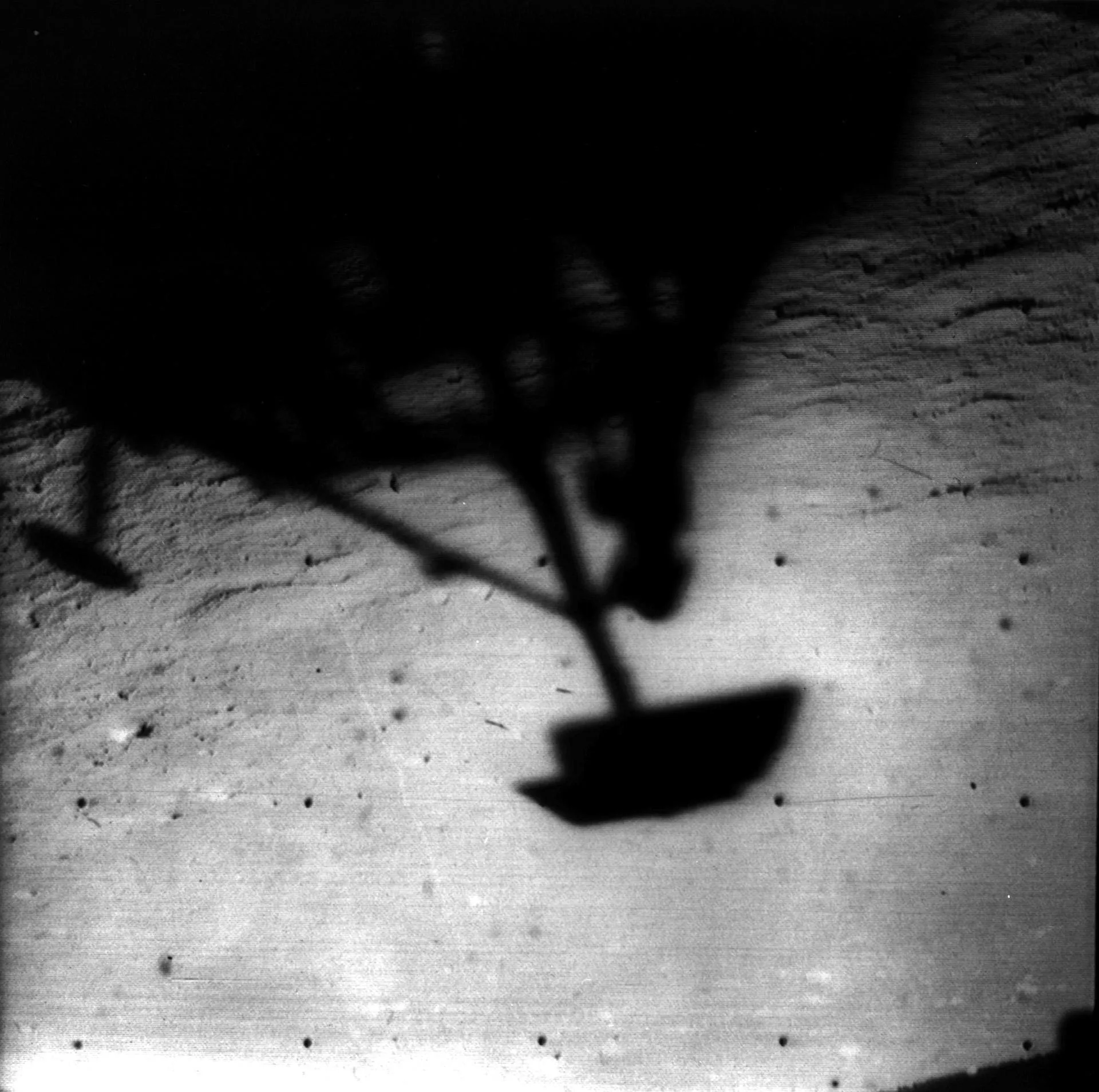
Surveyor 1 The shadow of Surveyor 1 on the Moon in the late lunar afternoon.
Image: NASA/JPL
 (opens larger view)
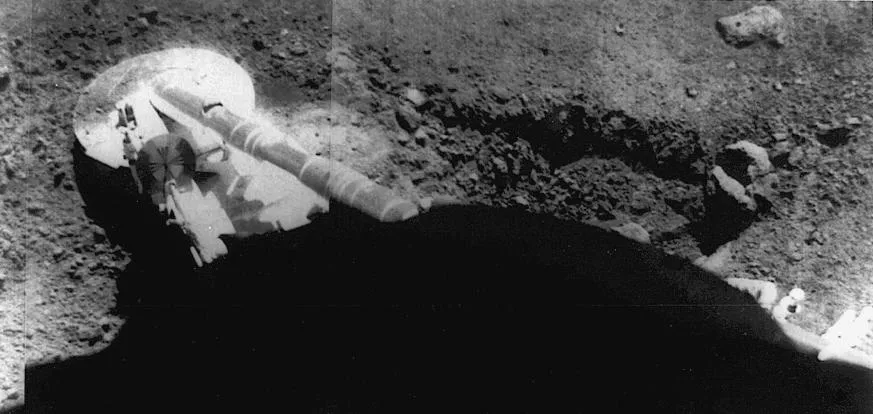
Image: NASA/JPL
A magnet on its foot
Surveyor 5 had a small magnet attached to one of its footpads. It was there to find out whether the Moon's soil contained magnetic material.

Echo: Basalt is a volcanic rock. You can find it on Earth too!
Surveyor 6 · 17 November 1967
The robot that hopped
Then there was Surveyor 6. On 17 November 1967, it did something no spacecraft had ever done before: it took off from the surface of the Moon.
It fired its engines for just 2.5 seconds. It rose about 3 metres into the air, about as high as a basketball hoop, and came back down about 2.5 metres to the west.
Its cameras then photographed the marks it had left at its first landing spot. So Surveyor 6 didn't just leave a spacecraft behind. It left two landing sites!
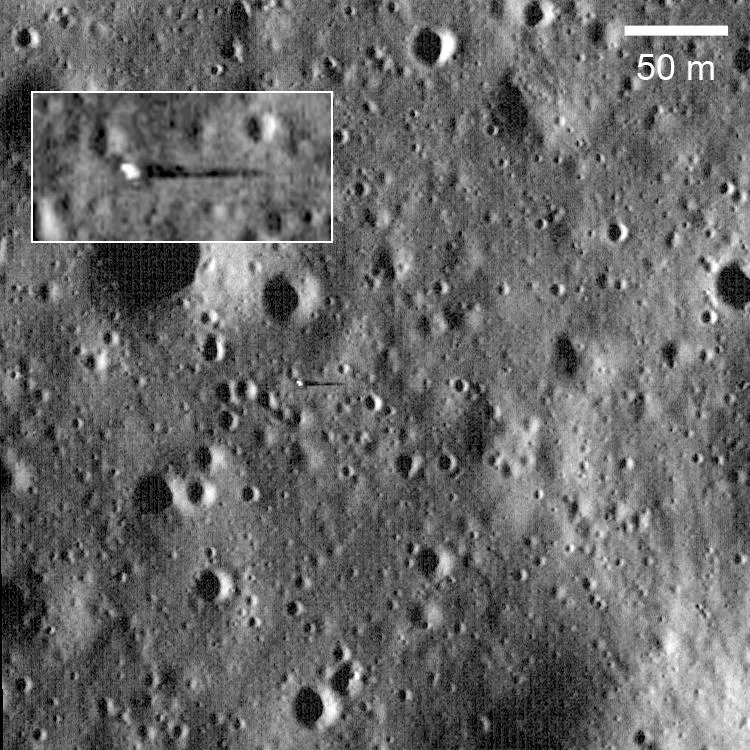 (opens larger view)
Surveyor 6 seen from orbit by NASA's Lunar Reconnaissance Orbiter. The Sun was low in the sky, so the tiny lander casts an 18-metre-long shadow.

Echo: It hopped about as high as a basketball hoop. On the Moon!

Imagine this…
You are a robot on the Moon, and you can hop just once. Where would you land, and what would you want to take a picture of?
Surveyor 7 · January 1968
Digging in near Tycho
Surveyor 7 left behind an even bigger collection of clues. It landed on 10 January 1968 north of a big crater called Tycho, in the Moon's highlands. It was the only Surveyor to land there.
Its robot arm, with a little scoop on the end, dug trenches in the lunar soil and picked up and moved four rocks. It also pressed on the ground at least 16 times, to test how much weight the surface could hold.
When its mission ended in February 1968, its science instruments and cameras stayed right where they were.
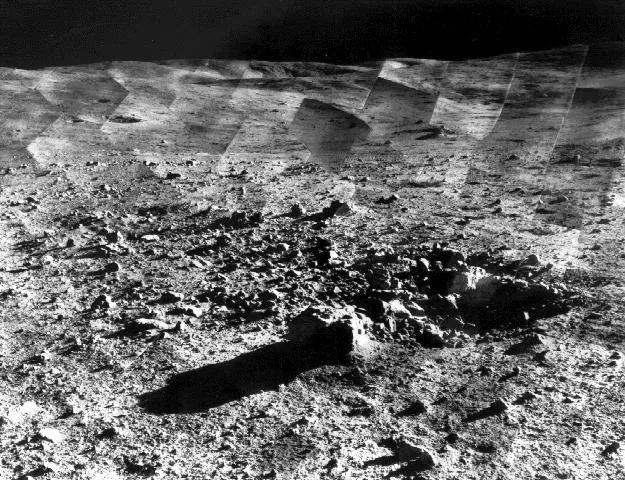 (opens larger view)
Surveyor 7's view near Tycho crater, pieced together from many of its own photos.
Image: NASA/JPL

Echo: A robot arm that digs and moves rocks? Like a claw machine on the Moon!
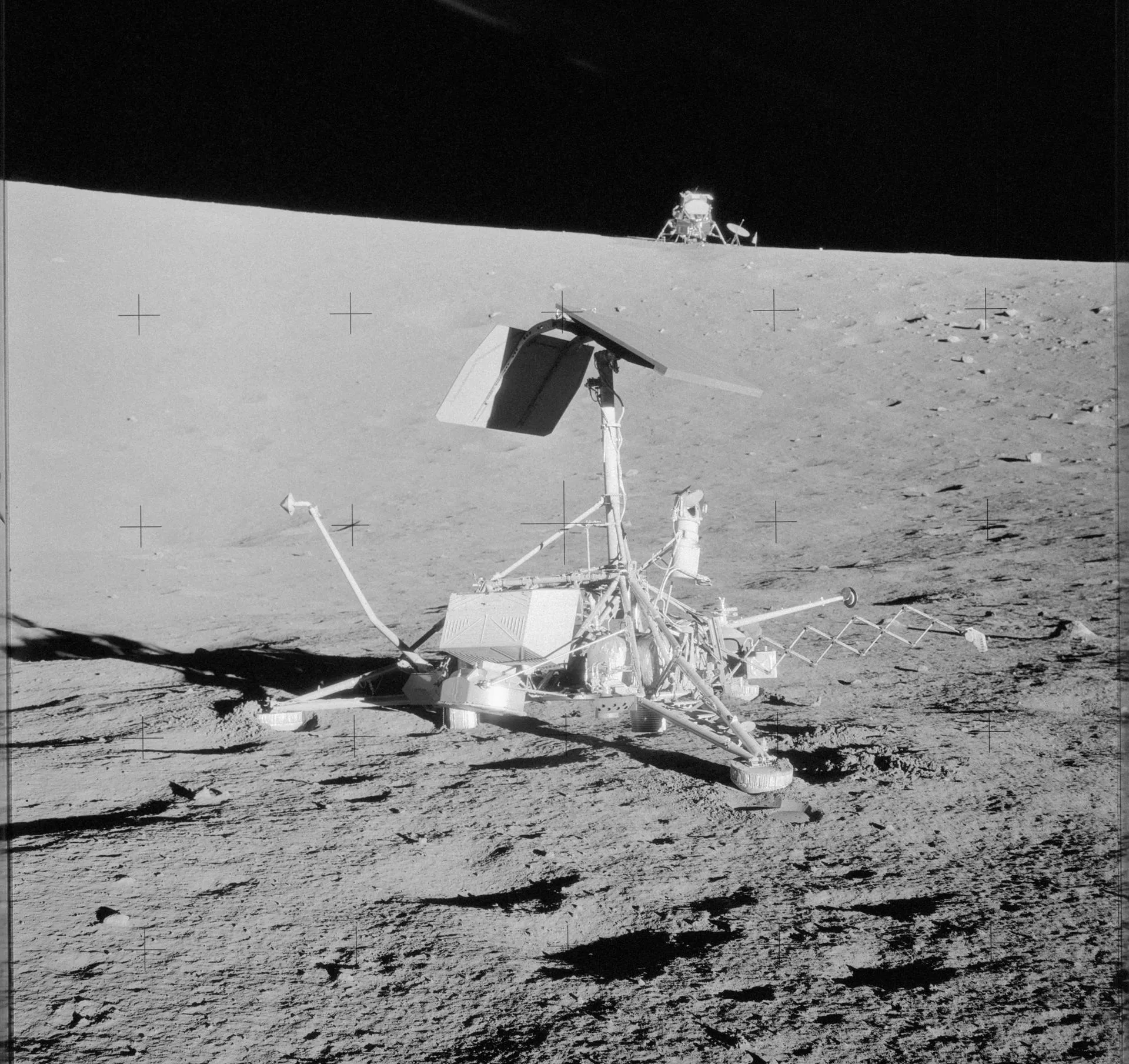
But one Surveyor had a very different ending.
It had a visit from Earth.
Image: JSC
Surveyor 3 · 1967 and 1969
A visit from Earth
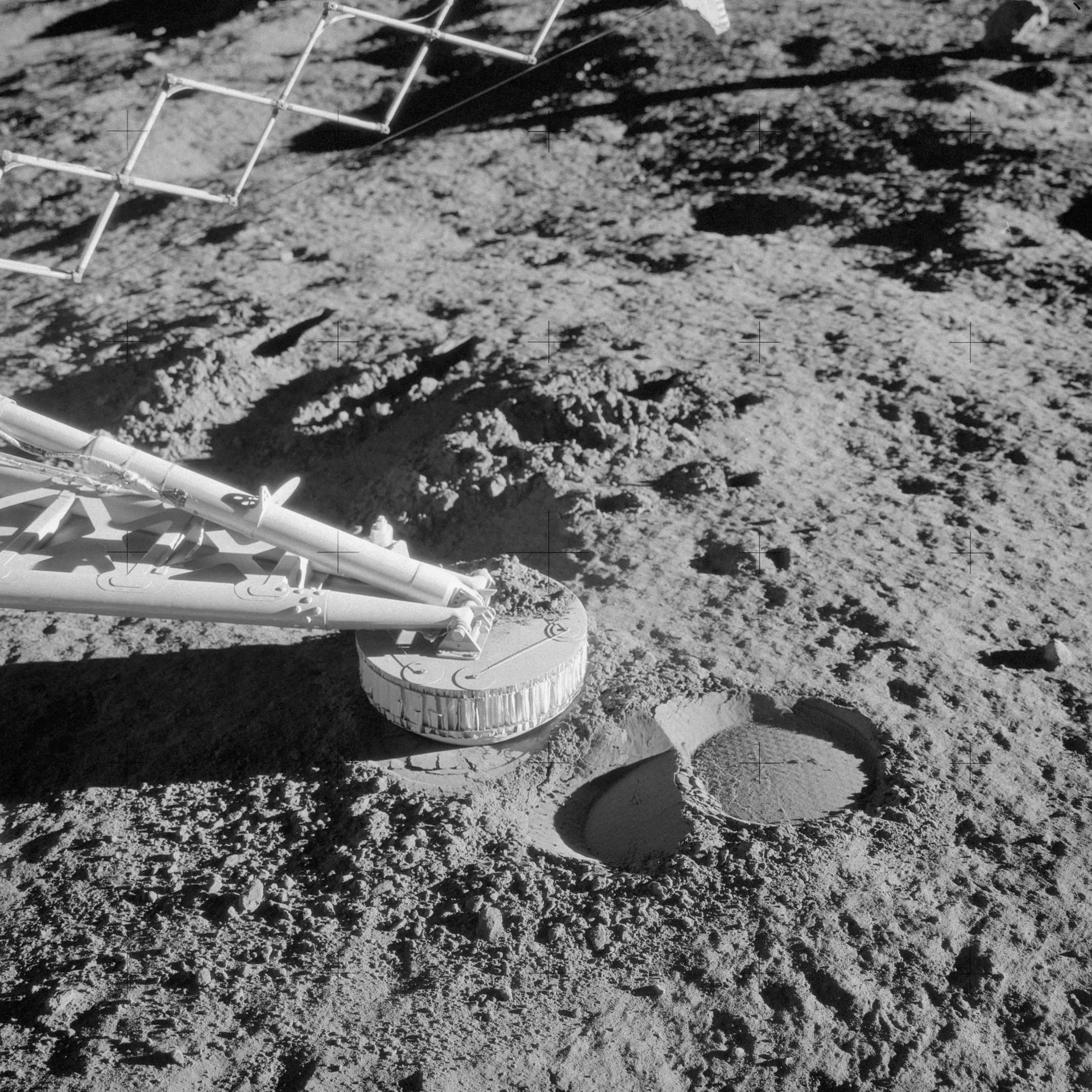
Surveyor 3 landed on 20 April 1967. It bounced twice before it settled, then spent about two weeks studying the Moon. Its scoop dug trenches, and scientists found that the lunar soil had a consistency "similar to wet sand".
More than two years later, something unexpected happened. Humans came to visit it.
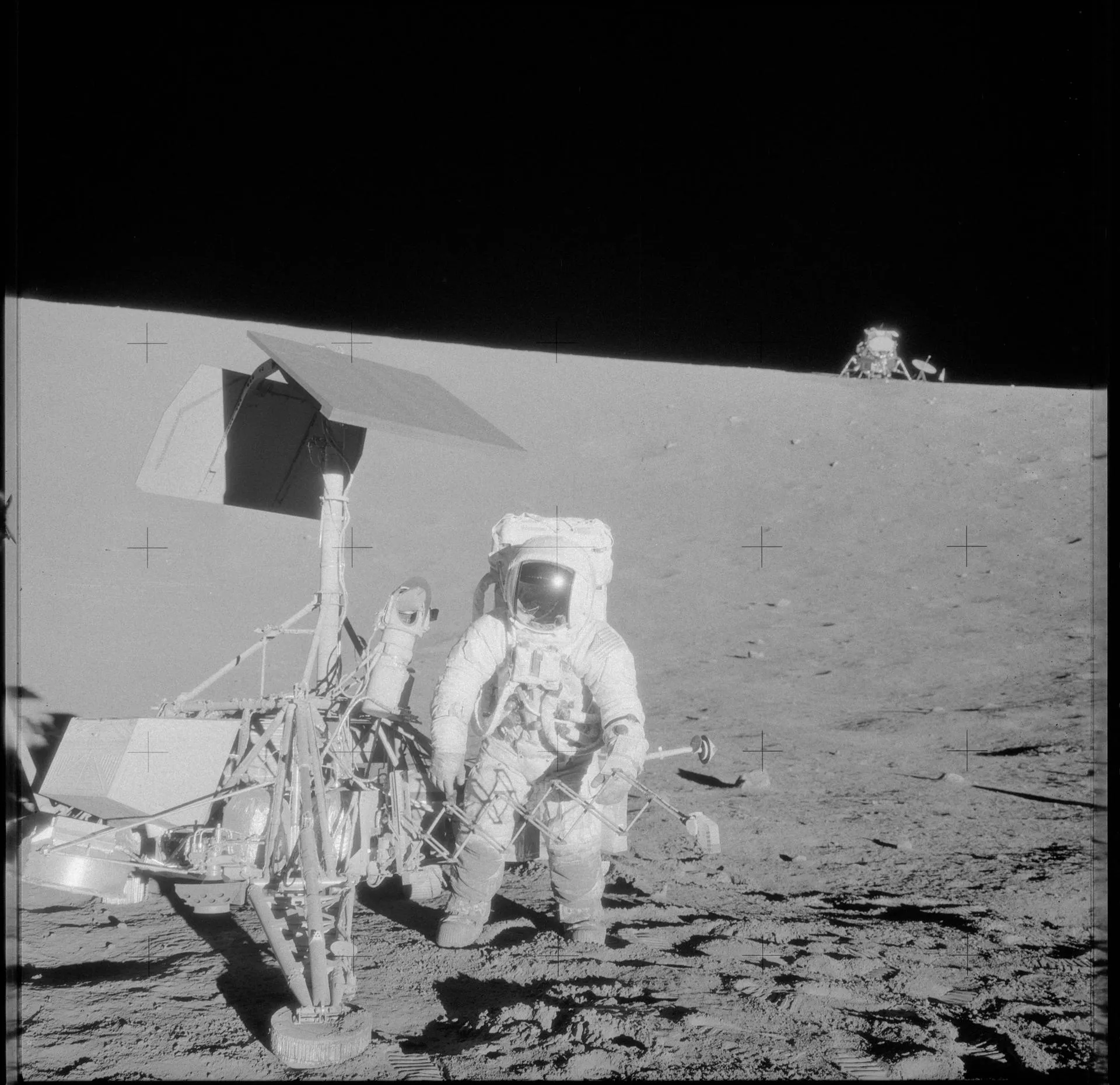
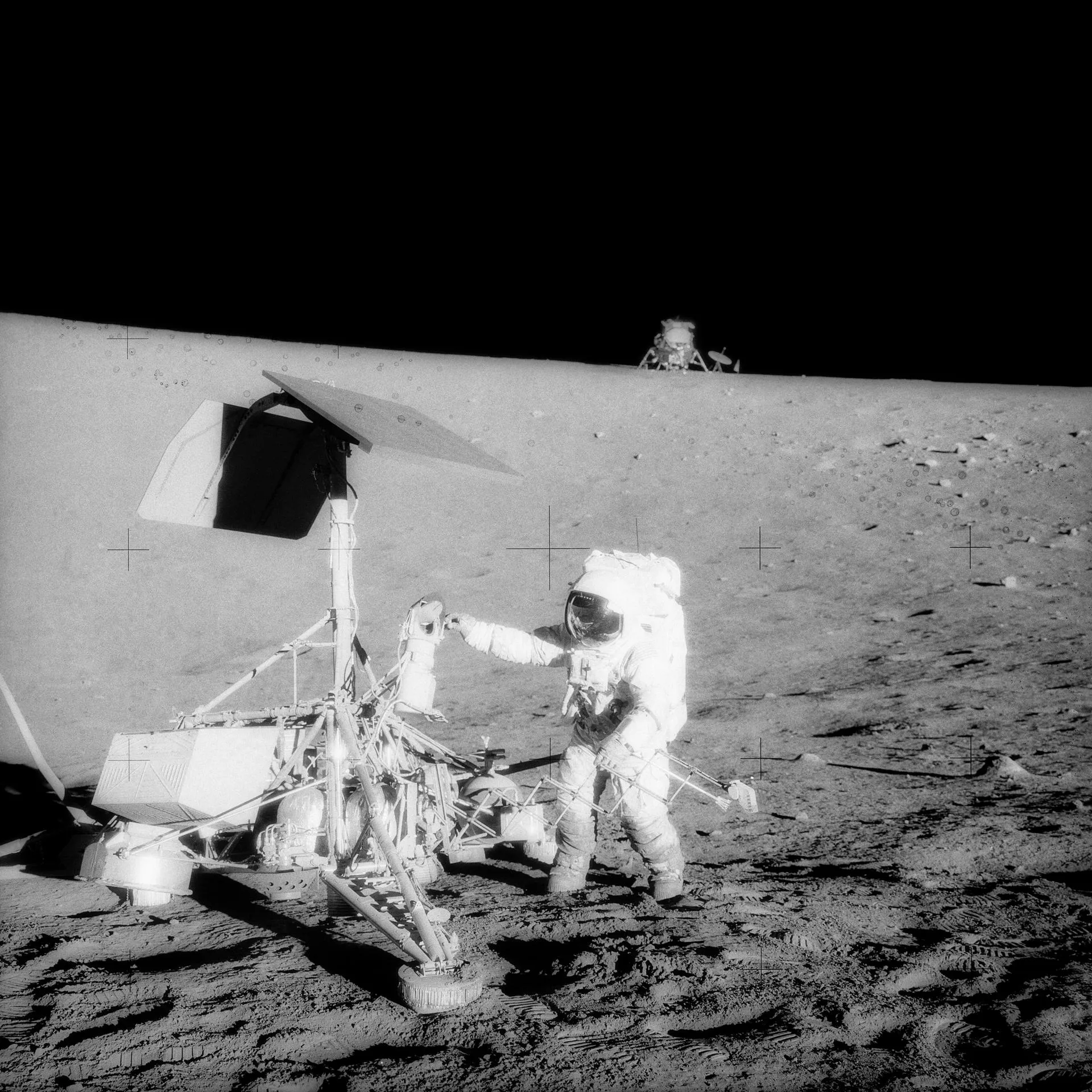
In November 1969, Apollo 12 astronauts Charles "Pete" Conrad Jr. and Alan Bean landed about 180 metres from Surveyor 3. They walked over to the old robot, photographed it and removed several parts, including its television camera and soil scoop.
Those pieces travelled all the way back to Earth. There, scientists studied what more than two and a half years on the Moon had done to them.
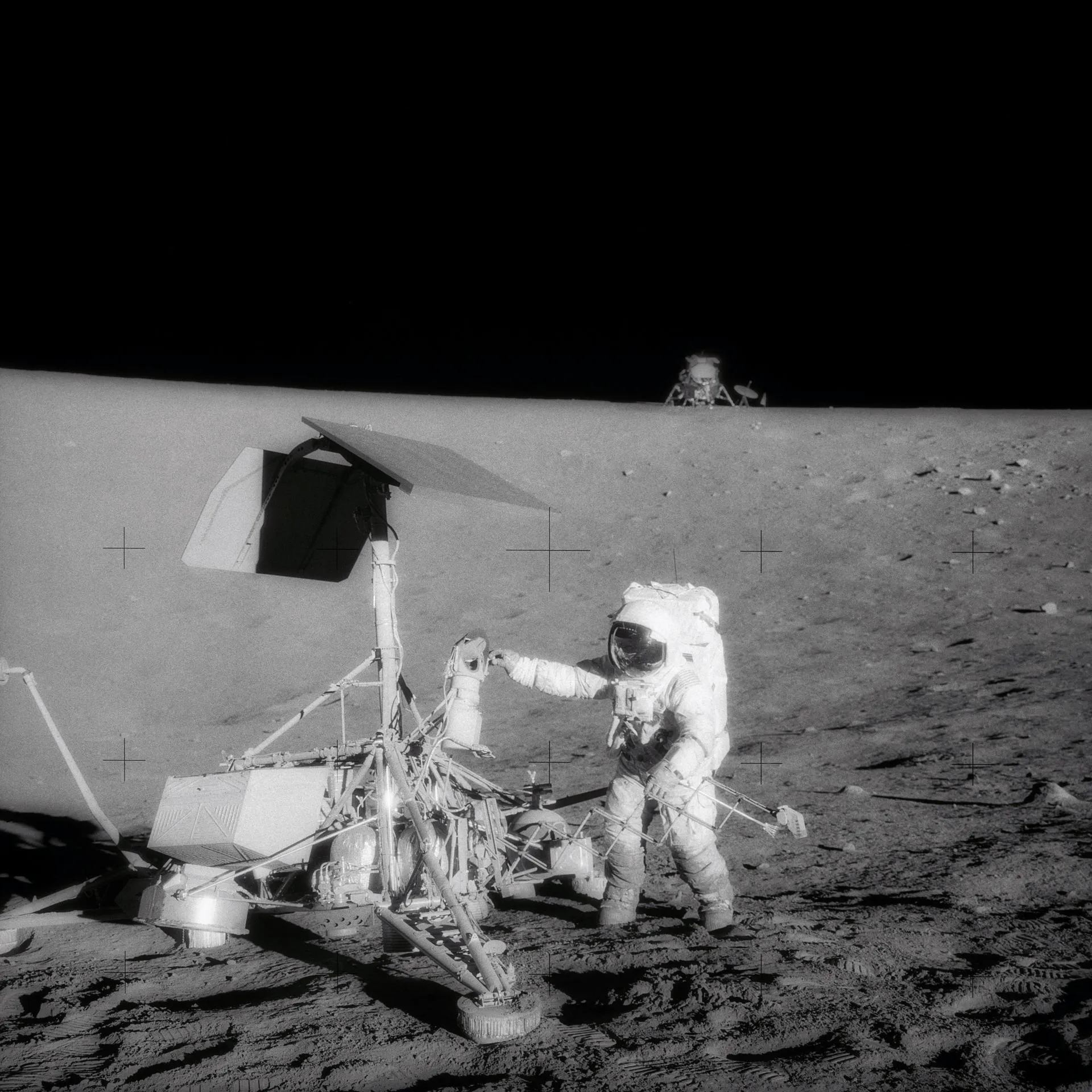 (opens larger view)
Pete Conrad examines Surveyor 3's TV camera, just before removing it to take home.
Image: NASA (JSC)

Echo: Imagine waiting on the Moon for more than two years… and then visitors show up!
In pictures
Surveyor 3 and its visitors
 (opens larger view)
01 / Pete Conrad examines Surveyor 3. His crewmate Alan Bean took the picture.
Image: JSC
 (opens larger view)
02 / Surveyor 3 in front, the Apollo 12 lander Intrepid behind.
Image: NASA (JSC)
 (opens larger view)
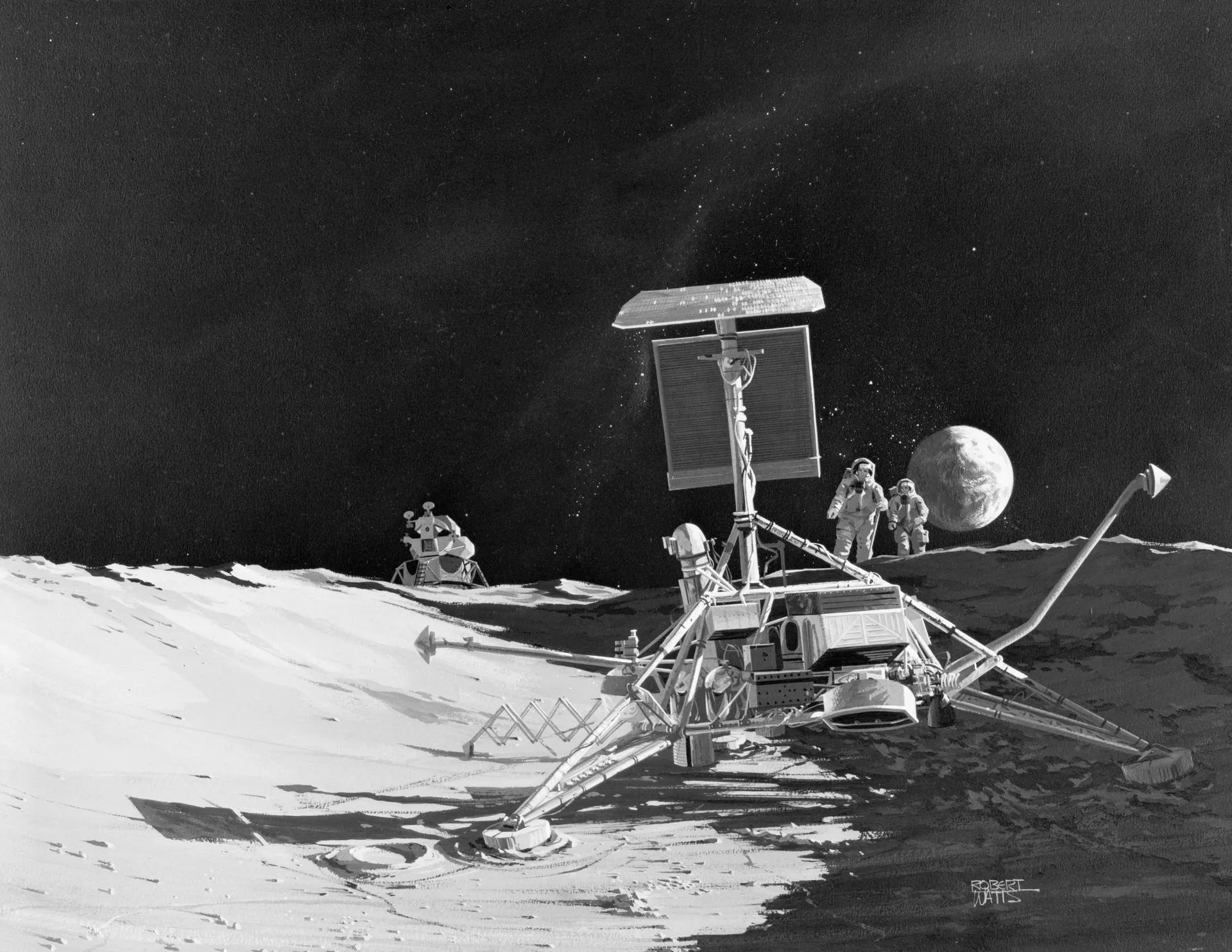
03 / Illustration: an artist's idea of the Apollo 12 astronauts approaching Surveyor 3.
Image: NASA (JSC), artist's concept by Ryan Aeronautical Company
Timeline
From the first landing to the first visitors
2 June 1966
Surveyor 1 lands
The first American soft landing on the Moon.
20 April 1967
Surveyor 3 lands
It bounces twice, then settles in the Ocean of Storms (Oceanus Procellarum).
11 September 1967
Surveyor 5 lands
Its instrument tests what the Moon's soil is made of.
10 November 1967
Surveyor 6 lands
It comes down in Sinus Medii, the "Central Bay", close to the middle of the Moon's face as we see it from Earth.
17 November 1967
Surveyor 6 hops
The first powered takeoff from the Moon.
10 January 1968
Surveyor 7 lands
The only Surveyor to land in the highlands, north of Tycho crater.
21 February 1968
The last Surveyor goes quiet
Surveyor 7's mission ends. All five landers stay on the Moon.
20 November 1969
Visitors from Earth
On their second moonwalk, Apollo 12 astronauts Pete Conrad and Alan Bean visit Surveyor 3 and take some of its parts home.
Still there
They never really left
The rest of Surveyor 3 was left behind. And so were the other Surveyors.
Their cameras stopped sending pictures. One by one, their radios went silent. Their missions ended.
But the machines stayed, quietly sitting on the Moon beside the marks, trenches and disturbed soil they left behind.
The Surveyors may have stopped exploring the Moon, but they never really left it.
 (opens larger view)
A Surveyor 3 footpad and its soil scoop, photographed by the Apollo 12 crew.
Image: NASA (JSC)

Echo: Five robots, still parked right where they finished their work. Gone quiet, but not forgotten!
Still there today
Five Surveyors, five landing sites
- Status: Not working any more
Surveyor 1
The first US soft landing on the Moon, on 2 June 1966.
- Status: Not working any more
Surveyor 3
Bounced twice before settling, after highly reflective rocks confused its landing radar.
- Status: Not working any more
Surveyor 5
Made the first analysis of soil on another world, right where it landed.
- Status: Not working any more
Surveyor 6
Fired its engines and hopped about 2.5 m: the first powered takeoff from the Moon.
- Status: Not working any more
Surveyor 7
The only Surveyor to land in the lunar highlands.
Sources and fact-check
- NASA Science: Surveyor 3
- NASA Science: Surveyor 6
- NASA Science: Surveyor 7
- NSSDCA: Surveyor 1
- NSSDCA: Surveyor 5
- NSSDCA: Surveyor 6
- NSSDCA: Surveyor 7
- NSSDCA: Apollo 12 Lunar Module / ALSEP
- NSSDCA: Surveyor 3 (1967-035A)
- NASA Science: Surveyor 1
- NASA: Apollo 12
- NASA Image: Surveyor 1 seen by the Lunar Reconnaissance Orbiter (PIA12910)
- NASA History: 15 Years Ago: Lunar Reconnaissance Orbiter Begins Moon Mapping Mission
- USGS Volcano Hazards Program Glossary: Basalt
- NBA Official Rules, Rule 1: basket ring 10 ft (3.05 m) above the floor