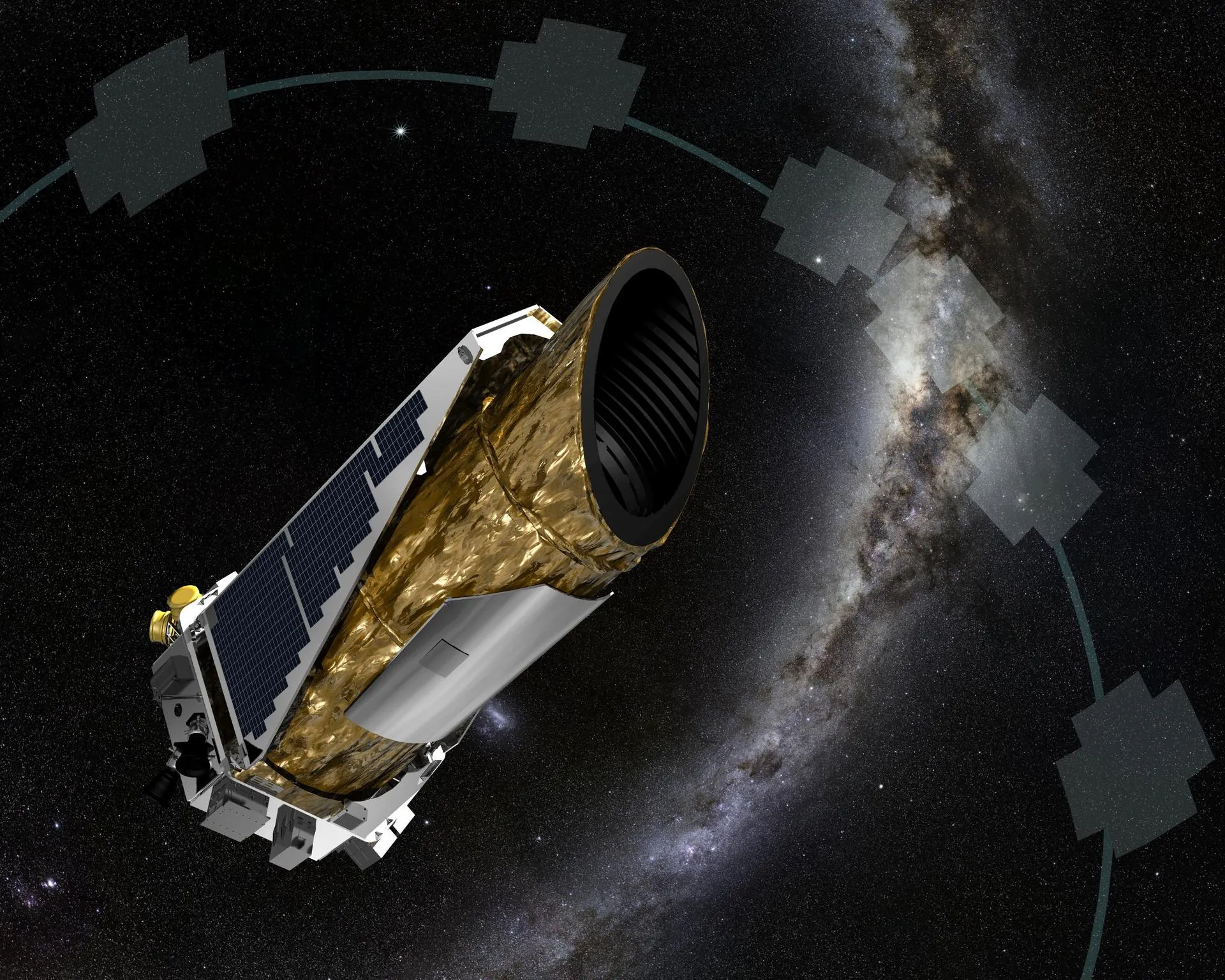
Launched: 7 March 2009Status: Not working any more
Kepler Space Telescope
Image: NASA/Ames/JPL-Caltech
In orbit around the Sun, trailing behind Earth
Kepler was NASA's first planet-hunting mission. When a second of its pointing wheels failed in May 2013, the team used the pressure of sunlight to keep it steady and gave it a new mission, K2, which surveyed more than 500,000 stars.
Where is it now?
In orbit around the Sun, trailing behind Earth
The story
Why did it go?
To find out how common planets like Earth are. Kepler stared at about 100,000 stars, watching for tiny dips in brightness when a planet passes in front of its star.
Kepler was NASA's first planet-hunting mission. When a second of its pointing wheels failed in May 2013, the team used the pressure of sunlight to keep it steady and gave it a new mission, K2, which surveyed more than 500,000 stars.
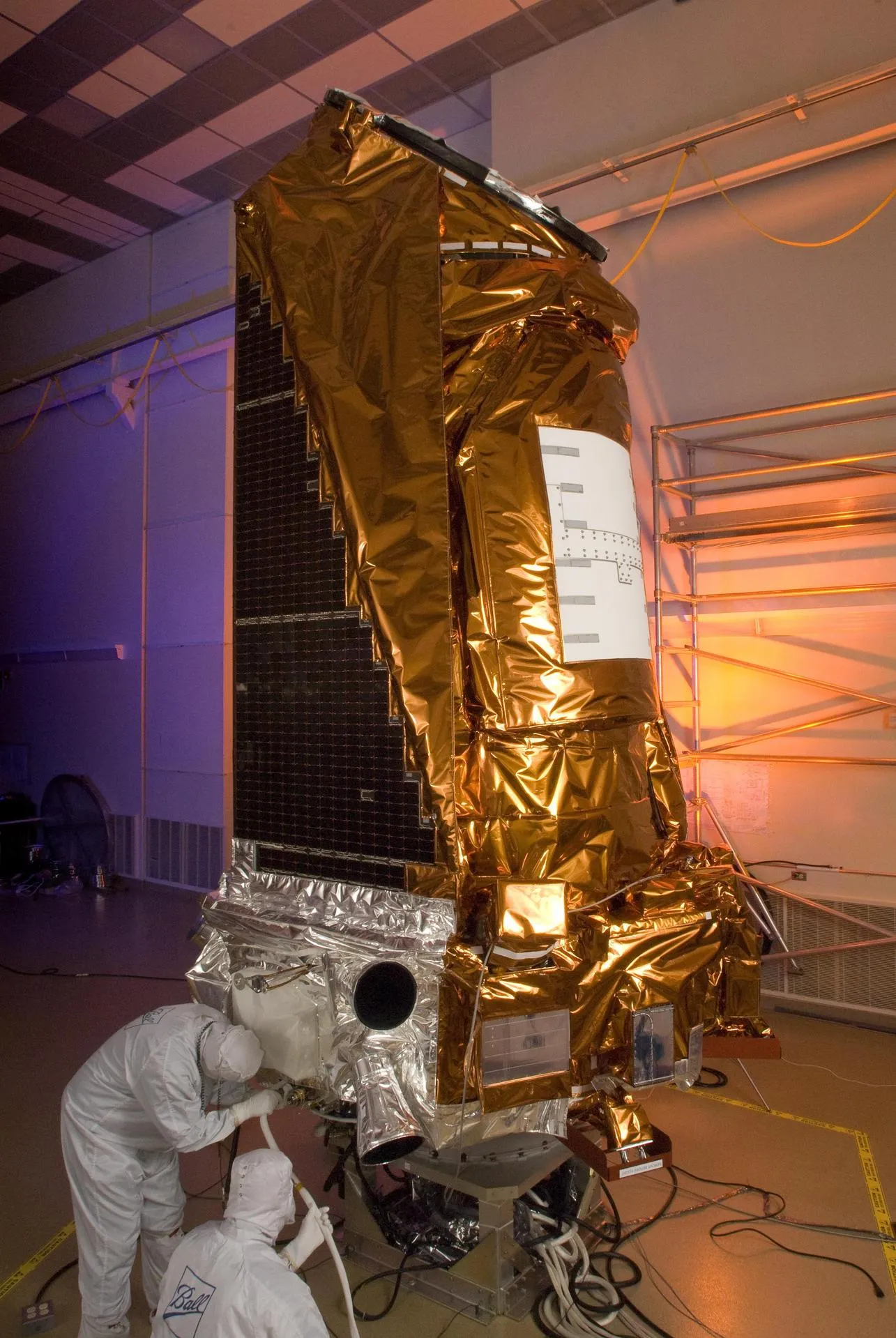 (opens larger view)
The real Kepler spacecraft at Ball Aerospace in Colorado.
Image: NASA/JPL-Caltech/Ball
By the numbers
The mission in numbers
- launch year
- 2009
- mass
- 1,039 kg
- type of mission
- Robotic
- objects listed as left behind
- 1
Timeline
The journey, step by step
7 March 2009
Launch
30 October 2018
Mission ends
Still there today
What did it leave behind?
- Status: Not working any more
Kepler space telescope
Retired on 30 October 2018 after running out of fuel, in a safe orbit away from Earth.
In pictures
Take a closer look
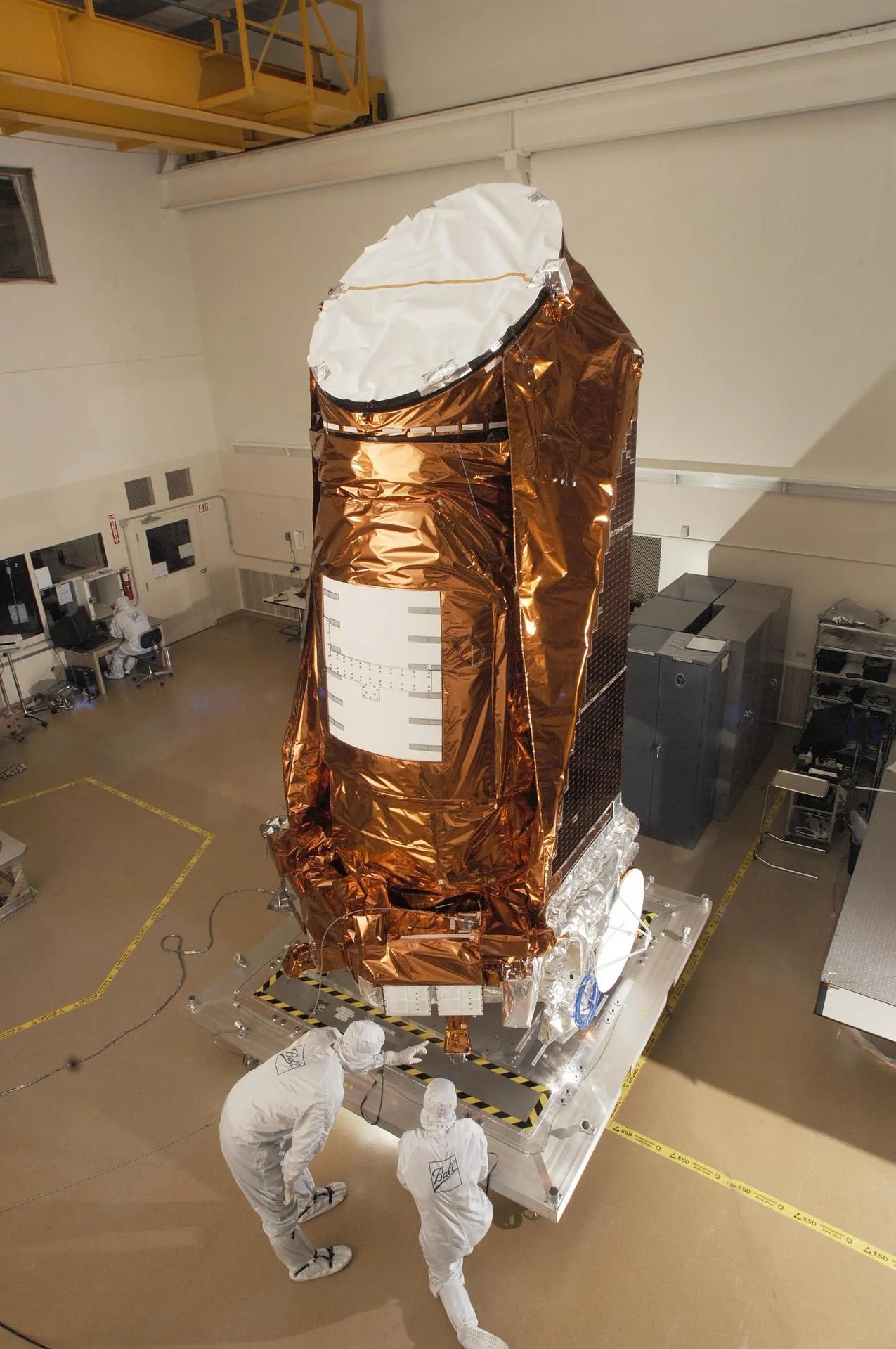 (opens larger view)
01 / Kepler in a clean room before launch.
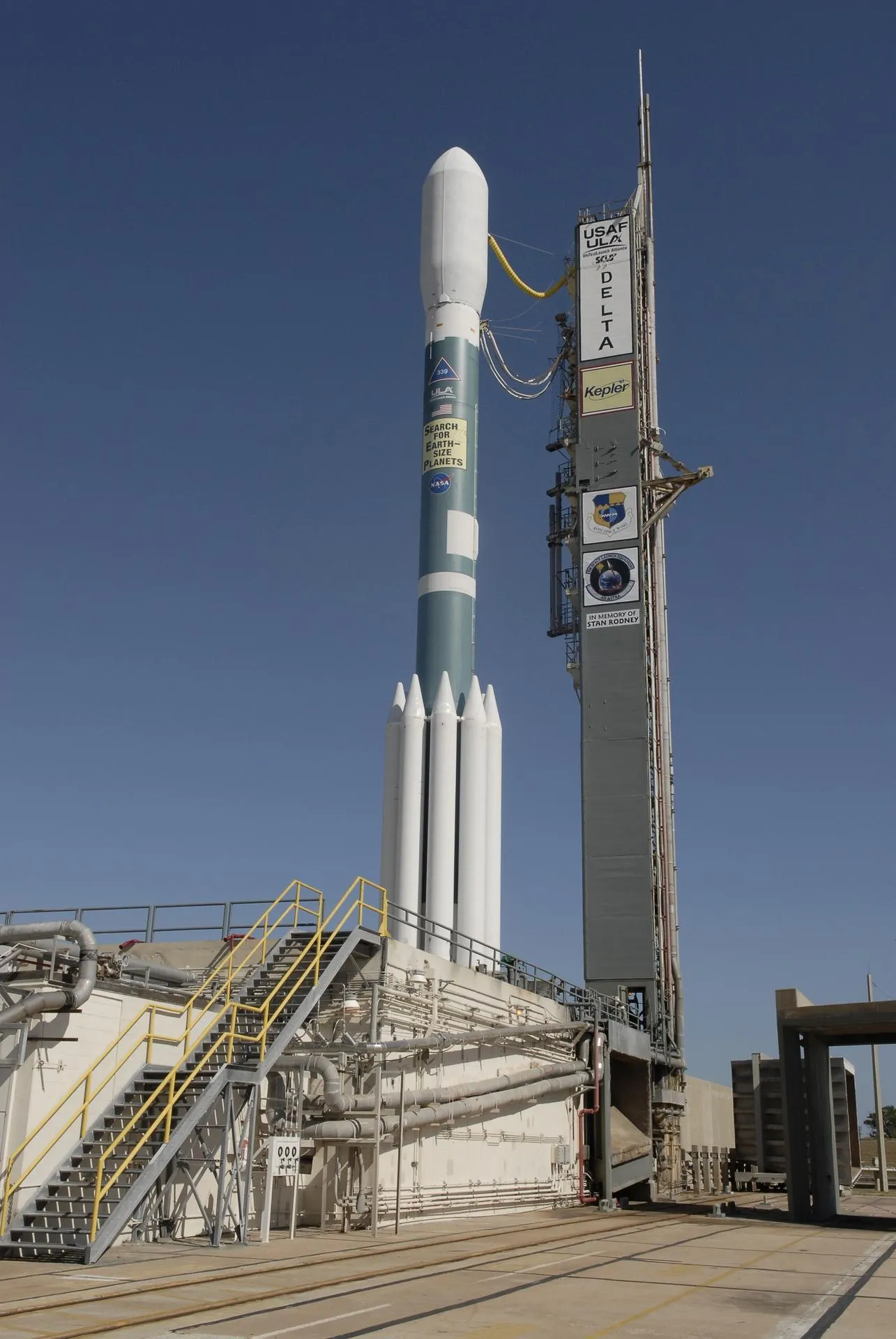 (opens larger view)
02 / Kepler on top of its Delta II rocket, ready for launch.
Image: KSC
 (opens larger view)
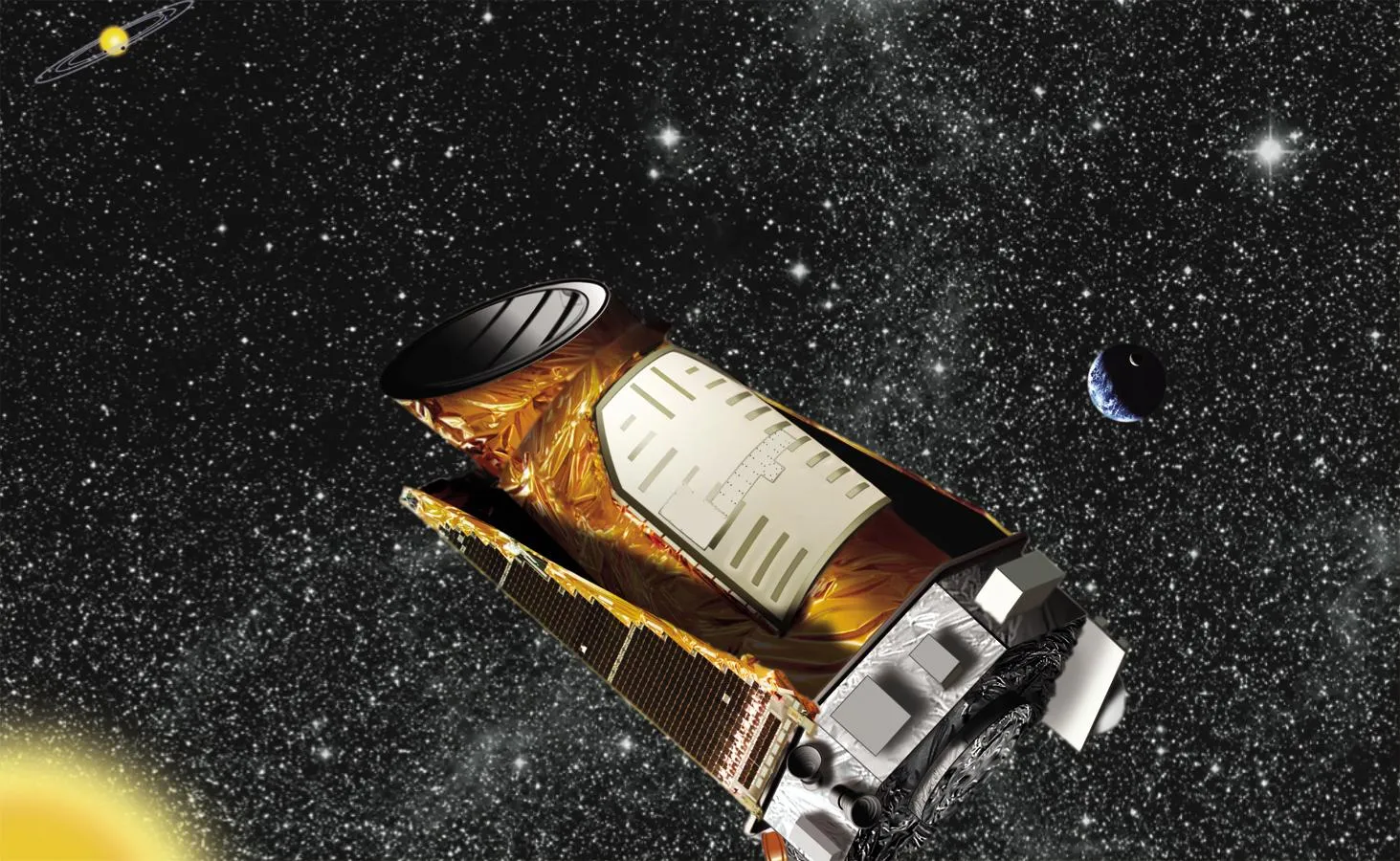
03 / Illustration: Kepler at work in space.
Image: NASA/Ames/JPL-Caltech
Science legacy
What did we learn?
Kepler discovered more than 2,600 planets outside our solar system. Its results suggest that 20 to 50 percent of the stars in the night sky may have small, possibly rocky planets where liquid water could exist.
Did you know?
The team said the K2 fix worked "like a kayak steering into the current". They expected 10 more observing campaigns and managed 19.