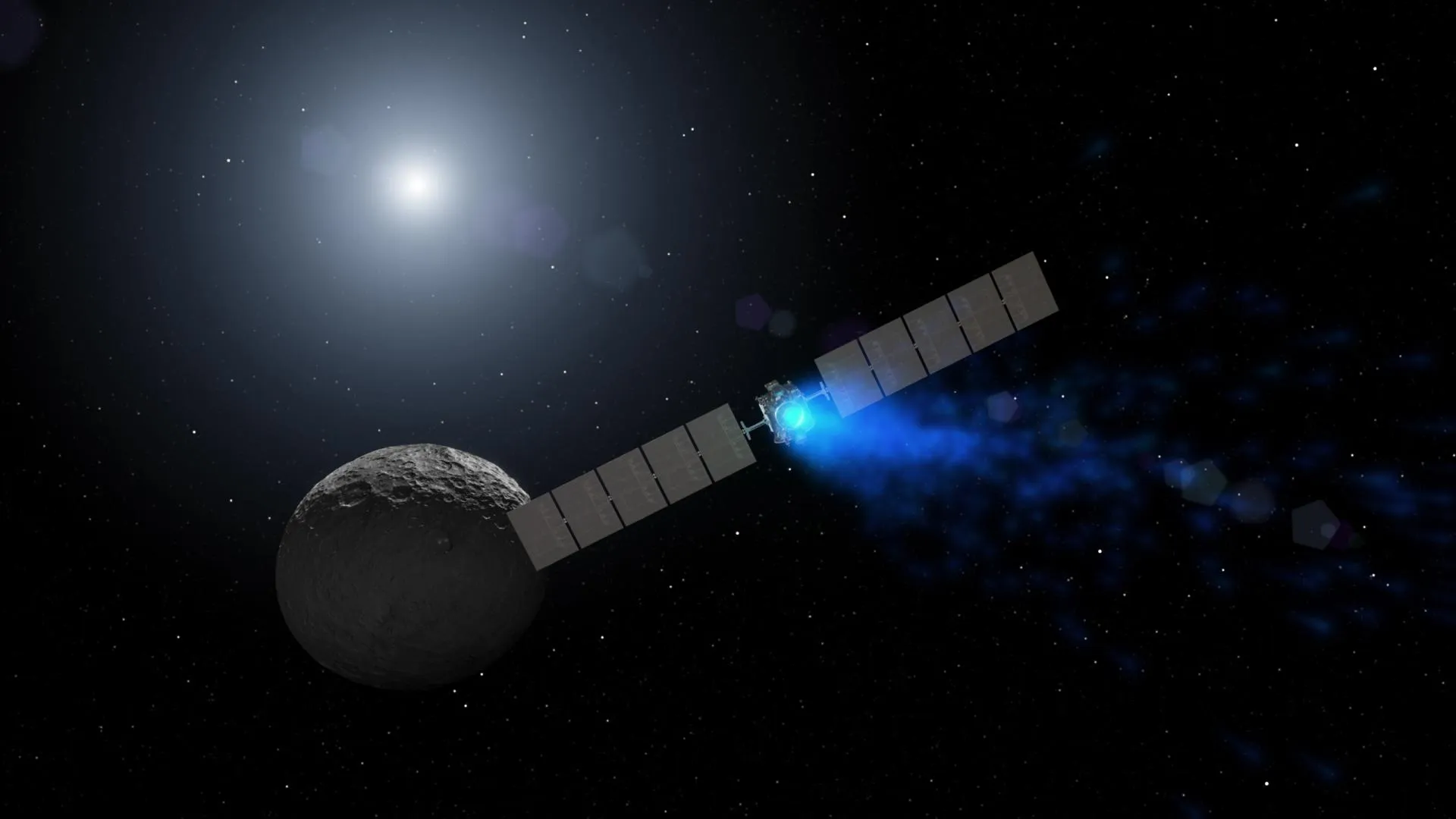
Launched: 27 September 2007Status: Not working any more
Dawn
In orbit around the dwarf planet Ceres
Dawn used ion engines to fly to Vesta, where it went into orbit in July 2011. Later it flew on to Ceres and went into orbit there on 6 March 2015, becoming the first spacecraft to orbit two worlds beyond Earth.
Where is it now?
In orbit around the dwarf planet Ceres
The story
Why did it go?
To visit two very different worlds in the asteroid belt between Mars and Jupiter: the giant asteroid Vesta and the dwarf planet Ceres.
Dawn used ion engines to fly to Vesta, where it went into orbit in July 2011. Later it flew on to Ceres and went into orbit there on 6 March 2015, becoming the first spacecraft to orbit two worlds beyond Earth.
 (opens larger view)
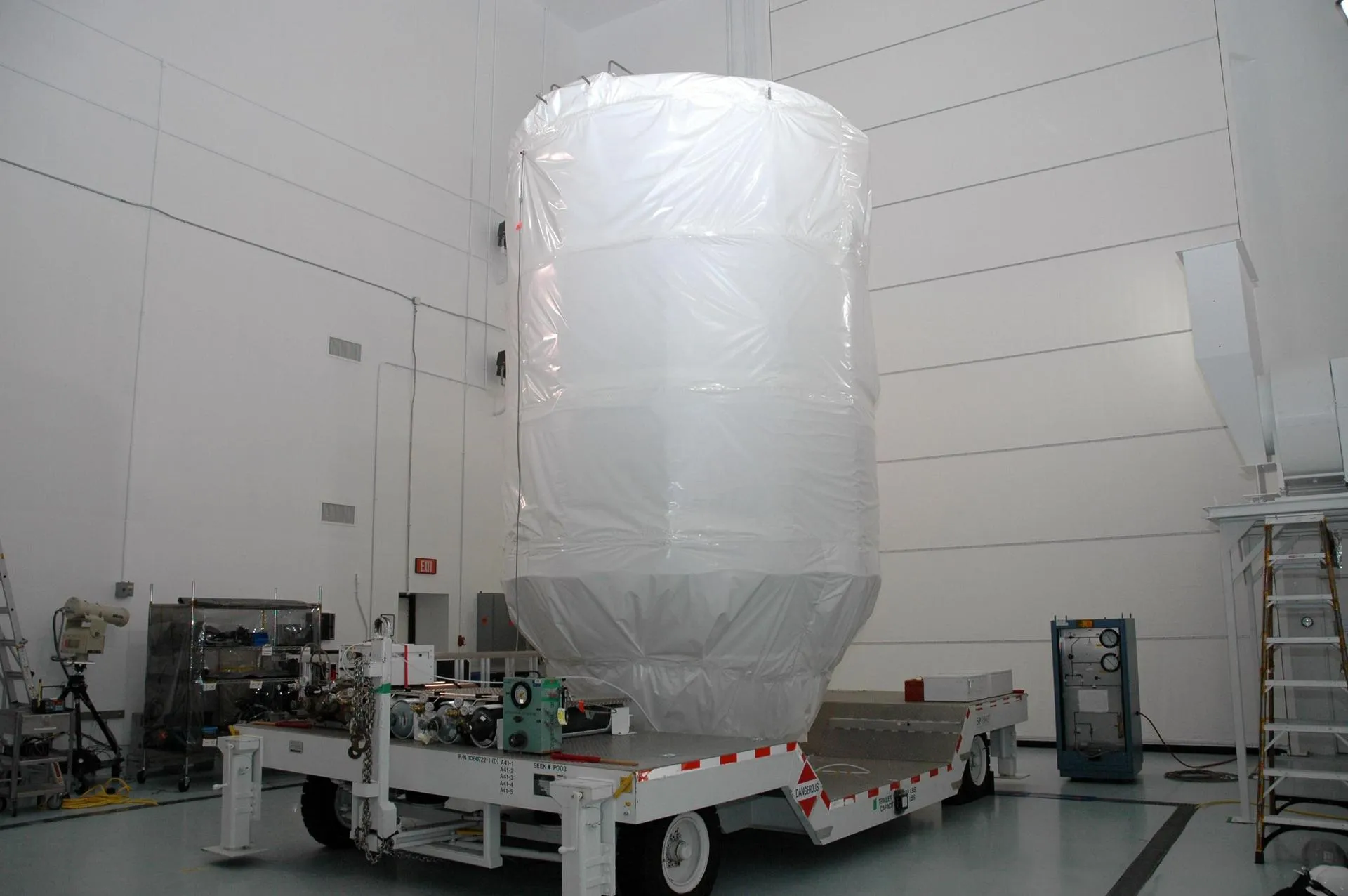
The real Dawn spacecraft before launch.
Image: KSC
By the numbers
The mission in numbers
- launch year
- 2007
- from arrival to the end of the mission
- 2,665 days
- mass
- 747.1 kg
- type of mission
- Robotic
- objects listed as left behind
- 1
Timeline
The journey, step by step
27 September 2007
Launch
16 July 2011
Arrival in orbit
1 November 2018
Mission ends
Still there today
What did it leave behind?
- Status: Not working any more
Dawn spacecraft
NASA calls it "an inert celestial monument" in orbit around Ceres.
In pictures
Take a closer look
 (opens larger view)
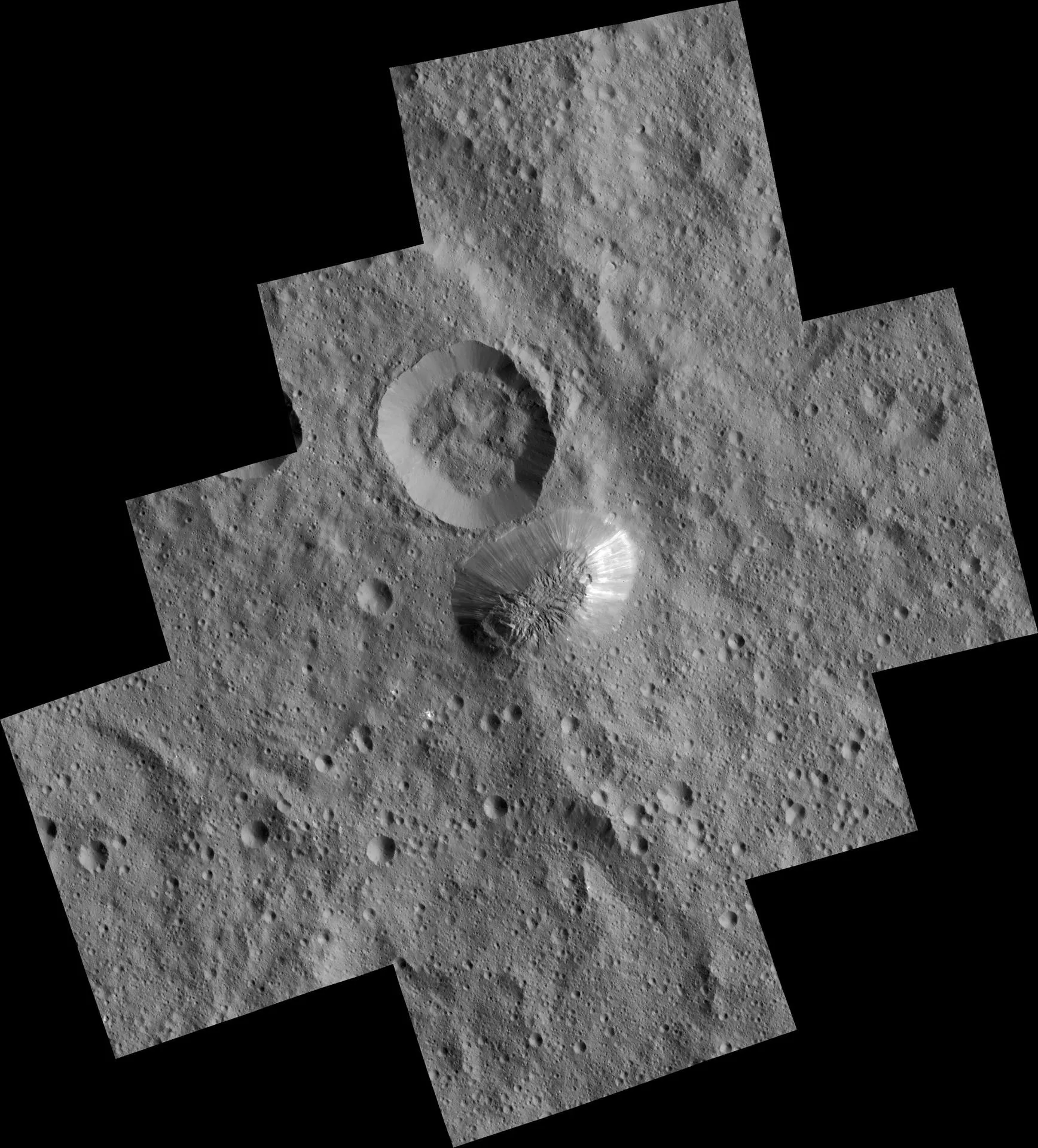
Ahuna Mons, a mountain on Ceres, photographed by Dawn.
 (opens larger view)
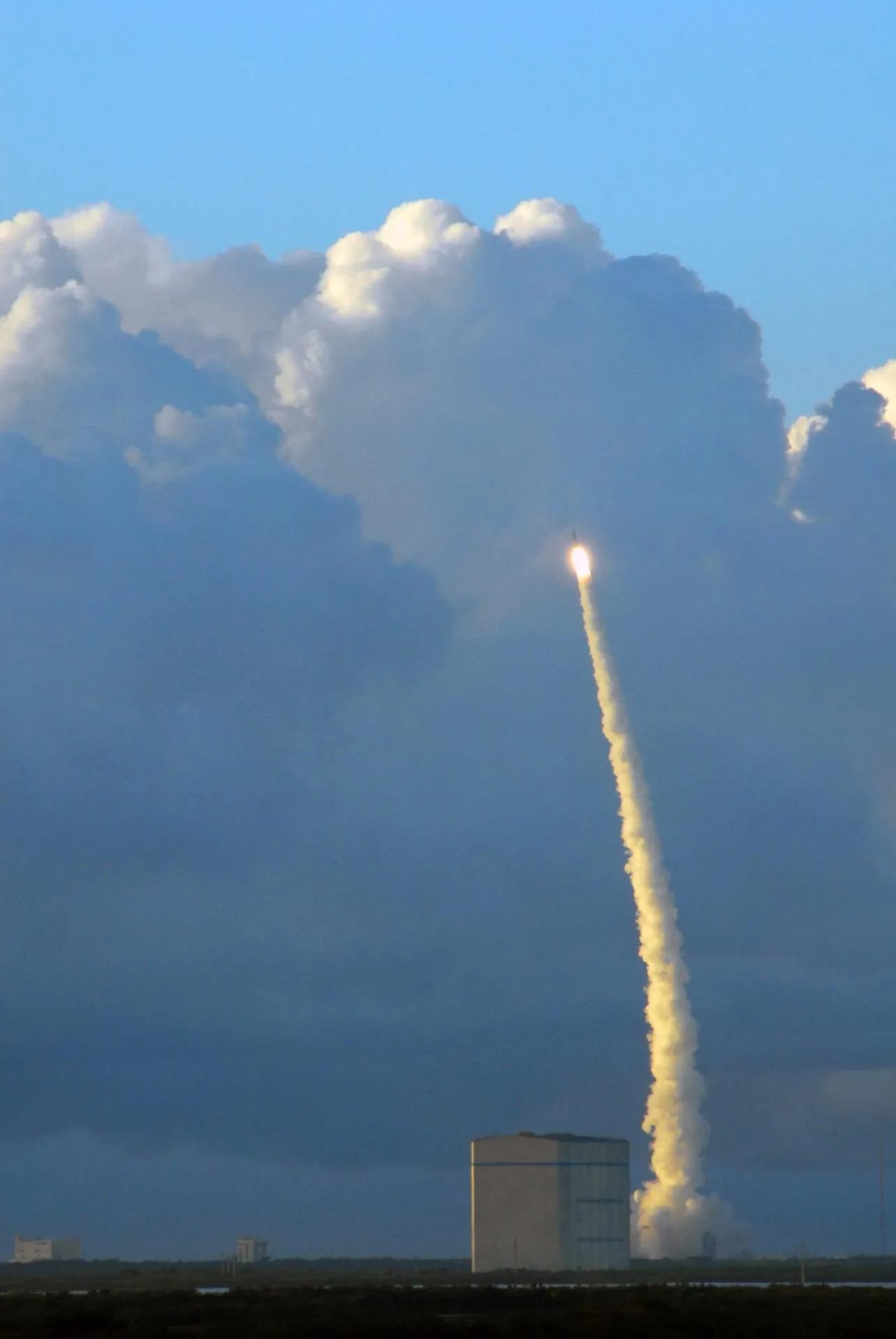
Dawn's launch from Cape Canaveral in 2007.
Image: KSC
Science legacy
What did we learn?
At Ceres, Dawn found that the bright spots in Occator crater are salt left behind by salty water from deep below, and that there is ice just below the surface across much of the dwarf planet.
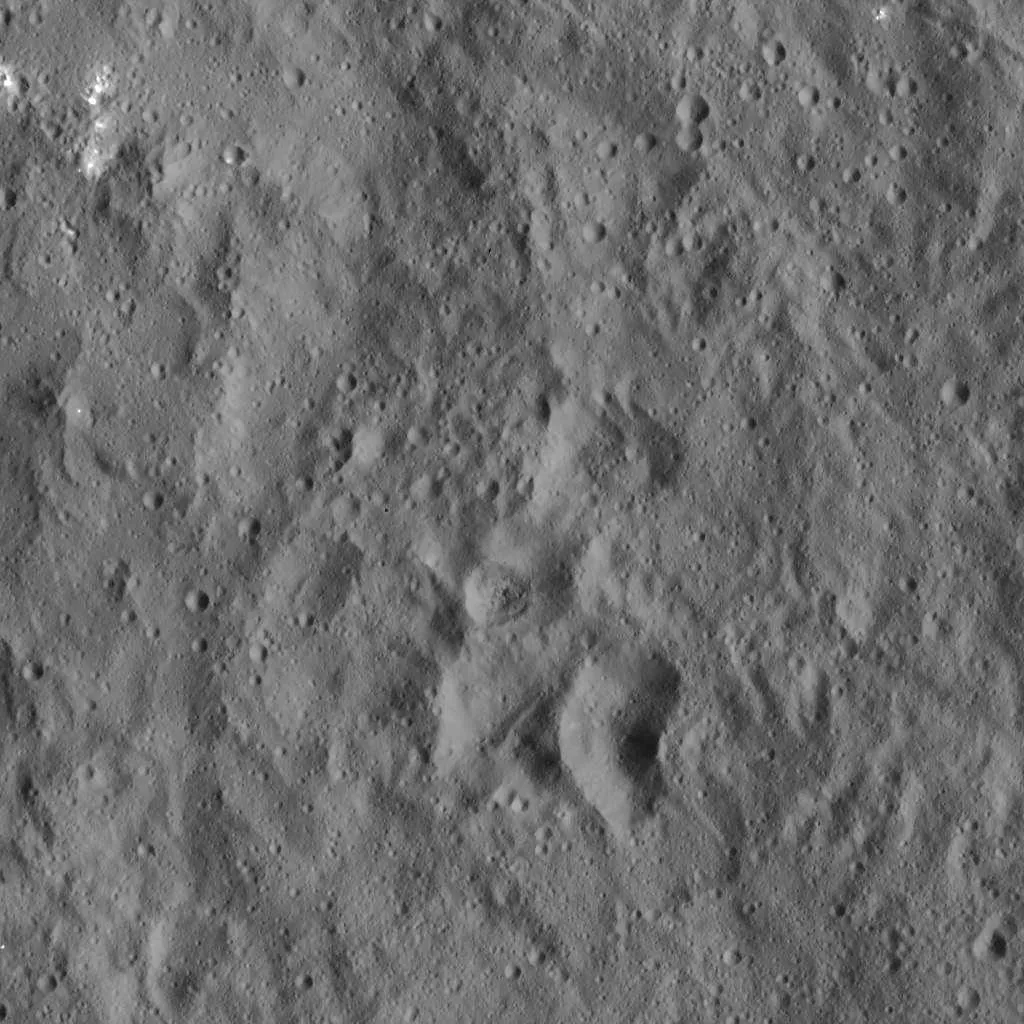 (opens larger view)
Flecks of bright material on Ceres, photographed by Dawn from its lowest orbit in 2015.
Did you know?
Dawn ran out of hydrazine fuel on 31 October 2018, so it can no longer point itself. It will stay in orbit around Ceres for at least a couple of decades, and probably much longer.
Sources and fact-check
- NASA Science: Dawn
- NASA Science: Dawn mission status
- NASA Science: Dawn spacecraft
- JPL: NASA Spacecraft Becomes First to Orbit a Dwarf Planet (6 March 2015)
- JPL: Where is the Ice on Ceres? New NASA Dawn Findings (15 December 2016)
- NASA: Mystery Solved: Bright Areas on Ceres Come From Salty Water Below (10 August 2020)