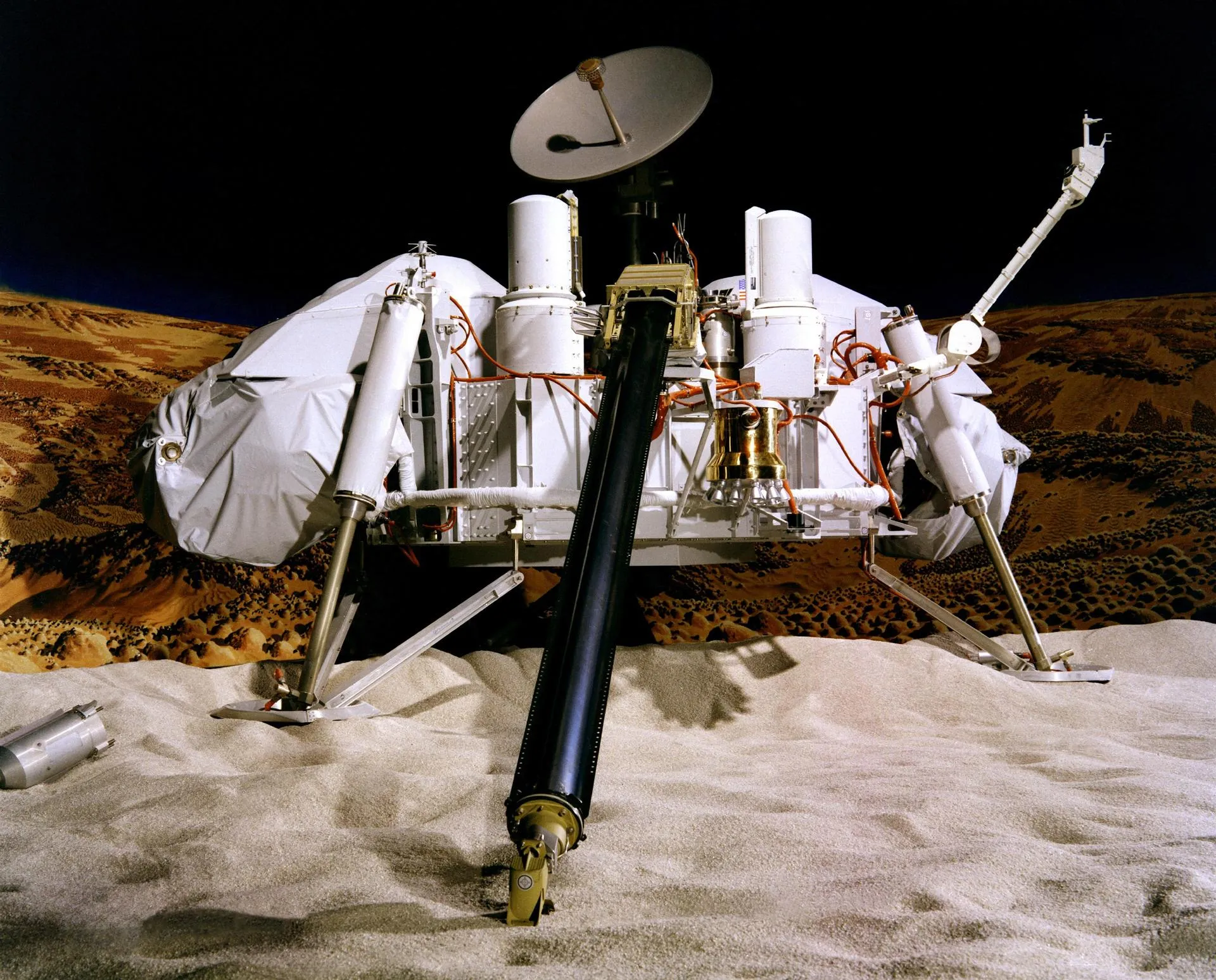
First landing: 20 July 1976Status: Not working any more
Viking 1 and 2 landers
Main spot on Mars:Chryse Planitia
Viking 1 landed on 20 July 1976, the first truly successful landing on Mars. Viking 2 followed on 3 September 1976, much farther north. Together the landers sent back 4,500 photos of their landing sites.
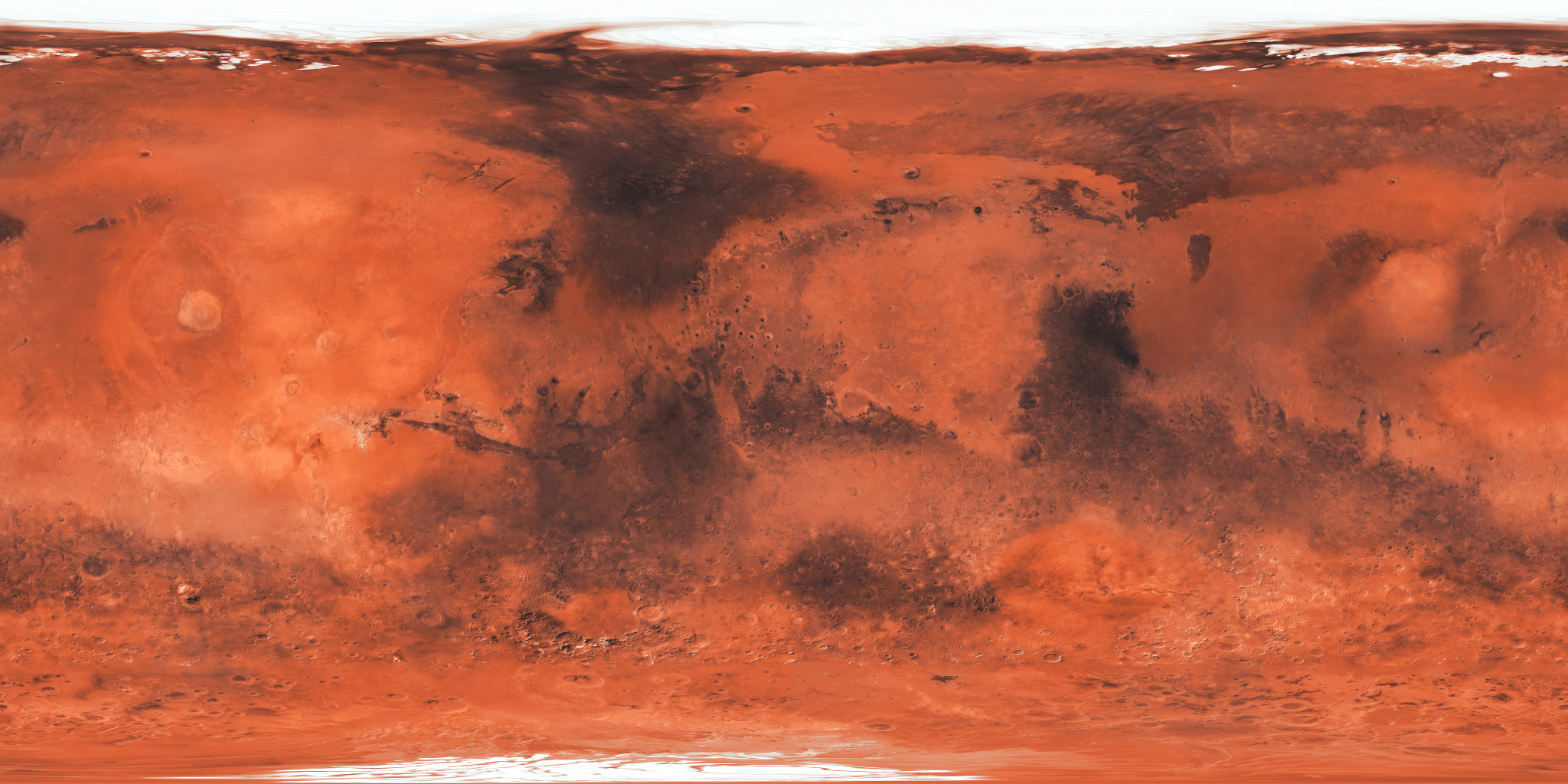
The twin explorers of Mars
For centuries, people looked at Mars and wondered what might be hiding on its surface. Was Mars once warmer? Could there have been water there? And perhaps the biggest question of all… could there have ever been life on Mars?

Echo: Hi! Let's travel to Mars with two robot twins.
The plan
Two missions, four spacecraft
In the 1970s, NASA decided to get much closer to the answer. Its plan involved not one spacecraft, but two. They were called Viking 1 and Viking 2.
Each Viking mission actually had two spacecraft working together: an orbiter that stayed above Mars and a lander that went down to the surface.
The orbiters could photograph Mars from above, help choose safe landing sites and communicate with the landers.
The landers had a different job. They were going to actually touch Mars.
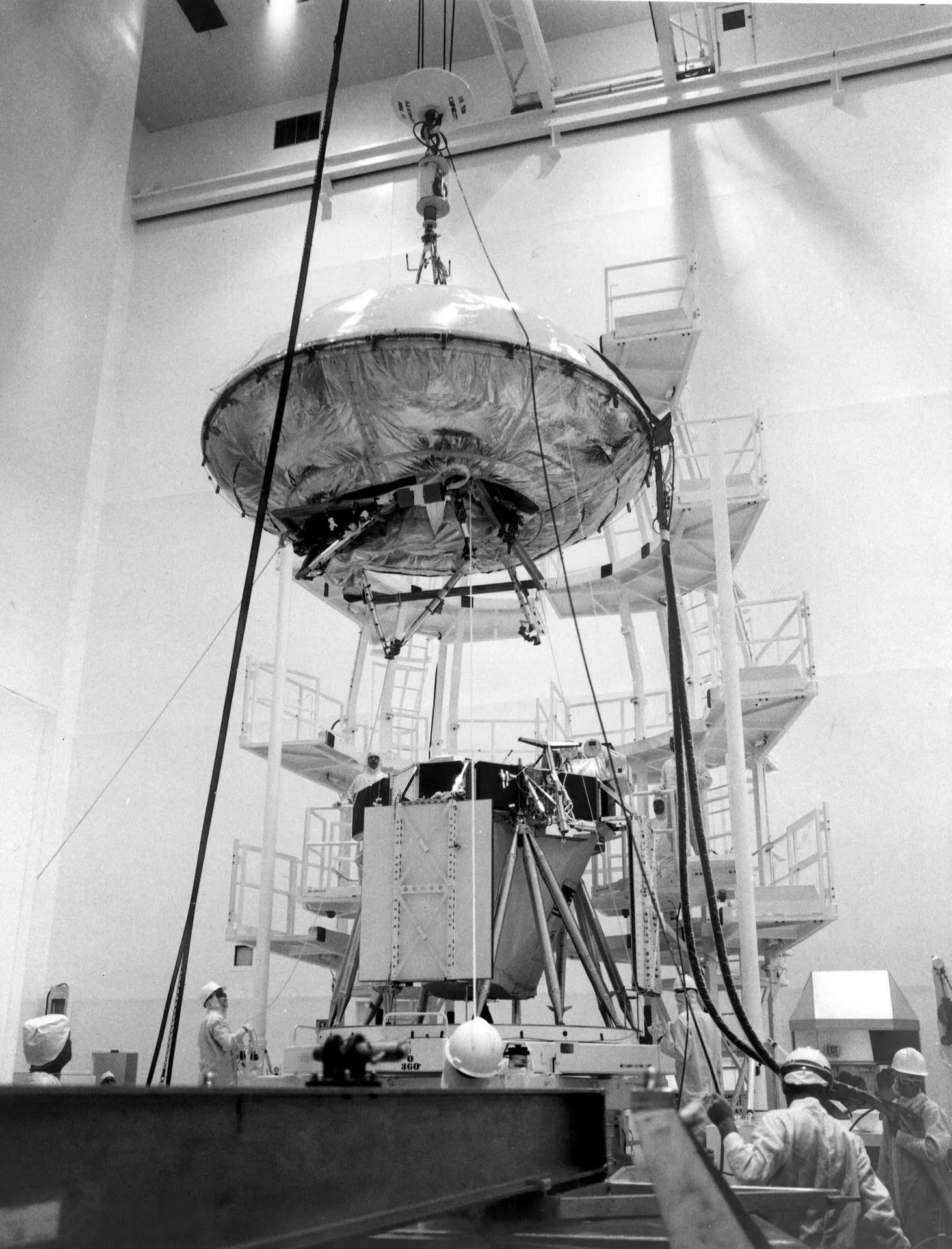 (opens larger view)
Before launch A Viking lander (top, inside its protective shell) joined to its orbiter at the Kennedy Space Center.
Image: NASA
Germ-free for Mars
The landers were going to look for life, so they must not bring any from Earth. Each lander was heat-sterilized and sealed inside a bioshield for launch, so no Earth germs could hitch a ride.

Echo: An orbiter up high and a lander down low. Teamwork!
By the numbers
Two missions, a mountain of pictures
- landers that worked on the surface of Mars
- 2
- photos the landers took of their two landing sites
- 4,500
- pictures of Mars taken by the two orbiters
- 52,663
- how long Viking 1 kept working on Mars
- 6+ years
August and September 1975
Off to Mars
Viking 1 launched on 20 August 1975. Viking 2 followed a few weeks later, on 9 September.
After their long journeys through space, about ten months for Viking 1 and eleven for Viking 2, both spacecraft reached Mars and went into orbit around it.
And then came the dangerous part.
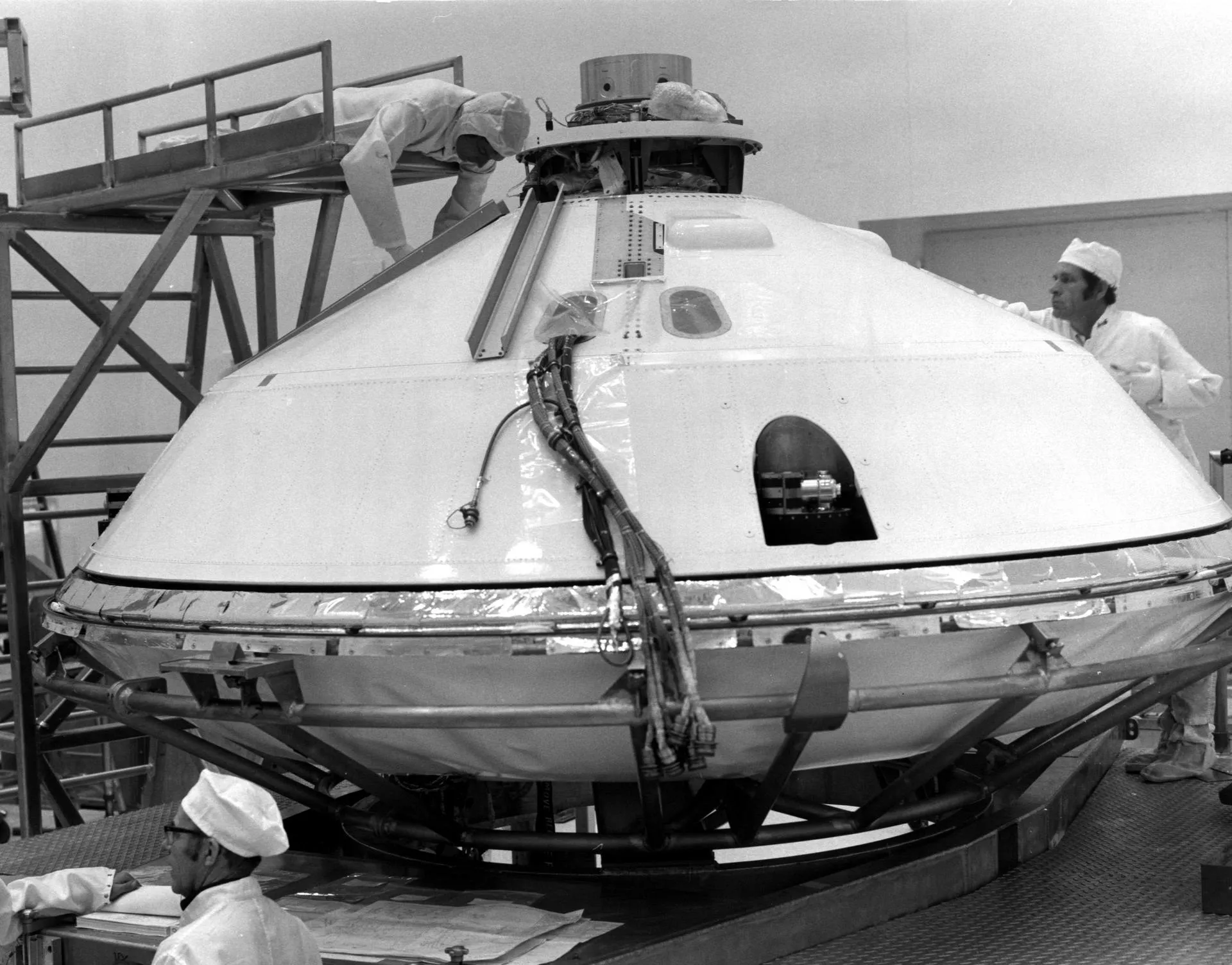 (opens larger view)
Viking Lander 1 being prepared at the Kennedy Space Center. Its rounded cover stayed on all the way to Mars.
Image: NASA

Echo: Fun fact: the twins swapped places! The spacecraft meant to go first had a battery problem, so the other one launched first as Viking 1.
Entry, descent and landing
The dangerous part
The landers had to separate from their orbiters and descend through the thin Martian atmosphere.
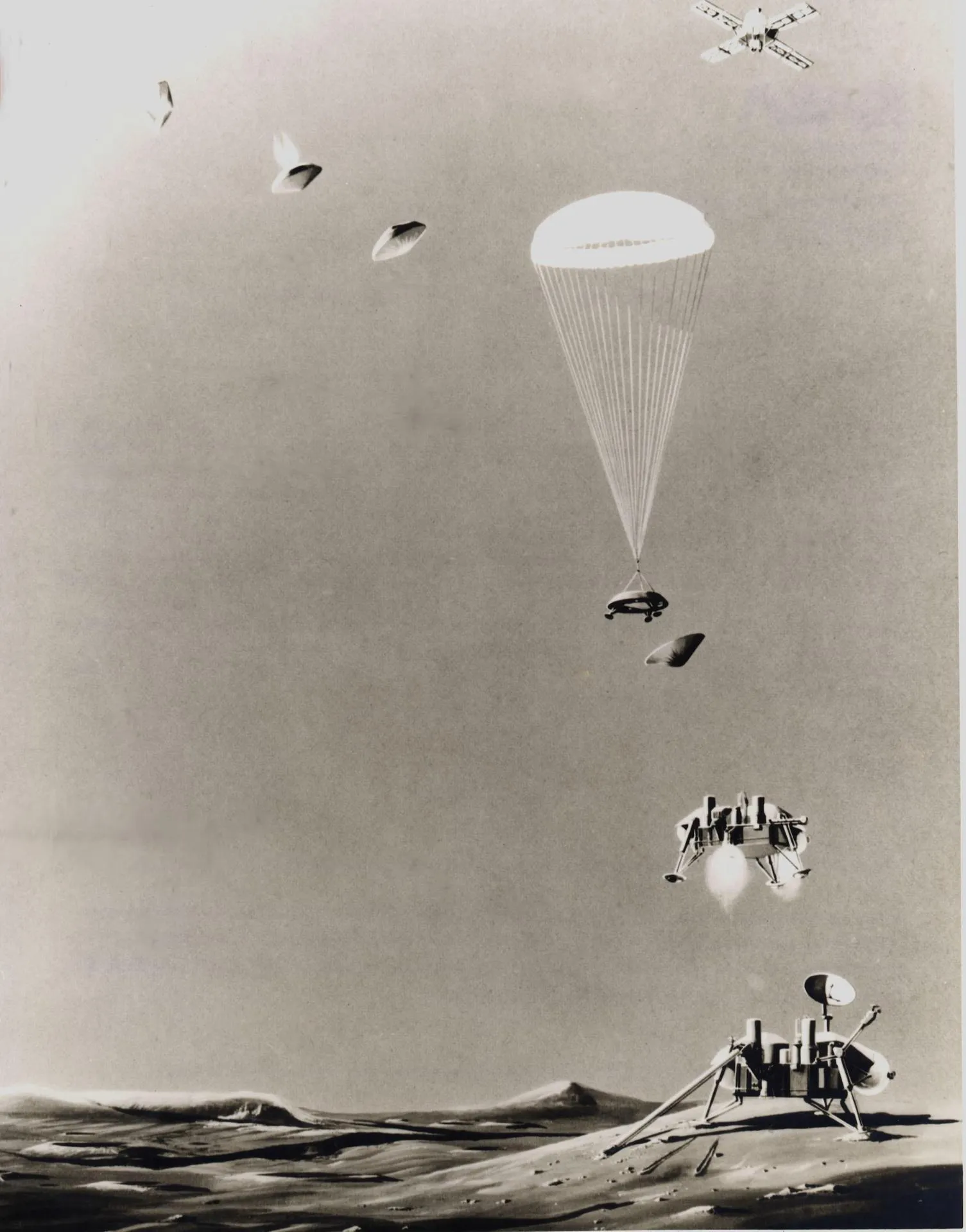
First a heat shield slowed each lander as it plunged into the air. About 6 km above the ground, a parachute 16 metres wide opened. Then, at 1.5 km, three rocket engines fired and set the lander down at a gentle 2.4 metres per second.
Viking 1 was supposed to land on 4 July 1976. But when its orbiter photographed the planned landing site, scientists saw that it was rougher than expected. So they waited, and picked a safer spot.
 (opens larger view)
Illustration: how a Viking lander gets down. Shell first, then a parachute, then rockets for a gentle touchdown.
Image: KSC

Echo: Better late than crashed! The orbiter's photos found a safer spot.
Viking 1 · 20 July 1976
Touchdown on the Golden Plain
On 20 July 1976, Viking 1 touched down safely in a region called Chryse Planitia, the Golden Plain.
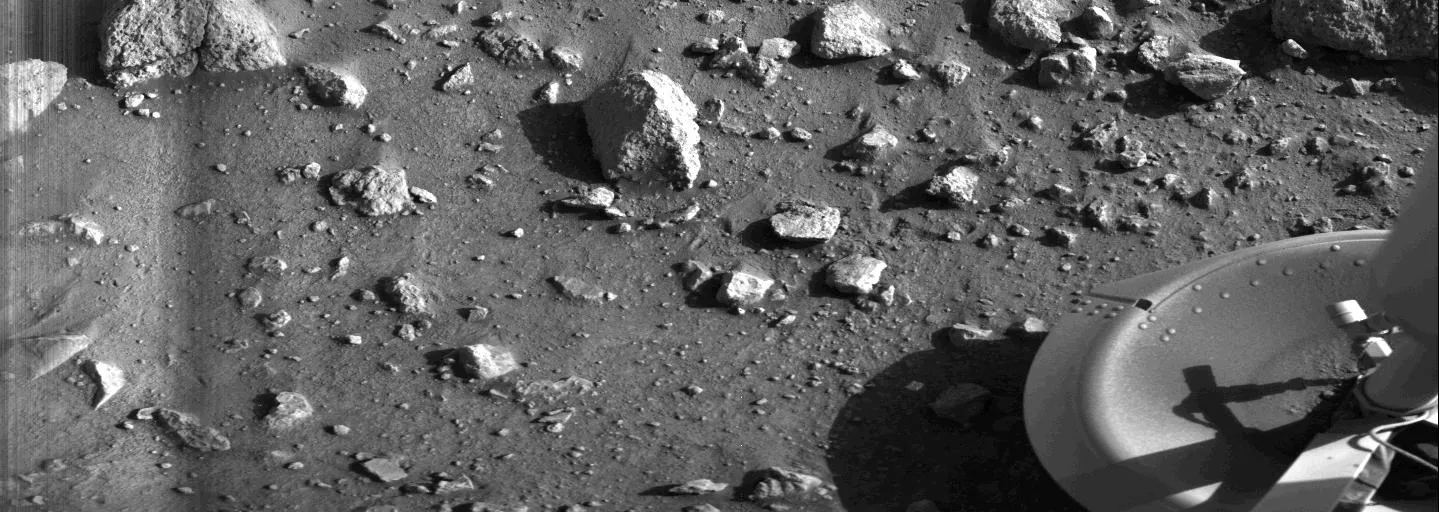
It was a huge moment. Viking 1 had become the first U.S. spacecraft to successfully land on Mars and send pictures back from the surface. Its camera started sending the first picture just 25 seconds after landing.
And those first images changed the way people saw Mars.
Instead of a distant red dot in the night sky, Mars was suddenly a real place.
A rocky landscape stretched out in front of the lander.
 (opens larger view)
The first photo The first photo ever taken on the surface of Mars, minutes after Viking 1 landed. The big rock in the middle is about 10 centimetres across.
Image: NASA/JPL

Echo: Hello, Mars! The very first picture from the ground.

Imagine this…
It's 1976. You're a scientist in mission control, and the very first picture from the surface of Mars is slowly appearing on your screen, line by line. What do you hope to see?
The big question
Digging for signs of life
But Viking 1 wasn't there just to take pictures. It had a robotic arm. The arm could reach down into the Martian soil, scoop up samples and deliver them to instruments inside the lander.
The scientists wanted to know what the soil was made of. And they especially wanted to know whether there were any signs that living organisms might be present.
Viking carried several experiments designed to investigate this question. On 28 July 1976, the arm scooped up its first soil sample.
The results were fascinating, but not simple.
Some of the experiments produced unexpected chemical reactions that could be interpreted in ways that seemed interesting for the search for life. But the missions found no clear evidence of living microorganisms in the soil they tested.
So the mystery remained.
A weak "maybe"
Some results could have been read as a weak positive, a faint hint of life. But the most important test, which looked for organic compounds (the carbon-based building blocks of living things), came back negative. Scientists thought sunlight's ultraviolet rays may have made chemicals in the soil that behave a bit like living things.

Echo: A scoop of Martian soil, and a mystery that's still being studied today.
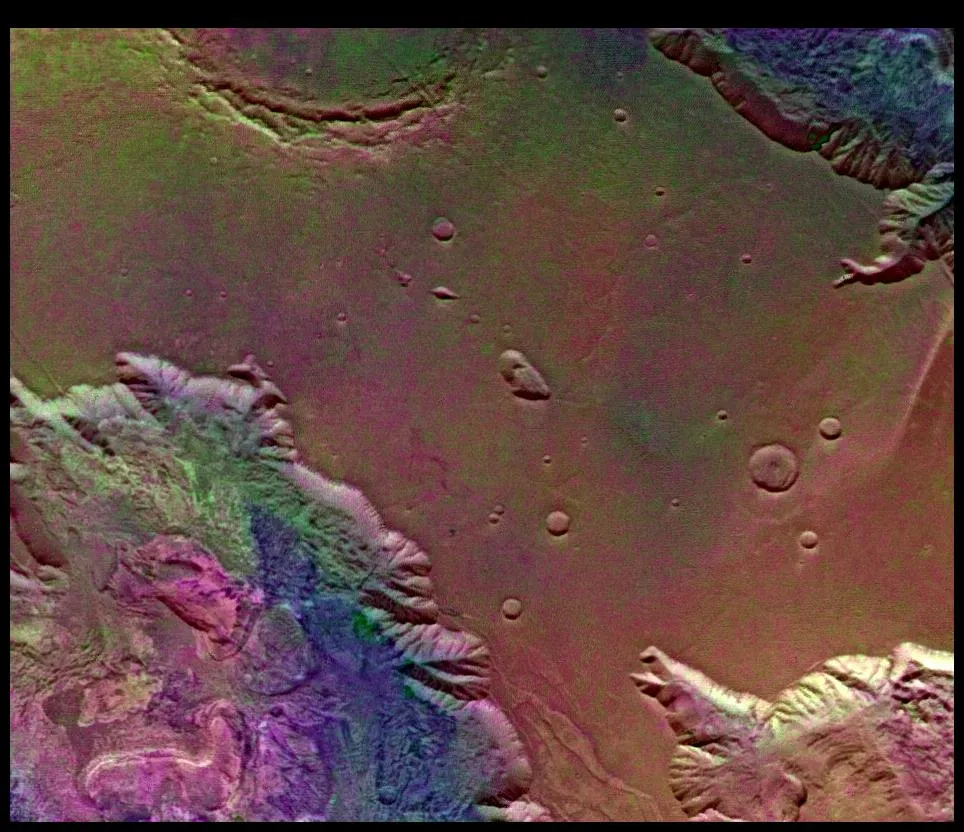
Then, just six weeks after Viking 1 landed…
its twin arrived.
Image: NASA/JPL/USGS
Viking 2 · 3 September 1976
A different corner of Mars
Viking 2 touched down on 3 September 1976. It landed about 6,460 kilometres (4,000 miles) away from Viking 1, in a region called Utopia Planitia, closer to Mars's north polar ice cap.
Now NASA had two landers working on the surface of Mars.
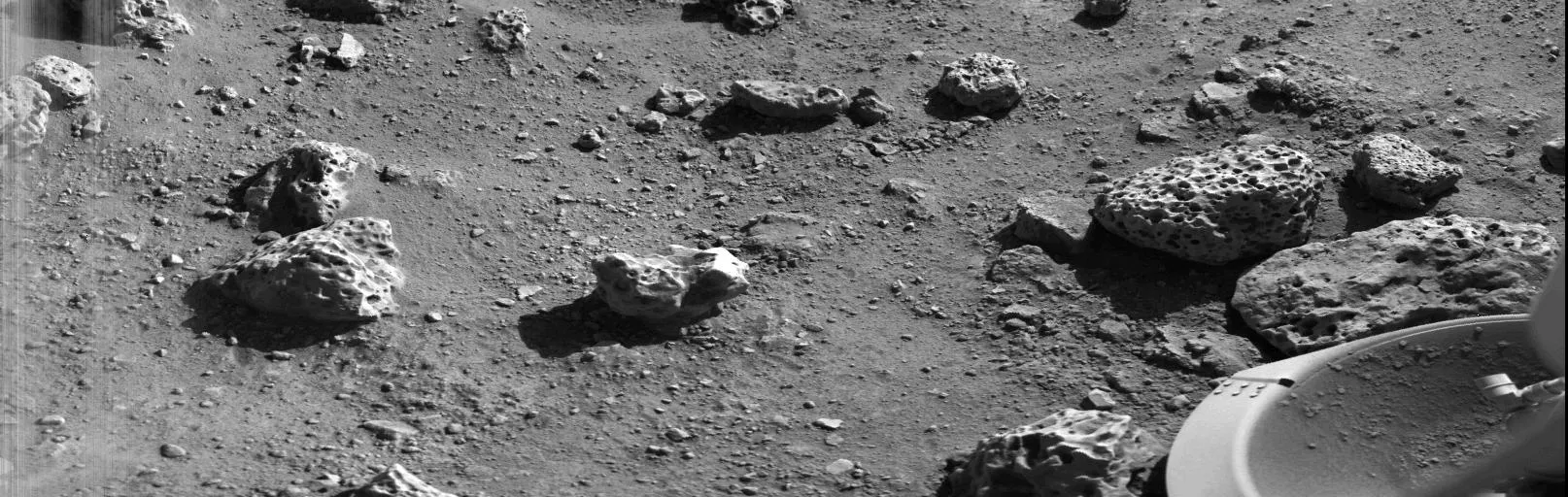
And Viking 2 found a landscape that looked different from Viking 1's landing site. It was flatter and rockier, and the lander itself ended up tilted about 8.5 degrees, with one leg resting on a rock.
 (opens larger view)
Viking 2's first picture on Mars, taken minutes after landing. Dust kicked up by the landing rockets has collected inside the footpad.
Image: NASA/JPL

Echo: Same twin, different view: rocks everywhere!
Two landers, one puzzle
Mars was more complicated than anyone thought
Just like its twin, Viking 2 photographed its surroundings, studied the atmosphere and weather, and used its robotic arm to collect Martian soil.
Its biology experiments produced results similar to Viking 1's. There was strange and interesting chemistry in the Martian soil… but still no clear evidence of life.
The Vikings had not answered the biggest question. But they had discovered something just as important:
Mars was far more complicated than scientists had imagined.
 (opens larger view)
Meanwhile, high above Water-ice clouds in the morning over Valles Marineris, photographed by Viking Orbiter 1 on 17 August 1976.
Image: NASA/JPL
The orbiters' map of Mars
While the landers worked on the ground, the two orbiters took 52,663 pictures and mapped about 97% of the surface of Mars.

Echo: No clear answer, but loads of new clues. That's science!
In pictures
Mars from above, then and now
 (opens larger view)
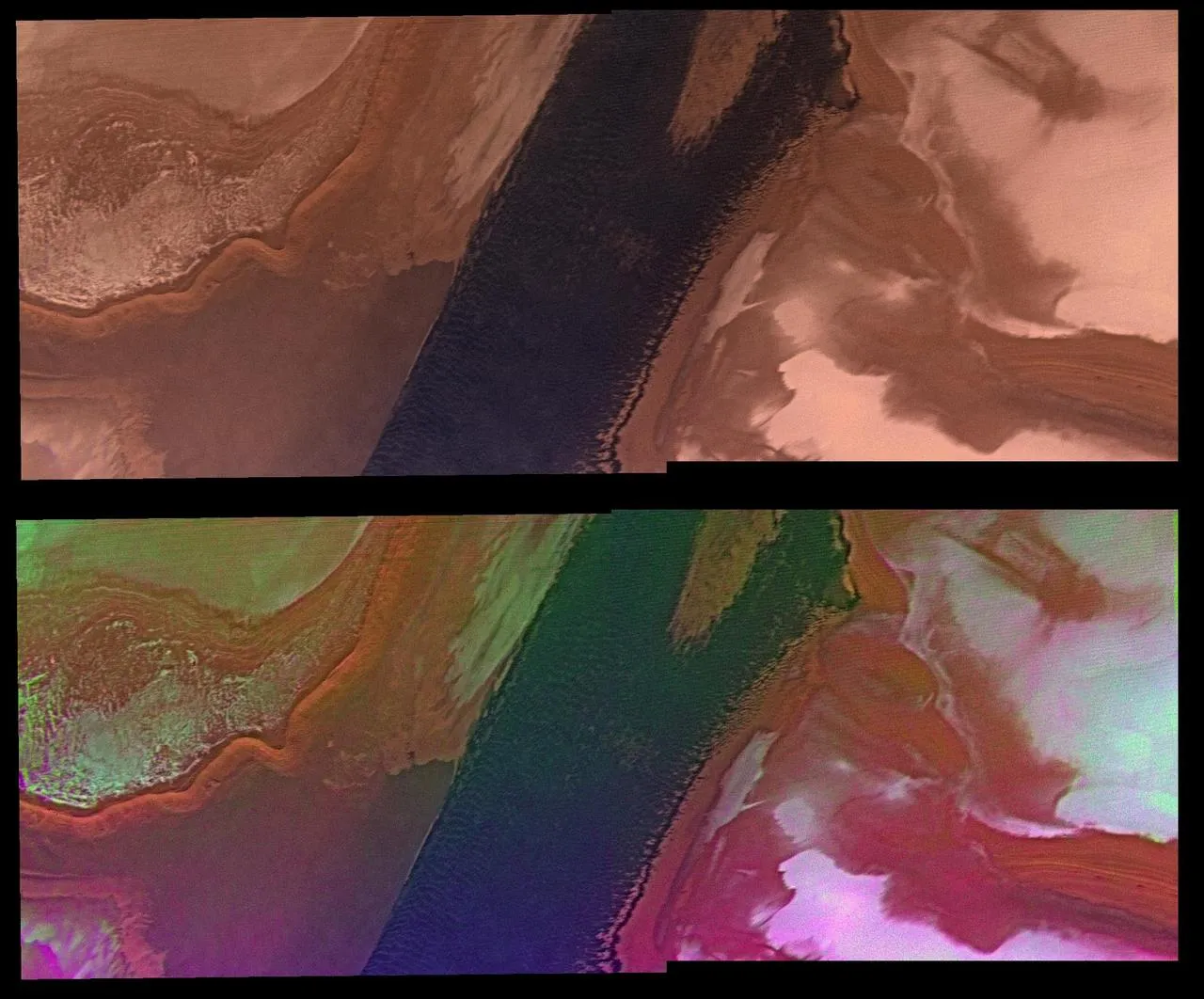
The edge of the north polar ice cap, seen by Viking Orbiter 2. The layers hold a record of Mars's past climate.
Image: NASA/JPL/USGS
 (opens larger view)
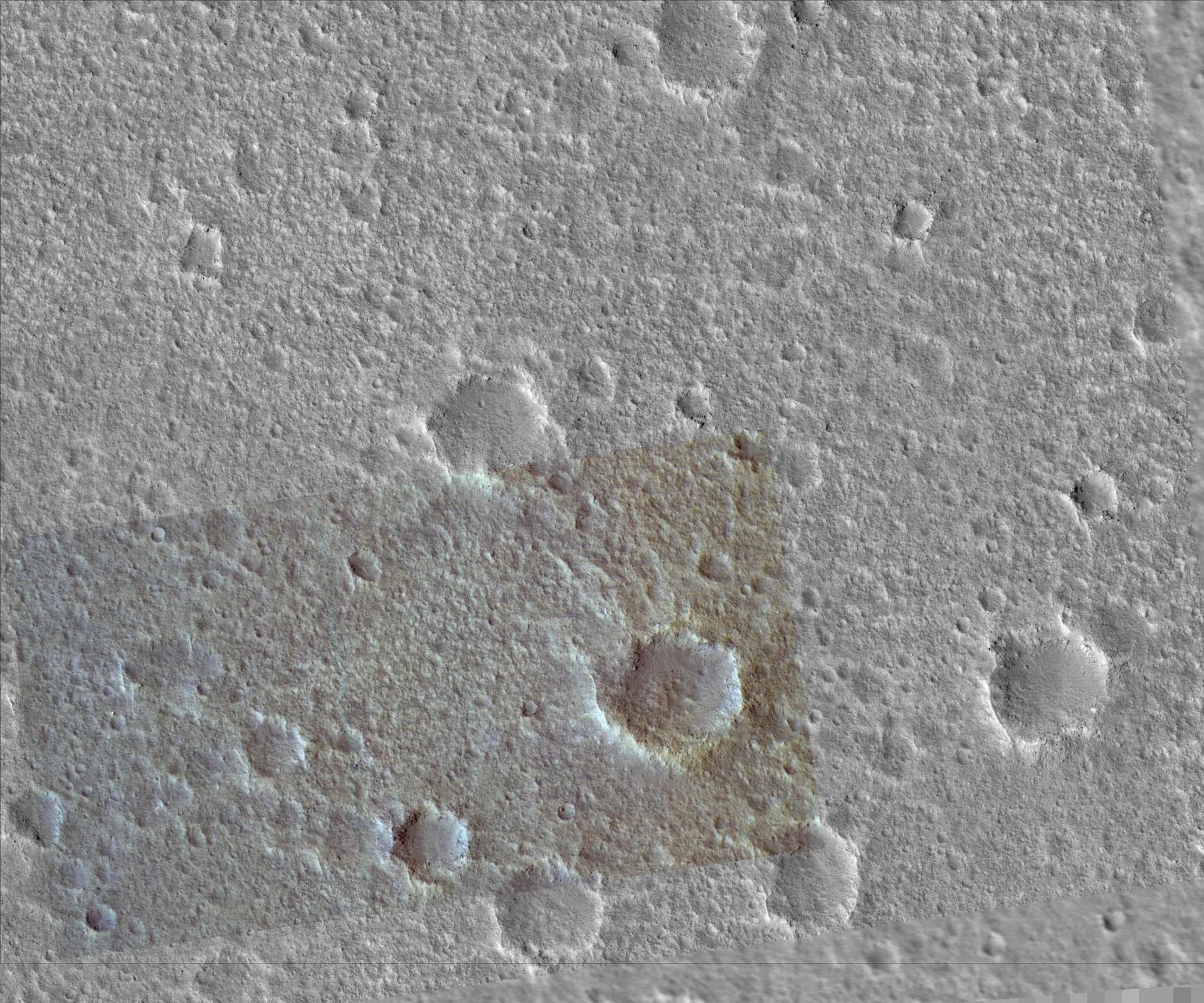
Viking 1's landing site, seen by NASA's Mars Reconnaissance Orbiter (pictures released in 2006). Its camera found the lander, its heat shield and its back shell.
 (opens larger view)
Viking 2's landing site from orbit (released in 2006). The cracked, many-sided pattern of the ground is common this far north and may come from ice deep underground.
 (opens larger view)
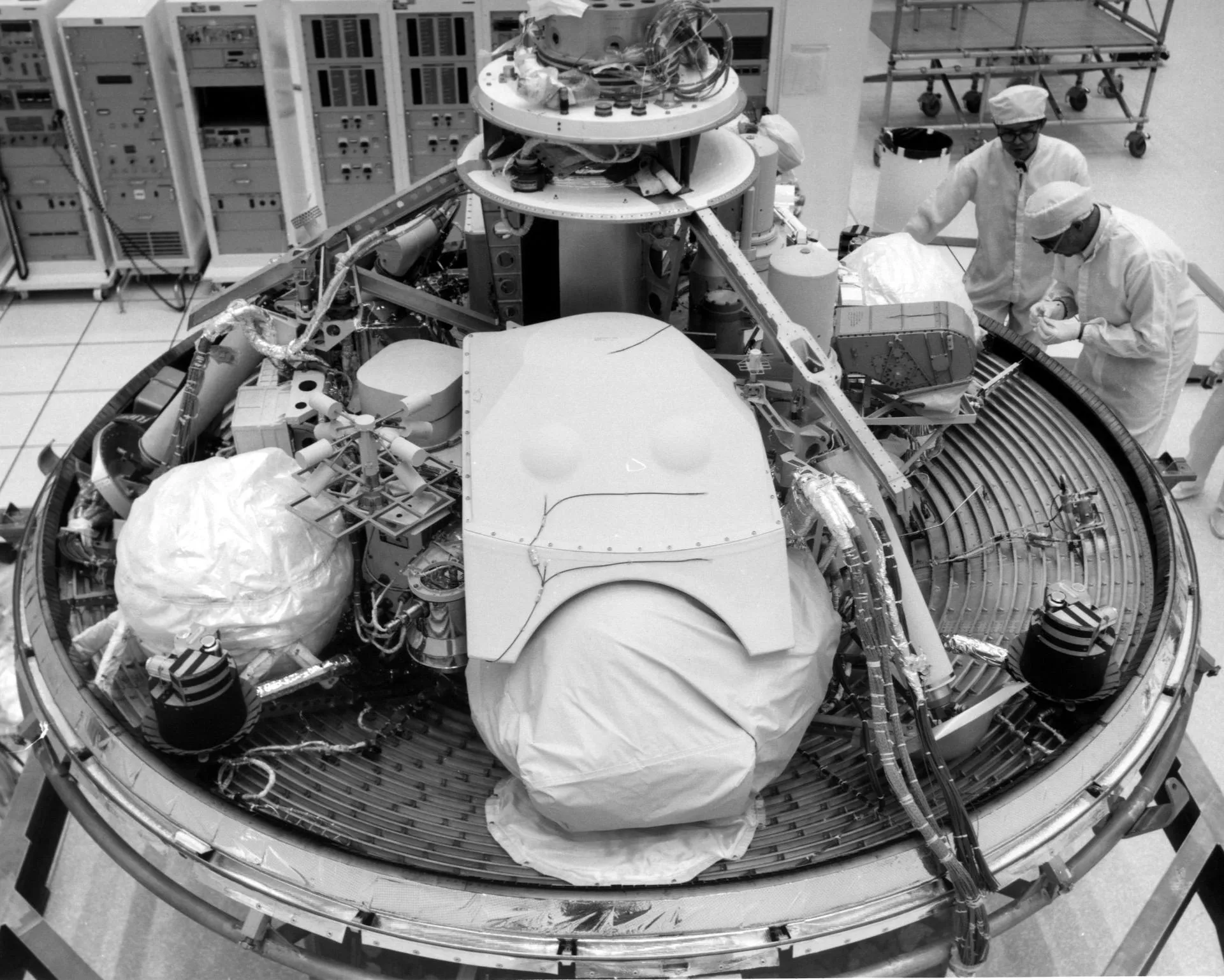
Viking Lander 2 being inspected at the Kennedy Space Center before launch.
Image: NASA
Timeline
From launch to the last signal
20 August 1975
Viking 1 launches
From Cape Canaveral, on a Titan-Centaur rocket.
9 September 1975
Viking 2 launches
Its twin follows a few weeks later.
19 June 1976
Viking 1 reaches Mars
The orbiter starts photographing landing sites and finds the first choice too rough.
20 July 1976
Viking 1 lands
Touchdown in Chryse Planitia, and the first photo from the surface of Mars.
28 July 1976
The first scoop
Viking 1's robotic arm collects its first soil sample for the experiments.
7 August 1976
Viking 2 reaches Mars
Almost 11 months after launch, it goes into orbit.
3 September 1976
Viking 2 lands
Touchdown in Utopia Planitia, tilted with one leg on a rock.
11 April 1980
Viking 2 goes quiet
Its batteries fail and it is switched off.
13 November 1982
Viking 1 falls silent
A faulty command sent from Earth on 11 November cuts the connection. Contact is never regained.
December 2006
Found from orbit
NASA releases Mars Reconnaissance Orbiter pictures of both landers, still where they touched down.
Still there
Longer than anyone planned
The two landers studied the Martian surface, atmosphere, weather and soil in incredible detail for their time. And they kept working far longer than originally planned: their main mission ended in November 1976, but the landers carried on.
Viking 2 continued sending data until April 1980, when its batteries failed. Viking 1 lasted even longer, sending weather reports until November 1982, when a wrong command from Earth cut it off.
By then, the two landers had spent years sitting on the surface of another planet, quietly sending information back to Earth.
New names
Both landers were later named after Viking scientists. Viking 1 became the Thomas Mutch Memorial Station, after the leader of the camera team. Viking 2 became the Gerald Soffen Memorial Station, after the Viking project scientist.

Echo: Planned for a few months, worked for years. Not bad, twins!
What Viking started
A bigger question
They didn't find little Martian creatures. They didn't prove that life had existed there. But they did something that would shape Mars exploration for decades to come.
They showed scientists how to land safely on Mars, how to study its soil and environment, and how much more there was left to discover.
Later missions would send orbiters, rovers and other spacecraft to Mars. And every one of them would build on what Viking 1 and Viking 2 had started.
The twin explorers arrived at Mars in 1976 looking for answers. They didn't solve the mystery of life on Mars. Instead, they left scientists with an even bigger question:
If Mars once had the right conditions for life, what happened to it?
And that question is still driving Mars exploration today.

Echo: Two landers, still standing on Mars, still inspiring every mission since. Not forgotten!
Still there today
Two landers, two landing sites
- Status: Not working any more
Viking 1 lander
Renamed the Thomas Mutch Memorial Station. Contact was lost in November 1982, after a faulty command was sent from Earth.
- Status: Not working any more
Viking 2 lander
Renamed the Gerald Soffen Memorial Station. It was switched off in April 1980, when its batteries failed.
Sources and fact-check
- NASA Science: Viking 1
- NASA Science: Viking 2
- NSSDCA: Viking 1 Lander (1975-075C)
- NSSDCA: Viking 2 Lander (1975-083C)
- NASA Image: Artist's concept of the Viking landing sequence, planned for 4 July 1976 (101-KSC-76PC-303)
- NASA Image: First Photograph Taken on Mars Surface (PIA00381)
- NASA Image: Viking Lander 2 First Picture on the Surface of Mars (PIA00396)
- NASA Image: Viking Lander 1 imaged from orbit (PIA01881)
- NASA Image: Viking Lander 2 imaged from orbit (PIA01882)