First landing: 4 January 2004Status: Not working any more
Spirit and Opportunity rovers
Main spot on Mars:Gusev crater
Spirit drove 7.73 km. In 2009 it broke through a thin crust into soft sand and could no longer move, and its last message came on 22 March 2010. Opportunity explored for more than 14 years and drove 45.16 km. It fell silent on 10 June 2018, during a dust storm that covered the whole planet.
Left behind
In January 2004, two robot geologists bounced down onto Mars, wrapped in airbags, on opposite sides of the planet. Each was built to work for about three months. Spirit kept going for more than six years. Opportunity kept going for more than fourteen.
The mission
Twin robot geologists
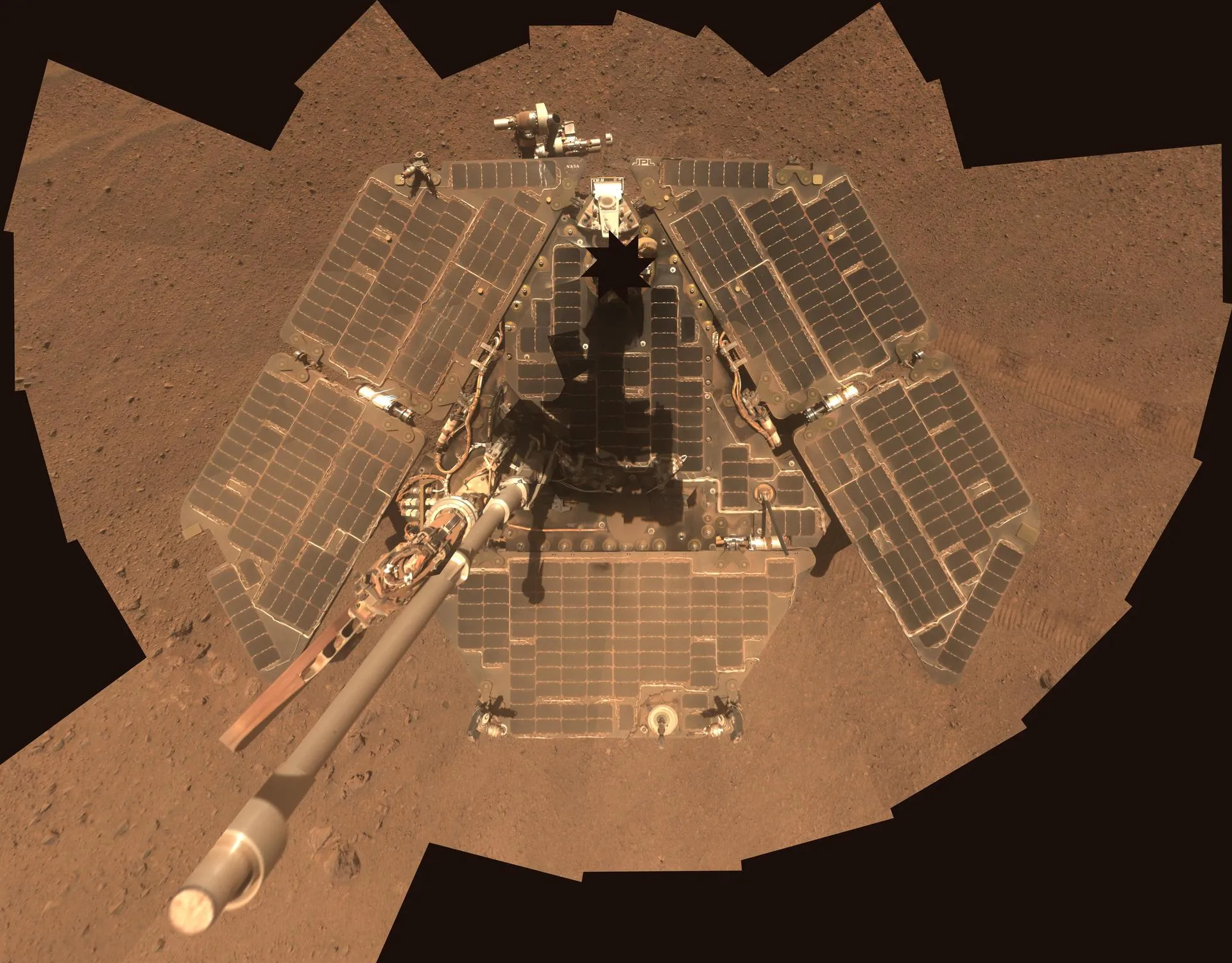
Spirit and Opportunity were identical twins: two golf-cart-sized rovers, powered by sunlight.
Each rover had six wheels and weighed about 185 kg. Solar panels made its electricity, and a set of six science instruments let it photograph and study the rocks around it.
Their job was to search for rocks and soils that hold clues to water on Mars long ago.
They were not fast. Spirit's top speed was about 3.75 cm per second. But they were patient, and they kept going for years longer than anyone had planned.
 (opens larger view)
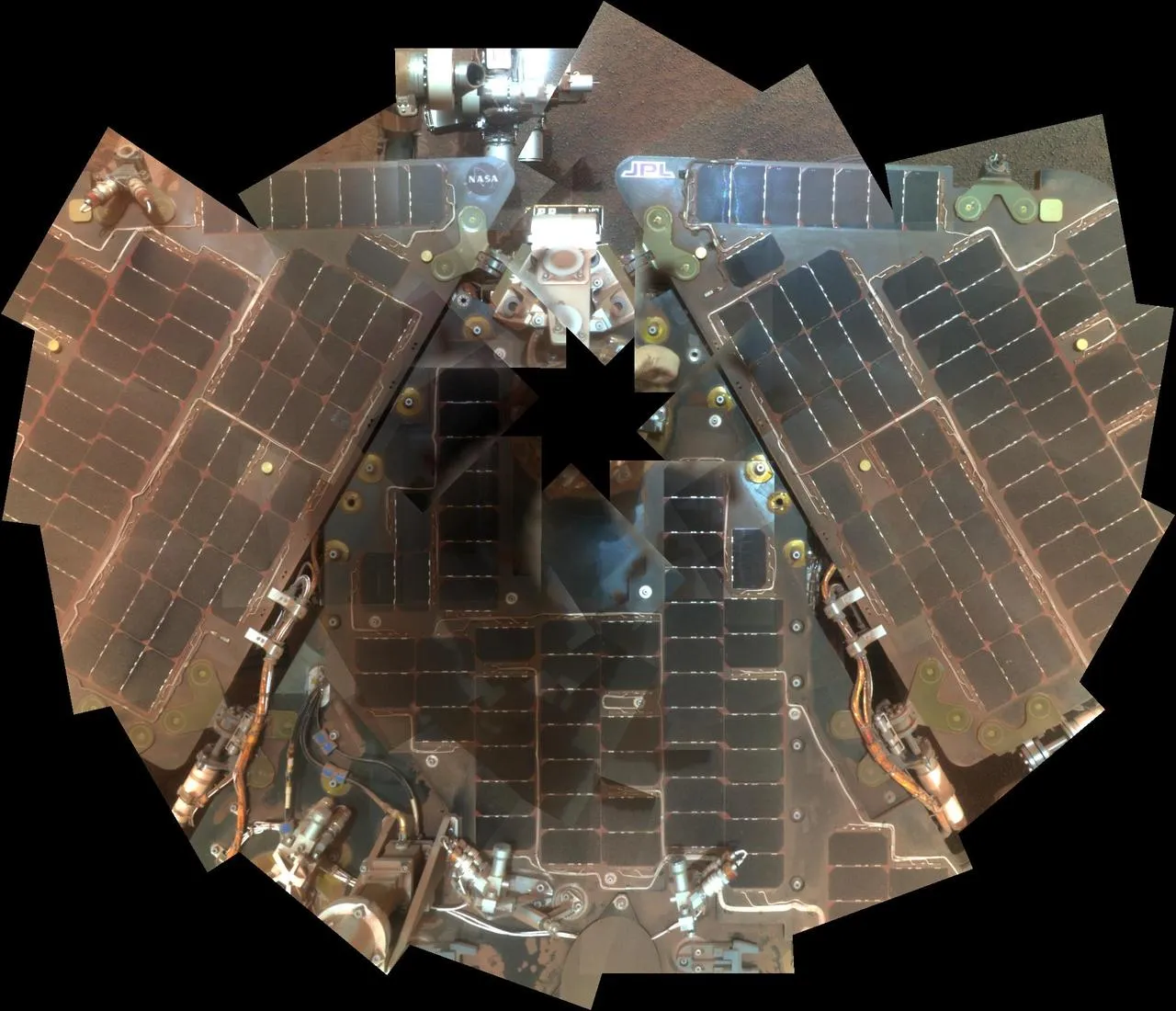
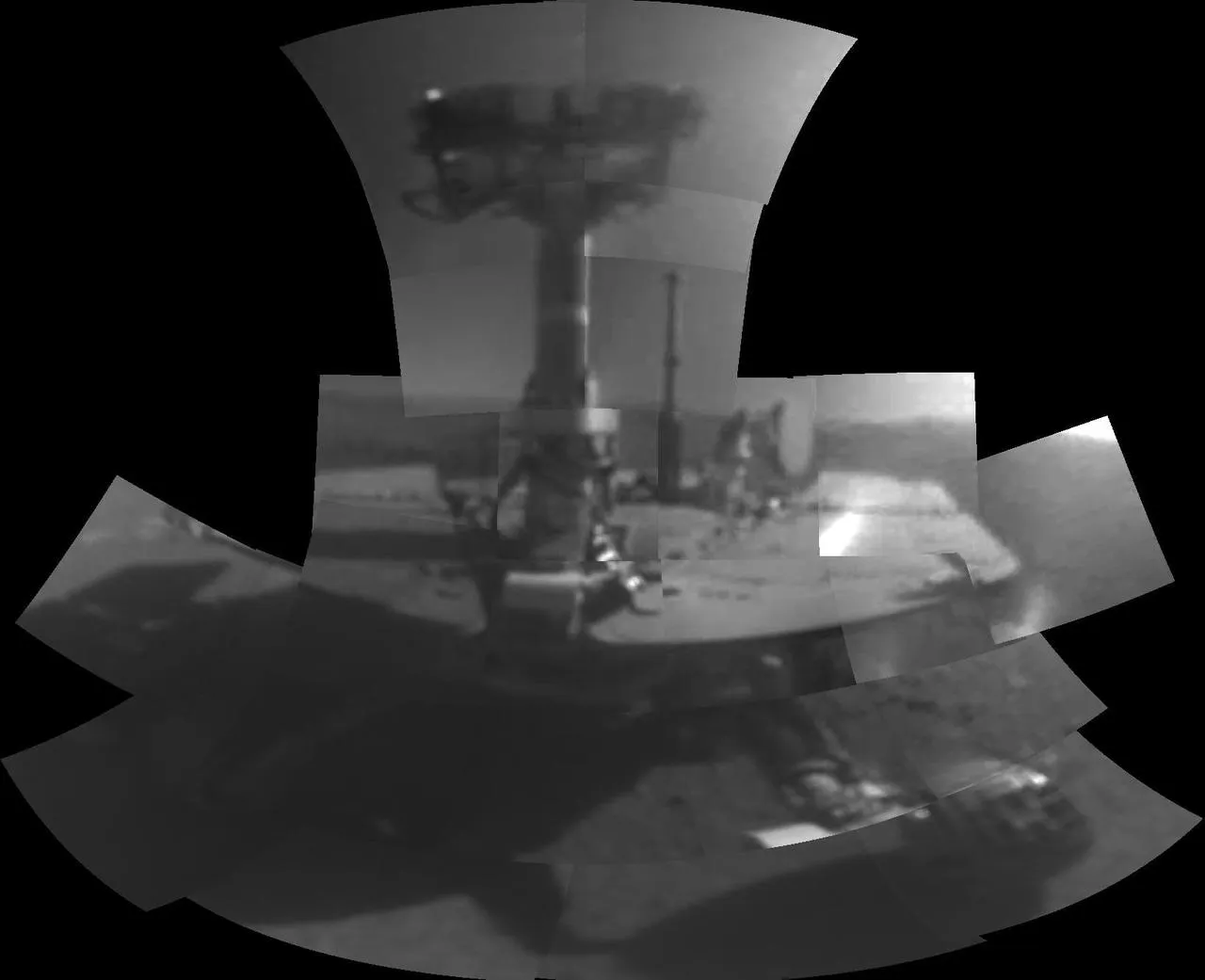
Opportunity photographed itself in 2007 to check how much dust covered its solar panels.
Image: NASA/JPL-Caltech/Cornell
Arrival
Two landings, three weeks apart
Each rover arrived inside a ball of airbags. Rockets slowed it down, the airbags inflated, and it bounced and rolled across the ground until it stopped.
Spirit landed first, on 4 January 2004, inside Gusev crater. Scientists chose Gusev because it looks like a dried-up lake bed.
Opportunity landed on 25 January 2004 on the other side of Mars, on a flat plain called Meridiani Planum. It hit the ground at about 50 km/h, bounced and rolled, and came to rest inside a small crater only about 20 metres wide. The crater was named Eagle.
 (opens larger view)
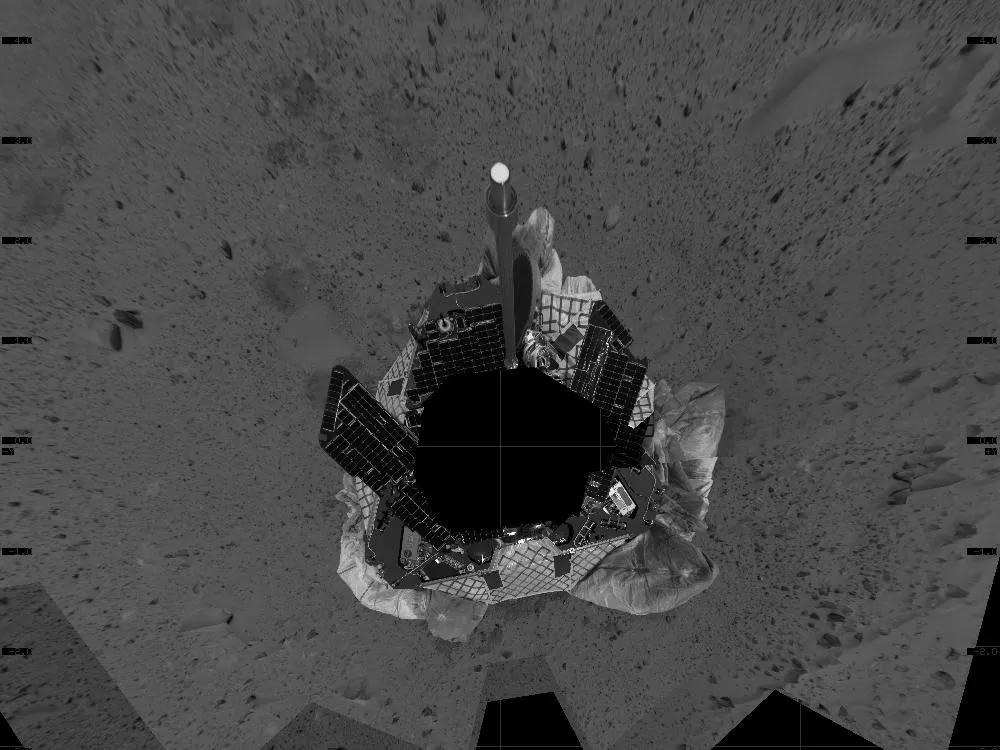
Spirit on top of its lander, just before rolling off onto Mars in January 2004.
Image: NASA/JPL
By the numbers
Built for 90 Martian days, lasted for years
- how long each rover was designed to last (a sol is a day on Mars)
- 90 sols
- longer than planned: how long Opportunity actually lasted
- 60 times
- driven by Spirit
- 7.73 km
- driven by Opportunity, which was designed to drive just 1 km
- 45.16 km
Spirit
The rover that kept going on five wheels
Spirit drove into a group of hills called the Columbia Hills and found a surprising variety of bedrock there.
In March 2005, dust devils (small spinning whirlwinds) passed over the rover and swept dust off its solar panels. Its power jumped from the usual 60% to 93%, which helped it keep working much longer.
In 2006, its right front wheel stopped turning. Spirit carried on, dragging the stuck wheel along. In 2007 that lucky accident scraped up bright white soil that was nearly pure silica, the main ingredient of window glass. It suggested that there were once hot springs or steam vents there. Scientists call it one of the most important finds of either rover.
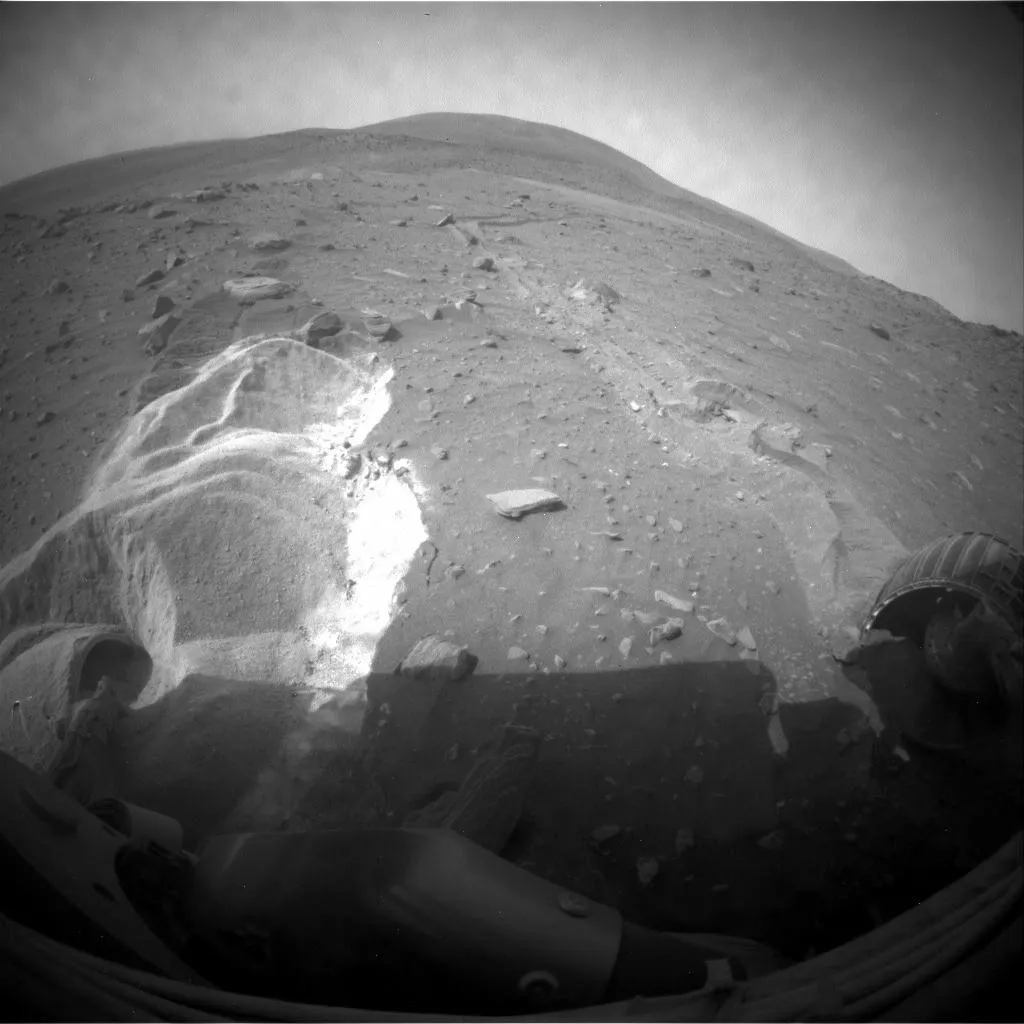
In 2009, Spirit broke through a thin crust into soft, slippery sand, at a place scientists called Troy, next to a low plateau called Home Plate. It could not get free. Its last message came on 22 March 2010, as the Martian winter approached and its solar power dropped. NASA stopped trying to contact it on 25 May 2011.
 (opens larger view)
Spirit's wheels sinking into soft ground in May 2009, after weeks of trying to drive free.
Image: NASA/JPL-Caltech
Opportunity
Blueberries, craters and a marathon
Right at its landing site, Opportunity found hematite, a mineral that forms in water. Some of it was in tiny balls that scientists nicknamed "blueberries".
Then it went crater to crater. It climbed out of Eagle crater in March 2004 and explored Endurance crater. In 2007 it drove into Victoria crater and stayed inside for almost a year. In August 2011, after a trip of nearly three years, it reached Endeavour crater. There it found signs of ancient water similar to the drinkable water of a pond or lake on Earth.
In March 2015, NASA announced that Opportunity had driven more than a marathon: 42.195 km. Nothing from Earth had ever travelled that far on another world. It also set a one-day Mars driving record of 220 metres, and climbed slopes as steep as 32 degrees.
In June 2018, a dust storm covered the whole planet and blocked out the sunlight Opportunity needed. Its last message came on 10 June 2018. Engineers sent more than a thousand commands to wake it up. None were answered, and on 13 February 2019 NASA declared the mission over. Opportunity's last stop was Perseverance Valley, on the rim of Endeavour crater.
 (opens larger view)
Opportunity's self-portrait in Perseverance Valley, on the slopes of Endeavour crater, its last stop.
Image: NASA/JPL-Caltech
Timeline
Two rovers, fifteen years
10 June 2003
Spirit launches
It lifts off from Cape Canaveral, Florida.
8 July 2003
Opportunity launches
In Florida it is still the evening of 7 July.
4 January 2004
Spirit lands in Gusev crater
In US time it is still 3 January.
25 January 2004
Opportunity lands at Meridiani Planum
It rolls into a small crater, later named Eagle. In US time it is still 24 January.
2009
Spirit gets stuck
Its wheels sink into soft sand at a place called Troy.
22 March 2010
Spirit's last message
25 May 2011
NASA says goodbye to Spirit
The team stops trying to contact the rover.
9 August 2011
Opportunity reaches Endeavour crater
March 2015
Opportunity passes marathon distance
42.195 km, the first time anything from Earth has travelled that far on another world.
10 June 2018
Opportunity's last message
A dust storm covering all of Mars blocks out the sunlight it needs.
13 February 2019
NASA ends Opportunity's mission
11 October 2026
A new record holder
The Perseverance rover passes Opportunity's 45.16 km, the longest drive on another world until then.
Still there
Two rovers, two resting places
- Status: Not working any more
Spirit rover
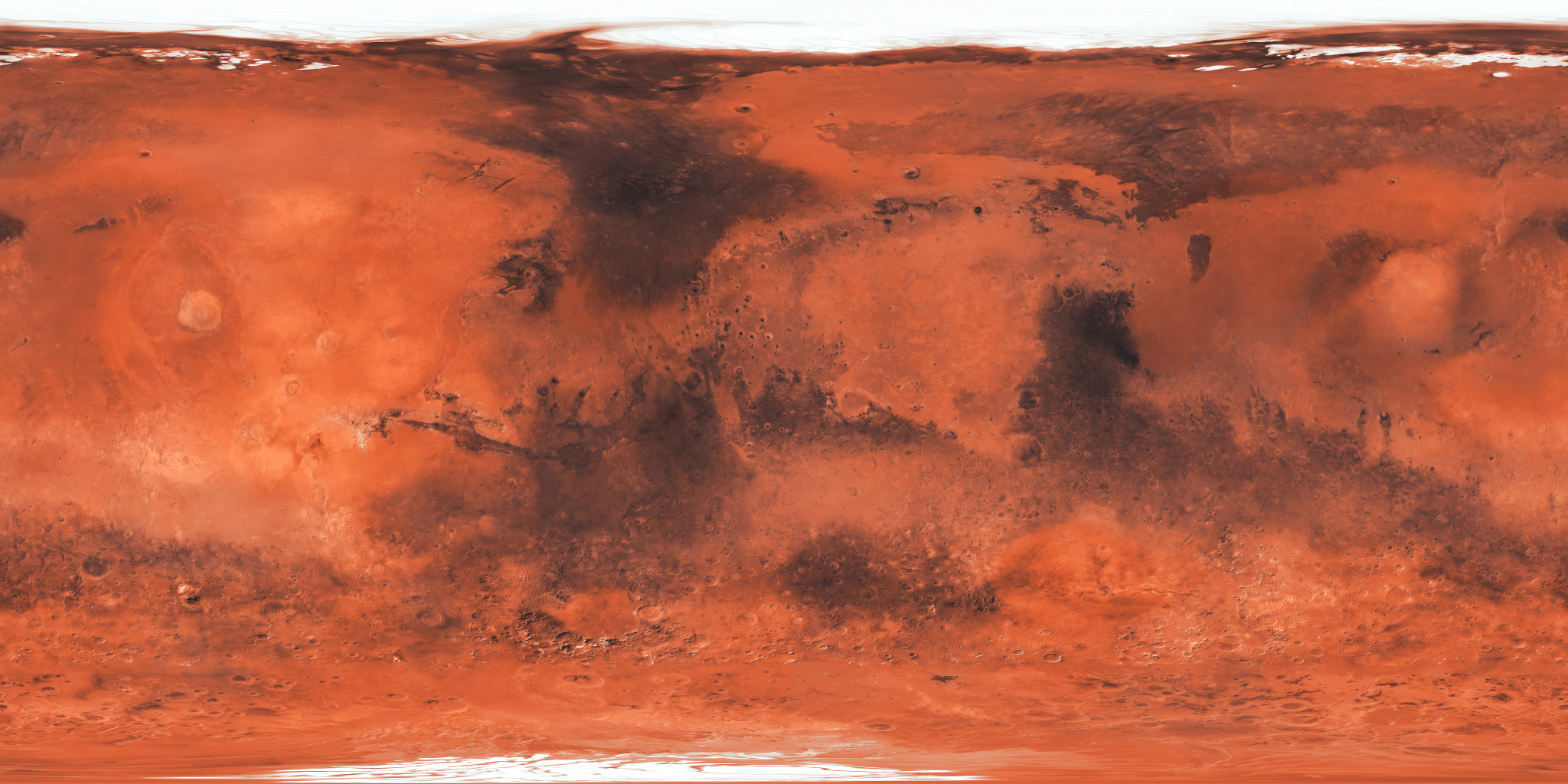
Landed on 4 January 2004 and drove 7.73 km. It got stuck in soft sand at a place called Troy, next to a low plateau called Home Plate. The pin marks its landing site.
- Status: Not working any more
Opportunity rover
Landed on 25 January 2004 and drove 45.16 km. Its last stop was Perseverance Valley, on the rim of Endeavour crater. The pin marks its landing site.
In pictures
A closer look
 (opens larger view)
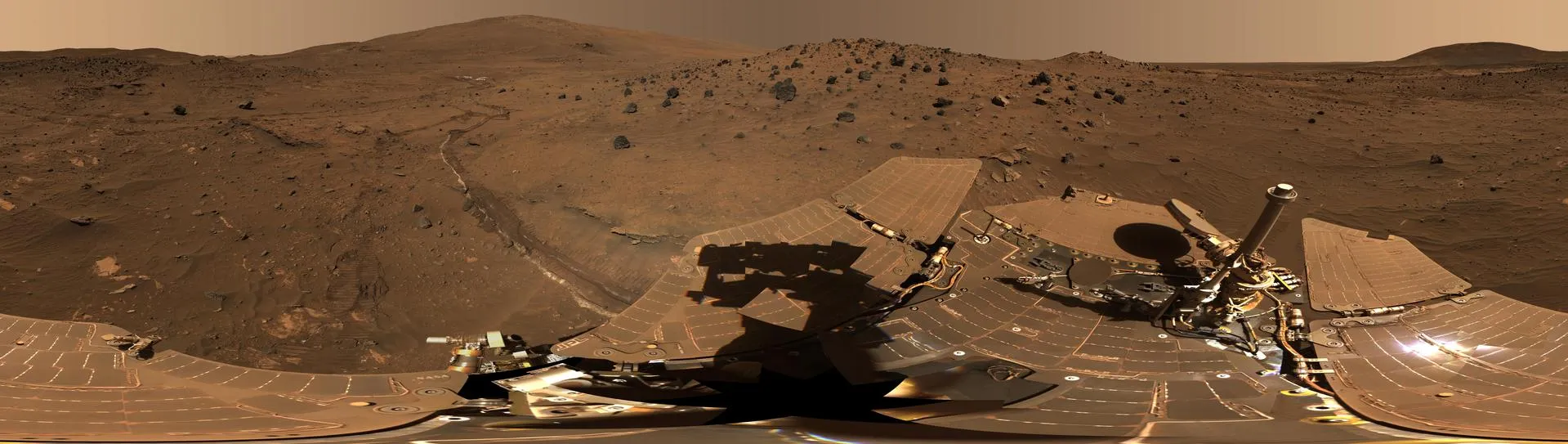
01 / The McMurdo panorama: Spirit's view from Low Ridge, where it spent the Martian winter of 2006.
 (opens larger view)
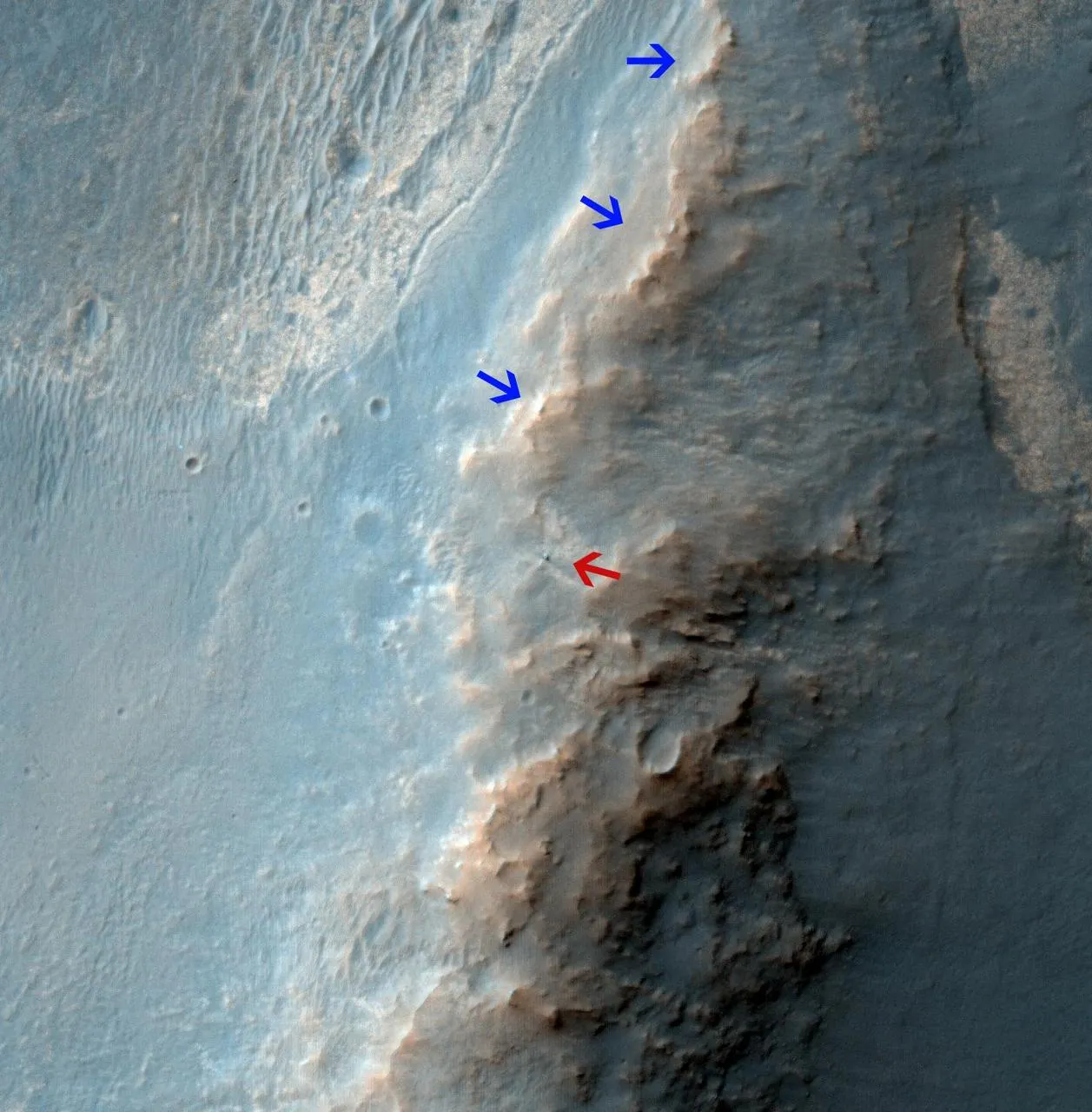
02 / Opportunity seen from orbit on Murray Ridge in February 2014.
 (opens larger view)
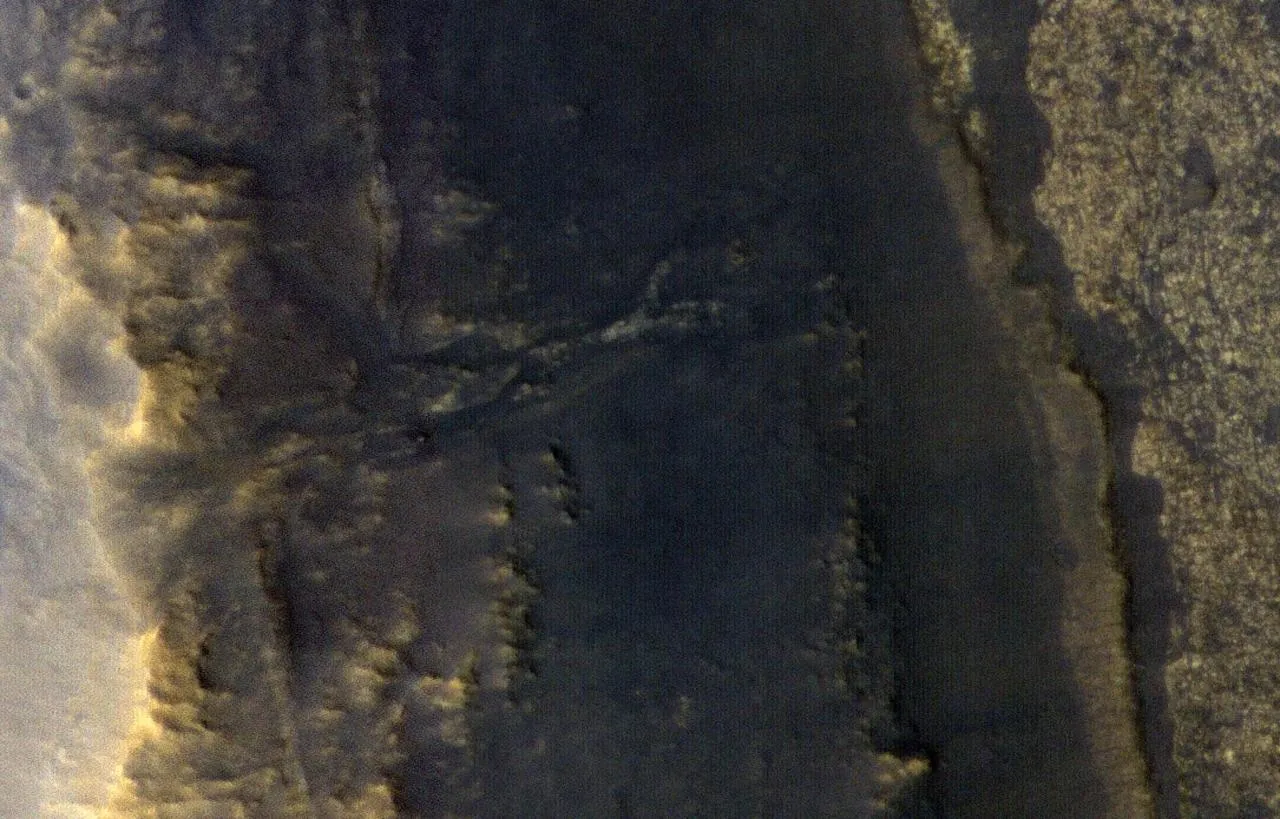
03 / Perseverance Valley from orbit after the 2018 dust storm cleared. Opportunity never woke up.
Science legacy
What the twins taught us
The rocks Spirit and Opportunity studied showed that, long ago, water stayed on the surface of Mars for a long time. Mars was likely wetter and warmer in the past than it is today.
They also taught engineers how to explore with robots: how to keep in touch with Earth reliably, how to find a path using 3D vision, and how to let a rover make some decisions on its own. Later rovers such as Curiosity and Perseverance are built on those lessons.
Today, the twins sit silent on opposite sides of Mars. Spirit is still in the sand at Troy. Opportunity is still in Perseverance Valley.
Sources and fact-check
- NASA Science: Mars Exploration Rovers: Spirit and Opportunity
- NSSDCA: Spirit
- NSSDCA: Opportunity
- NASA Science: Spirit
- NASA Science: Opportunity
- JPL: NASA's Spirit Rover Completes Mission on Mars (25 May 2011)
- JPL: NASA to Begin Attempts to Free Sand-Trapped Mars Rover (12 November 2009)
- NASA: NASA's Record-Setting Opportunity Rover Mission on Mars Comes to End (13 February 2019)
- JPL: PIA23178, Opportunity's final traverse map
- NASA Science: Six Things to Know About NASA's Opportunity Rover
- NASA Science: Martian 'Blueberries'